
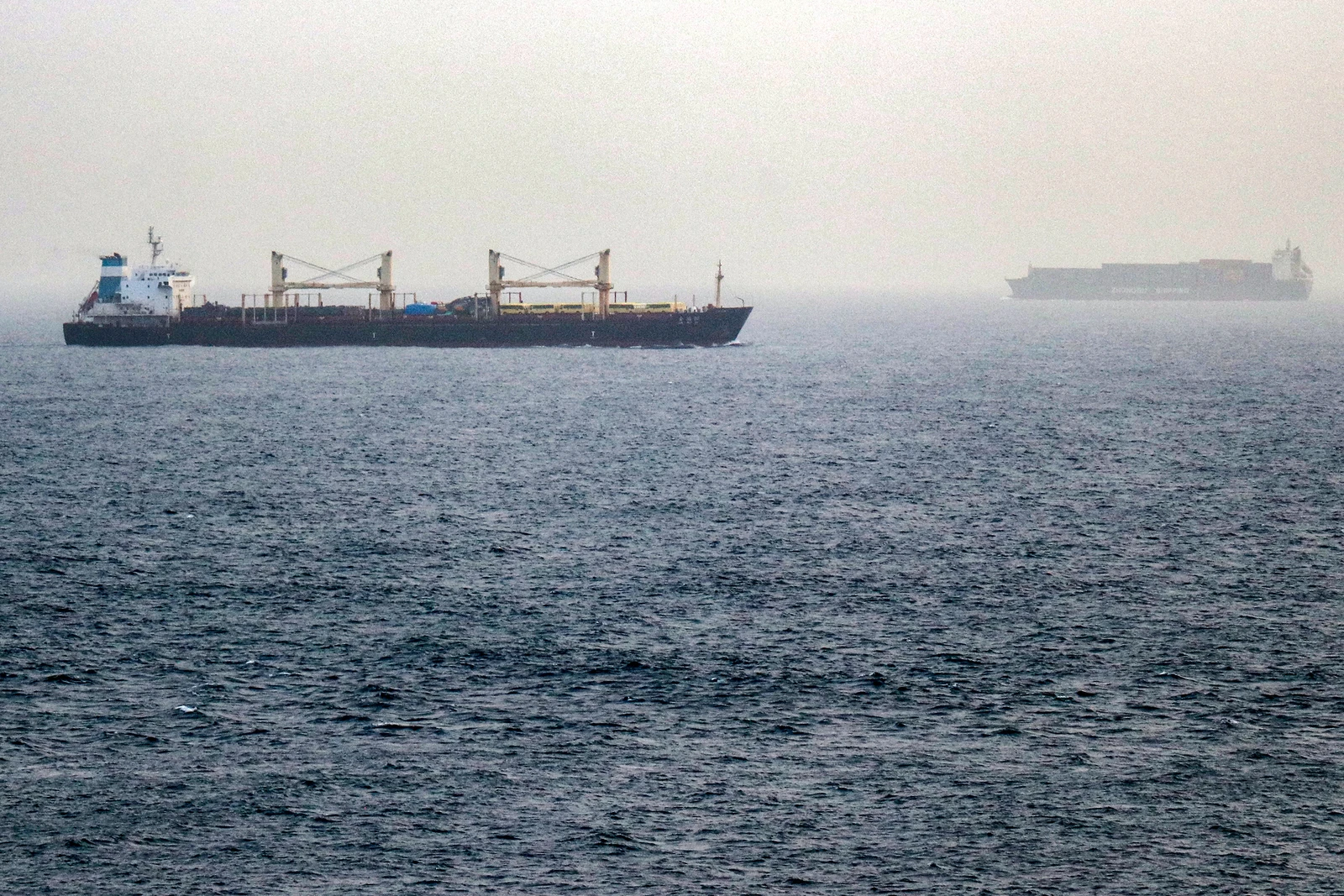

What is important to understand about the recent Houthi attacks on Saudi Arabia is that this is not merely a conflict between the Kingdom and some renegade group in a neighboring country. It is a conflict that affects navigation in the Red Sea and thus worldwide trade. That is why the world should be concerned about the Houthi attacks just as much as Saudi Arabia.
The Houthis claim their attacks are against the Kingdom only and they will not disrupt navigation in the Red Sea. They claim that ships, including American and Israeli ones, can pass — only Saudi vessels will be targeted. They said this in an effort to pacify the international community. However, the world should be smarter than this and understand that if the Houthis control the Yemeni west coast and the Red Sea, they will impose their own rules on everyone.
Unfortunately, several actors do not see the big picture and have been looking at this conflict from a narrow angle. Iran sees in this destabilization the chance for new leverage, both with the US and with neighboring countries. It wants to see maximum damage inflicted on Saudi Arabia and then act as a mediator between the Kingdom and the Houthis. Through this mediation, it will seek to impose its terms on Riyadh.
Unfortunately, several actors do not see the big picture and have been looking at this conflict from a narrow angle
Dr. Dania Koleilat Khatib
However, it will not work that way. This “pushing the limits” policy could turn against Iran. The Iranians have to remember that Trump made an offer to Saudi Arabia in July. He said the US would expand its defense cooperation with Riyadh if the latter joined the Abraham Accords and recognized Israel. Does Iran really want to test Riyadh’s patience?
The US is hoping the conflict with the Houthis will pressure Saudi Arabia to join the Abraham Accords. It was reported last month that US officials met with the Houthis in Oman and decided not to back the offensive against the group after the militants offered assurances over the safety of Red Sea shipping.
Israel has an indirect interest in seeing Saudi Arabia targeted by the Houthis. It wants this conflict to spiral as it is a test of the Makkah defense pact with Pakistan and Turkiye. It hopes that the pact fails. Israel is against any regional cooperation as it does not want the Middle East to unite and have substantial bargaining power against it.
But the international community should understand the seriousness of what is happening and how it can affect the worldwide economy. Trump is starting to grasp the situation. He has said the Houthis are “behaving very badly” and they are, at the behest of Iran, trying to drive up the price of oil ahead of the US midterm elections.
As much as the Houthi militia is important to Iran as a proxy, it is not as important as its relationship with China
Dr. Dania Koleilat Khatib
The world created a coalition to fight Daesh because it was not only a threat to Iraq — its terrorist activities and radical doctrine were a threat to the world. The world also united to fight the threat of pirates off the coast of Somalia. The piracy concerned the entire world because all nations have a vested interest in freedom of navigation in the Red Sea. Similarly, the international community should create a coalition against the Houthis.
Some might say that the military option will not work — that Yemen contains difficult terrain and that only diplomacy can end the conflict and bring peace and stability to Yemen. This is true. However, those who advocate a diplomatic solution need to understand that unless some real consequences are imposed on the Houthis and Iran, they will not sit at the negotiating table or become part of the Yemeni state.
The coalition should not only be a military one but also a political one. Unlike Daesh, when the target was to eliminate the group, with the Houthis the aim is to bring them to the negotiating table. The coalition should apply political pressure on Iran to stop it supporting the Houthis. It is very important to have China and Russia on board as they have immense leverage over Tehran.
Once Iran sees there is a coalition that is patrolling the Red Sea and making sure the Houthis get no munitions, it will rethink its support for the group. Also, as much as the Houthi militia is important to Iran as a proxy, it is not as important as its relationship with China.
The world should wake up. The Houthis are not only targeting Saudi Arabia, they are targeting freedom of navigation in the Red Sea, which is of concern to everyone. The world cannot sit idle while a small group of fanatics disrupts world trade. This problem has to be solved once and for all and it cannot be solved unless the Houthis are contained and forced to be part of the legitimate state. The world should act now and put together a coalition to fight the Houthis.
Dr. Dania Koleilat Khatib is a specialist in US-Arab relations with a focus on lobbying. She is co-founder of the Research Center for Cooperation and Peace Building, a Lebanese nongovernmental organization focused on Track II.


