
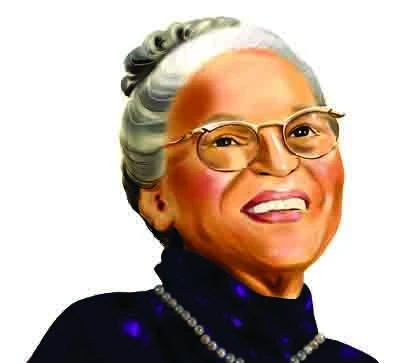

Almost exactly 60 years ago this week, on Dec. 1, 1955, Rosa Parks, at the time a 42-year-old seamstress and civil rights activist, who was “tired of giving in” and “referred to be lynched than live to be mistreated,” defied Jim Crow laws in Montgomery, Alabama, when, seemingly exhausted after a long workday, she refused to give up her seat to a white passenger and move to the back of the bus.
It was a time in Alabama, indeed the entire American South, when the color of your skin determined where you could sit on a public bus and racial segregation was the rule. Strict Jim Crow laws had for long enforced there a system of white supremacy that discriminated against “Negros,” as African Americans were then called, and kept them “in their place.”
As Russel Freedman wrote in “Freedom Walkers: The Story of the Montgomery Bus Boycott” (2006): “People were separated by race from the moment they were born in segregated hospitals until the day they were buried in segregated cemeteries. Blacks and whites did not attend the same schools, eat in the same restaurants, sleep in the same hotels, drink from the same water fountains, or sit together in the same movie theaters.”
No one knew at the time that Rosa Parks’ seemingly humble act of defiance was about to change American history. Yet, the seamstress did just that, for after she was convicted of violating the city’s segregation ordinance, a determined protest movement sprang into action. For more than a year, or a total of 381 days, the black citizens of Montgomery maintained a total boycott of the city’s bus system, choosing to walk, carpool and cycle to work, braving economic reprisals, arrests, threats against their lives and the firebombing of their homes and houses of worship.
The boycott organizers mobilized the entire black population of Alabama’s capital. “About 50,000 men, women and children walked to work, gave each other lifts, and even on the coldest, wettest days refused to ride the buses,” wrote Adam Fairclough in his book, Better Day Coming: Blacks and Equality, 1890-2000 (2001). “Prosecuted with a degree of unity that had never been seen before, the boycott astounded the world, and even surprised the black people of Montgomery.”
The boycott, in effect, became an international cause celebre. In the end, as often happens in a situation like that, what was going on in Montgomery captured the attention of Americans everywhere, which finally led to a US Supreme Court ruling in November 1956 desegregating public transportation. It also catapulted an eloquent 26-year-old minister, called Martin Luther King, who had earlier taken the pulpit at the Dexter Avenue Baptist Church in the city, on the national stage. And the rest, as they say, is history.
Last Tuesday, from the pulpit of the same church, Hillary Clinton, commemorating the memory of Rosa Parks’ brave act of defiance 60 years earlier, called for a “continuation” of the civil rights movement kicked off by the “lowly seamstress,” whose arrest and trip to the local police precinct at the time made the front page of the New York Times with the iconic black and white photo of her being fingerprinted.
To be sure, Rosa Parks was not, as some narratives of civil rights history portray her, a “lowly seamstress,” a simple, middle-aged black woman whose feet that day when she defied Jim Crow laws were tired from “working for the man” as an assistant tailor at a Montgomery department store. Rather, Parks had been, since 1943, the feisty secretary of the local chapter of the National Association for the Advancement of Colored People (NAACP), and had organized an NAACP Youth Council in the city, where at least on one occasion she was ejected from a “white” library where members of her youth council had unsuccessfully —and in Alabama at the time, provocatively — tried to borrow books.
Perhaps Clinton was right when, in her speech at the Dexter Avenue Baptist Church in Montgomery earlier this week, in front of a roomful of black lawyers, she called for a “continuation” of the civil rights movement. The struggle for civil rights in the United States indeed remains a work-in-progress, not just on behalf of African Americans, but also of women, Muslims, industrial workers, undocumented immigrants and other groups.
The ratification of the Bill of Rights more than 200 years ago represented an eloquent recognition of the human rights of citizens. And, yes, no government had ever before made such a commitment to protect civil liberties. Yet the Bill of Rights, and indeed the Declaration of Independence that inspired it, are only the beginning, mere “promissory notes,” as Martin Luther King called them, that need to be paid in full to those minorities, wronged in the past.


