
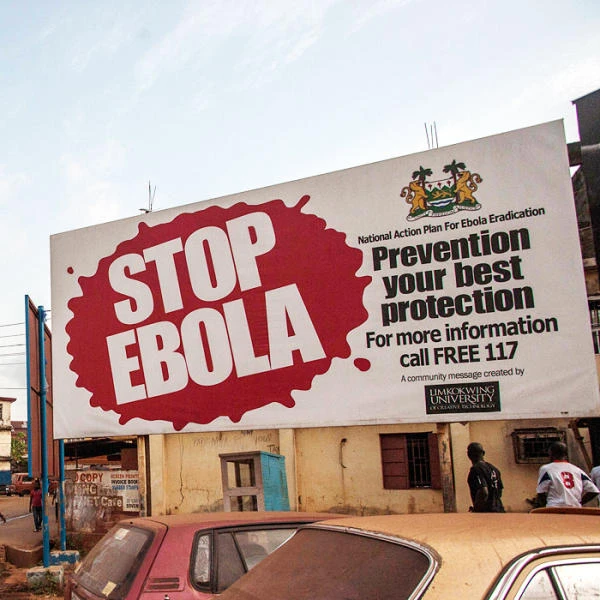

Before the horrors of the latest Ebola outbreak in West Africa could even begin to fade from our minds, the Zika virus emerged as a major global health risk. Yet the death toll from another virus is rising fast: Yellow fever.
In southwestern Africa, Angola is facing a serious yellow fever epidemic — its first in 30 years. Since the virus emerged in Luanda, Angola’s capital and most populous city, last December, it has killed 293 people and infected a suspected 2,267. The virus has now spread to six of the country’s 18 provinces. Travelers have taken cases to China, the Democratic Republic of Congo, and Kenya. Namibia and Zambia are on high alert.
Yellow fever virus is transmitted by Aedes aegypti — the same mosquito that spreads the Zika virus. Symptoms include fever, muscle pain, headache, nausea, vomiting and fatigue. At least half of untreated patients with severe cases of yellow fever die within 10-14 days. The good news is that, unlike Zika or Ebola, yellow fever can be controlled with an effective vaccine, which confers lifelong immunity within a month of administration. And, indeed, vaccination forms the core of Angola’s National Response Plan, initiated early this year with the goal of administering the yellow fever vaccine to more than 6.4 million people in Luanda Province. So far, nearly 90 percent of that target population has been vaccinated, thanks largely to the World Health Organization, the International Coordinating Group for Vaccine Provision, and other countries, including South Sudan and Brazil, which together made some 7.35 million doses of the vaccine available.
The mass vaccination effort has stemmed the spread of yellow fever. But to end the outbreak, vaccination has to continue not only in Luanda, where an additional 1.5 million are at risk of infection, but also encompass other affected provinces. This will be a major challenge. One key problem is cost. In 2013, the yellow fever vaccine cost $0.82 per dose in Africa — a price that most developing countries cannot afford. A 2015 report by Medecins Sans Frontieres showed that the vaccine is now almost 70 times more expensive than it was in 2001. Making matters worse, even if countries have the money, there are serious supply constraints. For now, however, supplies are tight. One way to stretch existing stores could be by administering a fractional dose (one-fifth of the usual dose), which has also been shown to protect against yellow fever.
But even that may not be enough if the virus spreads further. And, unfortunately, the high density of Aedes aegyptii mosquitoes in the affected areas means that the risk of transmission remains high.
An outbreak in a region like Asia, which lacks experience with a yellow fever epidemic and has no capacity to manufacture the vaccine, would be particularly difficult to control. According to John P. Woodall, the founder of the disease-alert service ProMED, if yellow fever spreads to parts of Asia with the right climate and mosquito species, hundreds of thousands could be infected (and possibly die) before vaccine stocks are delivered. The virus also has the potential to spread to the Americas, which are home to Aedes mosquito vectors that transmit not only yellow fever, but also dengue, Zika and chikungunya. Already, the Pan American Health Organization has declared an epidemiological alert for yellow fever in Latin America.
To help limit yellow fever’s spread, international health regulations require that all travelers to the 34 countries where yellow fever is endemic present a vaccination certificate. But the implementation of those regulations depends on each country’s capacity, and is thus far from perfect. The WHO is working closely with several partners and the Angolan government to combat the current outbreak. But, as some health experts have pointed out, even more needs to be done.
—
©Project Syndicate
In southwestern Africa, Angola is facing a serious yellow fever epidemic — its first in 30 years. Since the virus emerged in Luanda, Angola’s capital and most populous city, last December, it has killed 293 people and infected a suspected 2,267. The virus has now spread to six of the country’s 18 provinces. Travelers have taken cases to China, the Democratic Republic of Congo, and Kenya. Namibia and Zambia are on high alert.
Yellow fever virus is transmitted by Aedes aegypti — the same mosquito that spreads the Zika virus. Symptoms include fever, muscle pain, headache, nausea, vomiting and fatigue. At least half of untreated patients with severe cases of yellow fever die within 10-14 days. The good news is that, unlike Zika or Ebola, yellow fever can be controlled with an effective vaccine, which confers lifelong immunity within a month of administration. And, indeed, vaccination forms the core of Angola’s National Response Plan, initiated early this year with the goal of administering the yellow fever vaccine to more than 6.4 million people in Luanda Province. So far, nearly 90 percent of that target population has been vaccinated, thanks largely to the World Health Organization, the International Coordinating Group for Vaccine Provision, and other countries, including South Sudan and Brazil, which together made some 7.35 million doses of the vaccine available.
The mass vaccination effort has stemmed the spread of yellow fever. But to end the outbreak, vaccination has to continue not only in Luanda, where an additional 1.5 million are at risk of infection, but also encompass other affected provinces. This will be a major challenge. One key problem is cost. In 2013, the yellow fever vaccine cost $0.82 per dose in Africa — a price that most developing countries cannot afford. A 2015 report by Medecins Sans Frontieres showed that the vaccine is now almost 70 times more expensive than it was in 2001. Making matters worse, even if countries have the money, there are serious supply constraints. For now, however, supplies are tight. One way to stretch existing stores could be by administering a fractional dose (one-fifth of the usual dose), which has also been shown to protect against yellow fever.
But even that may not be enough if the virus spreads further. And, unfortunately, the high density of Aedes aegyptii mosquitoes in the affected areas means that the risk of transmission remains high.
An outbreak in a region like Asia, which lacks experience with a yellow fever epidemic and has no capacity to manufacture the vaccine, would be particularly difficult to control. According to John P. Woodall, the founder of the disease-alert service ProMED, if yellow fever spreads to parts of Asia with the right climate and mosquito species, hundreds of thousands could be infected (and possibly die) before vaccine stocks are delivered. The virus also has the potential to spread to the Americas, which are home to Aedes mosquito vectors that transmit not only yellow fever, but also dengue, Zika and chikungunya. Already, the Pan American Health Organization has declared an epidemiological alert for yellow fever in Latin America.
To help limit yellow fever’s spread, international health regulations require that all travelers to the 34 countries where yellow fever is endemic present a vaccination certificate. But the implementation of those regulations depends on each country’s capacity, and is thus far from perfect. The WHO is working closely with several partners and the Angolan government to combat the current outbreak. But, as some health experts have pointed out, even more needs to be done.
—
©Project Syndicate


