


When the EU determines which assets are strategic, it tends to focus on those where a rival already dominates production (or could one day). That is why we hear so much about semiconductors, batteries, rare earths and hydrogen. But we almost never hear about an EU asset that cannot be replicated elsewhere: Europe’s soil.
Often regarded as part of the landscape, soil is, in fact, vital infrastructure. It is the foundation of our food systems, producing 95 percent of the food the world consumes. Moreover, European soils hold some 75 billion tonnes of carbon, several times that in the living biomass of its forests, and its porous structure serves as a buffer against droughts and floods — destructive events that have become increasingly common features of European summers.
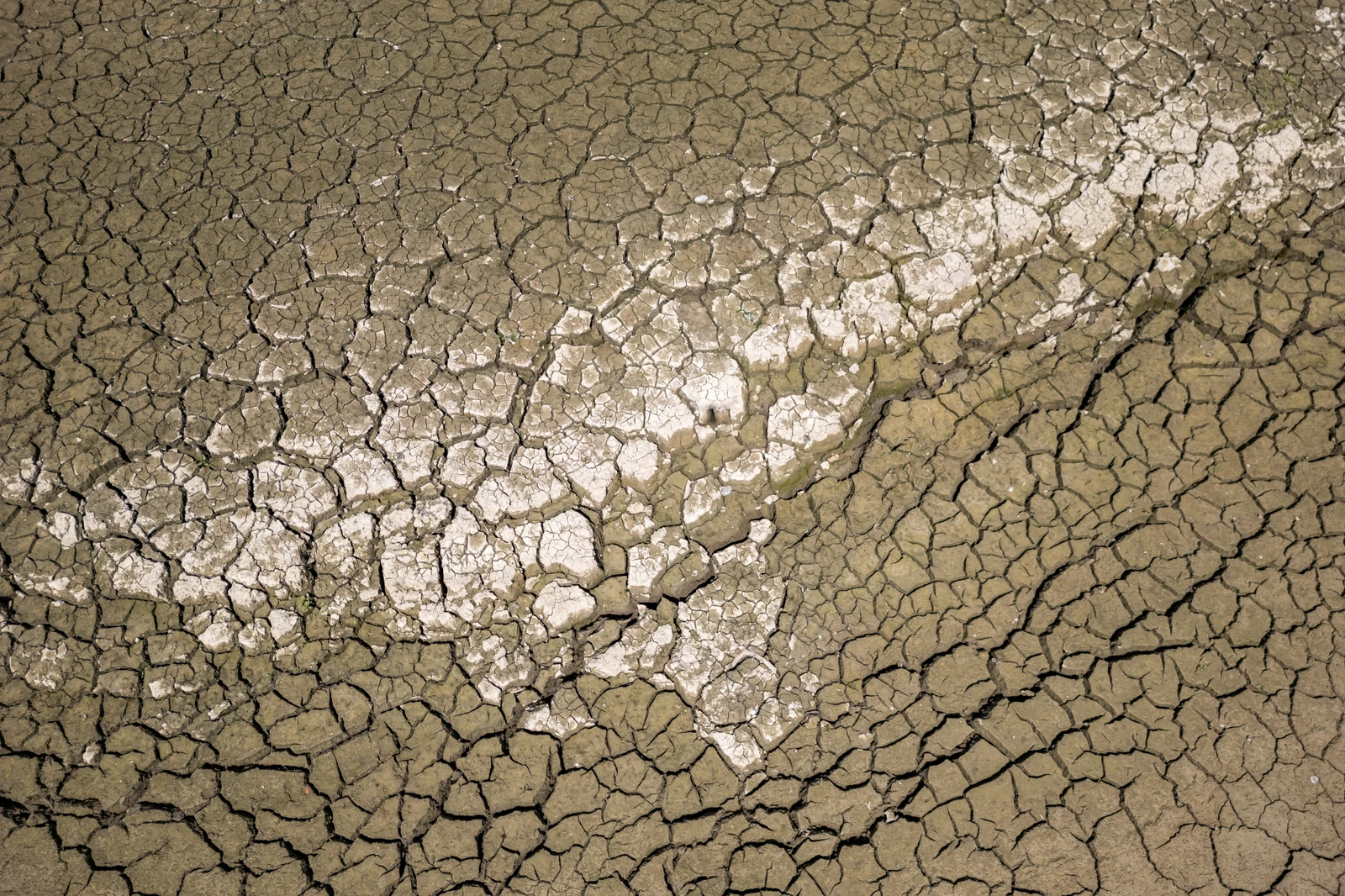
But Europe’s soil is dying. According to the European Commission, an estimated 60 percent to 70 percent of EU soils are unhealthy and their degradation costs the economy more than €50 billion ($57 billion) annually. Given that it can take up to a thousand years for a few centimeters of fertile topsoil to form, continuing down this path could have severe consequences.
The problem is that what is not counted cannot be protected — and policymakers rarely price the value of healthy soil. When a country’s soil ecosystem collapses, its gross domestic product barely moves, although it is undoubtedly poorer. Europe, in particular, knows the risks of unaccounted-for dependencies: after gas supplies from Russia were cut following the Kremlin’s full-scale invasion of Ukraine, European governments had to allocate roughly €500 billion to shield their citizens and industries from soaring energy prices.
When a country’s soil ecosystem collapses, its gross domestic product barely moves, although it is undoubtedly poorer
Adrien Geiger, Brune Poirson and Bertrand Badré
The degradation of soil is different because it is a gradual process for which we are wholly responsible. Because this is not a case of a foreign adversary deciding overnight to withhold a critical input, policymakers often fail to recognize that healthy soil builds robustness — the ability to continue functioning in the face of perturbations.
Encouragingly, the EU has many of the tools it needs to act. The Soil Monitoring Law, in force since last December, sets out a common framework for assessing carbon content, erosion, biological activity and the capacity to retain and infiltrate water. A 2024 regulation requires member states to compile accounts for seven specific ecosystem services (although the services provided by soil, chief among them water retention, remain marginal). And in July, the European Commission adopted certification methodologies that will help farmers access financial rewards for measurable soil outcomes.
What the bloc lacks, however, is an overarching plan for connecting these measures and turning healthy soil into an advantage for those who maintain it. The Common Agricultural Policy pays for sustainable practices but not for verifiable improvements in soil health and water retention. The European Commission has an opportunity to change that with its framework for European climate resilience and risk management, expected later this year.
As business leaders, investors and advisers across these value chains, we believe that the framework, which aims to make resilience a guiding principle for investment, should include three commitments.
Dead soil leads to lower yields, higher food prices and greater exposure to drought and flooding, all of which are expensive
Adrien Geiger, Brune Poirson and Bertrand Badré
For starters, it should expand mandatory ecosystem accounting to the services provided by healthy soil, starting with water retention, and call for their inclusion in national economic accounts. It should also extend outcome-based rewards beyond carbon to soil health and water retention, so that farmers and land managers can gain from measurable results. Lastly, it should ensure that these indicators guide public support and investment decisions, just as carbon metrics do today.
Some will argue that Europe cannot afford these commitments. Quite the contrary: dead soil leads to lower yields, higher food prices and greater exposure to drought and flooding, all of which are expensive. Worse, this form of fragility is a regressive hidden tax. To prevent the people with the least from being squeezed by higher food prices and subject to intensifying climate disasters, we must abandon the fiction that degrading soil has no real costs.
Europe is not alone. In August, the 17th Conference of the Parties to the UN Convention to Combat Desertification convened in Ulaanbaatar, Mongolia, with a focus on restoring degraded land. While governments agreed to mobilize new funding initiatives for land restoration and drought resilience, they failed to reach a binding global framework on drought, underscoring the persistent gap between scientific urgency and political action. But there is still hope. Many countries in the Global South, especially producers of coffee, cocoa and fruit, have begun to treat soil health as a strategic asset.
Despite this progress, efforts on soil degradation remain fragmented. Europe should promote a soil alliance, backed by governments that agree on the importance of measurement and the need for rules that reward soil restoration. It should also pursue this agenda at October’s UN Biodiversity Conference in Yerevan, Armenia, and November’s UN Climate Change Conference in Antalya, Turkiye, and make it a cornerstone of its new resilience framework.
As the French poet Rene Char wrote, “Our inheritance was left to us by no testament.” Soil passes from one generation to the next and yet it does not appear in our economic accounts. Instead, for decades, Europe has counted only what it produces, not what it possesses. Unless and until that changes, the slow death of the continent’s soil will continue.
Adrien Geiger is CEO of L’Occitane en Provence.
Brune Poirson, a former French secretary of state to the Minister for the Ecological and Inclusive Transition, is the founder of Udaan Advisory.
Bertrand Badré, a former managing director and CFO of the World Bank, is Chair of the Project Syndicate Advisory Board, Founder and Managing Partner of Blue like an Orange Sustainable Capital, and the author of “Can Finance Save the World?” (Berrett-Koehler, 2018).
Copyright: Project Syndicate


