
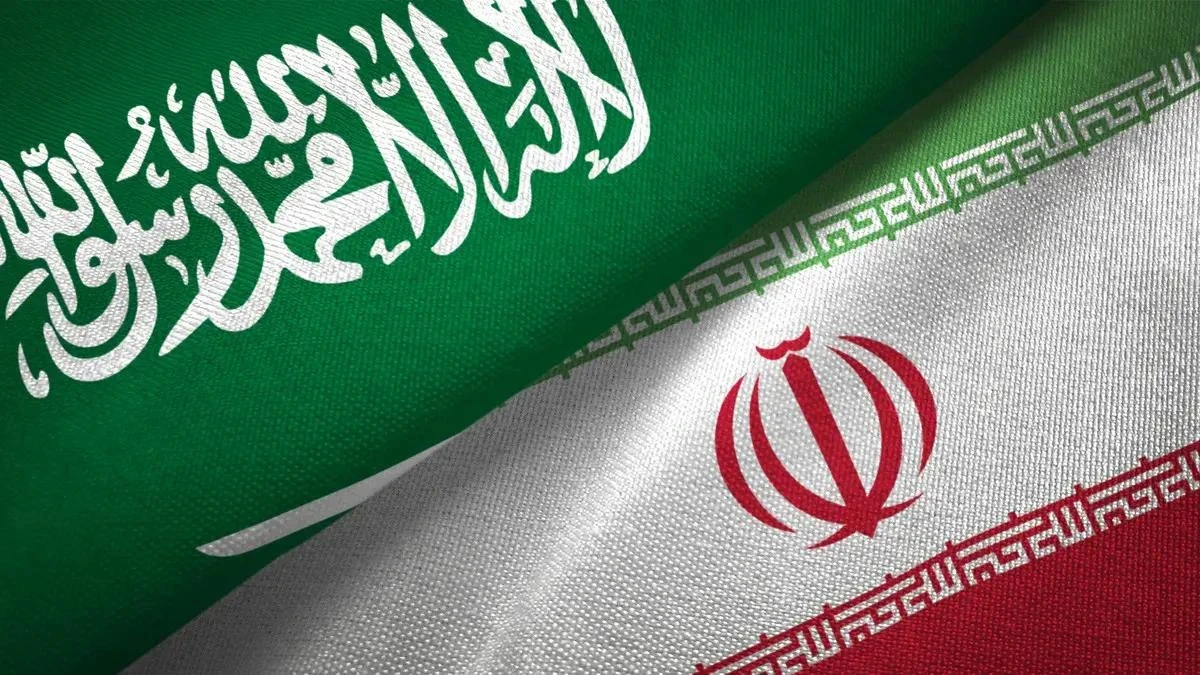

In the midst of the current war, a question is frequently raised as to why Iran — a country with fewer financial resources and that is under siege — is more capable of fighting than Gulf states like Saudi Arabia and whether there is something amiss behind that. This conclusion — that Iran represents a model of “superiority” — has been repeated for many years due to the supposed military victories it has achieved against more than half the region’s countries, not just Israel.
Partially, this is true. Iran is a dangerous regional power. Over the past 30 years, the reach of its influence and militias to the borders of the Mediterranean Sea and the Red Sea, as well as its hegemony over Lebanon, Syria, Iraq and Yemen, have demonstrated that it is an offensive power that has surpassed the influence of both Nasserite Egypt and Saddam Hussein’s Baathist Iraq at the peak of their powers.
Saudi Arabia and Iran are two major oil-producing nations but they have chosen two different paths to build power. Each country has a different vision for success: Saudi Arabia primarily invests in the strength of its economy and the state, while Iran has primarily invested in the power of weapons and external influence.
Saudi Arabia and Iran are two major oil-producing nations but they have chosen two different paths to build power
Abdulrahman Al-Rashed
Saudi Arabia views a superior economy, advanced infrastructure, modern cities and global investments as the sources of a state’s strength. Iran, on the other hand, finds its definition of success and power exclusively in the military sphere, comprising missiles, drones, a nuclear program and the recruitment of tens of thousands of Afghans, Iraqis, Lebanese and Yemenis as a massive proxy army that it trains, finances and directs to serve its strategy and fight for its ambitious expansion.
At a time when Saudi Arabia hosts Yemenis and provides them with economic and humanitarian support, Iran recruits tens of thousands of impoverished Yemenis and uses them to fight on its behalf, as it did with the Zainabiyoun, Fatemiyoun, Hezbollah, Asa’ib Ahl Al-Haq and the rest of its militias in the region and its allies in Africa. It recruited them for military purposes, exploiting the wretched humanitarian conditions in which they live.
In contrast, Saudi Arabia has absorbed more than 10 million people who came from such countries to support their families, improve their incomes and participate in development.
Just as Saudi Arabia builds giant railway and metro networks between its regions and cities, Iran digs trenches and carves through mountains to build and store its regionally directed weapons. And while Saudi Arabia boasts of its products — most recently this week, its Ceer electric vehicles — Iran proudly announced a new military drone carrier, named Shahid Bagheri, a former commercial ship it converted into a platform for transporting and operating combat drones.
Saudi Arabia is a massive economic power, while Iran is a major offensive power. This does not diminish Saudi defensive strength, as it possesses a superior combat air force; however, it has not transformed this into an aggressive political project. Saudi Arabia’s foreign projects are economic, whereas Iran’s are military, having spent billions of dollars on the Lebanese Hezbollah over four decades while its own population suffers from poverty and a deteriorating currency, which has plummeted to 2 million tomans to the US dollar.
In the past few years, discussions and efforts in Riyadh have centered on how to safeguard the economy in the post-oil phase. There is no doubt that the steps Saudi Arabia has taken since 2015 are what are today protecting it from the collapse of oil revenues caused by the war.
Saudi Arabia is one of the world’s largest defense spenders but this spending is part of a broader state project
Abdulrahman Al-Rashed
In Iran, however, the question and the thinking have remained the same since the 1990s: how to build greater power, expand influence even further across the region and harness all of the country’s capabilities solely for war.
The truth is that the Iranian model is not new to the region — it is an imitation of what Saddam began. He inspired the Tehran regime to make the military project the focal point, with all state capabilities serving it rather than the reverse. Saddam succeeded in achieving missile capabilities and a million-man army, fought Iran fiercely for eight years, threatened Syria, invaded Kuwait and threatened Saudi Arabia, only to be destroyed after his invasion of Kuwait.
Saudi Arabia is one of the world’s largest defense spenders but this spending is part of a broader state project whose goal is to protect the economy, facilities and cities, rather than expansion, occupation and a sense of excessive power.
Iran’s declared military spending may appear significantly lower but a numerical comparison is misleading due to the low production costs and wages in Iran, the multiple funding channels for the Revolutionary Guard, proxy funding, and a lack of budget transparency. Iran spends most of its revenue on the war machine and neglects other sectors.
The truth lies not in the budget difference between the two neighboring countries but rather in how it is spent. Saudi resources go toward tourism, mining, energy, industry, technology, sports and aviation, while a larger portion of Iran’s resources goes to the Revolutionary Guard, enrichment, missiles, drones and armed groups outside its borders.
It is not difficult to know which is stronger as a state, rather than as an aggressive power. Most of Saudi Arabia’s activities involve building new companies and projects, such as Riyadh Air, the Red Sea projects, Diriyah, Qiddiya and AlUla, alongside expanding into mining, renewable energy, hydrogen and technological industries.
Meanwhile, the focus of Iranian spending is on projects such as developing its nuclear program, which was the largest project in the country’s history and was destroyed in June 2025.
We must not mistake the true meaning of power and success for today and in the future. All countries that have exclusively adopted the project of an aggressive military state have ended up in weakness or destruction and Iran today is a striking example, preceded by Cuba. There is also North Korea, a fearsome military power that is, at the same time, considered one of the poorest and worst-off countries in its region.
There is no doubt that the war involving Iran, Iraq and Yemen prompts Saudi Arabia to accord greater attention to its defensive capabilities, unless the region awakens to a change that brings an end to its tension and wars.
The final question remains: Why does Saudi Arabia not want a major war with Iran? I believe the reason is clear. Riyadh has an interest in peace and understandings because it has built economic assets and a great infrastructure and it will not enter a war unless forced to do so. As for Iran, it has nothing to fear — its assets are military and it has hidden them securely underground.
Abdulrahman Al-Rashed is a Saudi journalist and intellectual. He is the former general manager of Al Arabiya news channel and former editor-in-chief of Asharq Al-Awsat, where this article was originally published.
X: @aalrashed


