
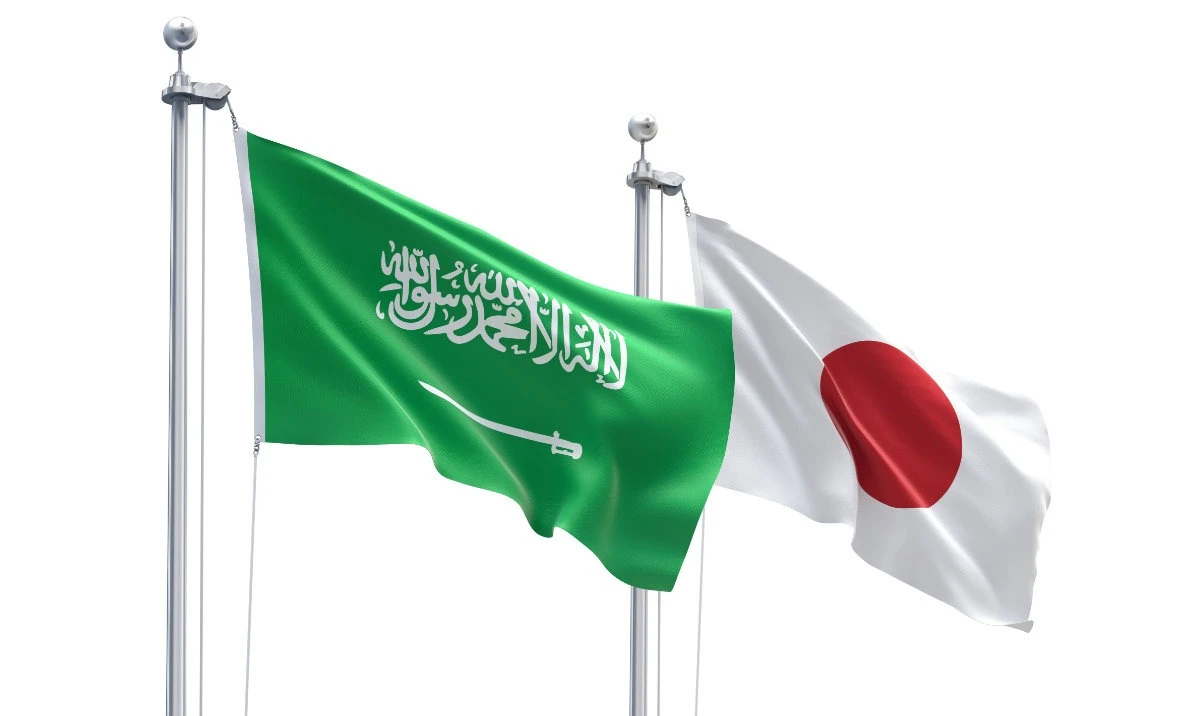

On the occasion of the 96th Saudi National Day, I extend my warmest congratulations to King Salman, Crown Prince Mohammed bin Salman and the government and people of the Kingdom.
Saudi National Day commemorates the historic unification of the Kingdom by King Abdulaziz and invites us to reflect on how the country has continued to renew itself while remaining firmly rooted in its history, identity and traditions.
Under the leadership of King Salman and the crown prince, Saudi Arabia is undertaking one of the world’s most ambitious economic and social transformations. The achievements of Vision 2030 testify to the Saudi people’s determination to build a more diversified, innovative and globally connected economy.
My own engagement with Saudi Arabia began early in my public service. In 1985, I joined Japan’s Ministry of International Trade and Industry, now the Ministry of Economy, Trade and Industry, and was assigned to the Petroleum Department of the Agency for Natural Resources and Energy. Through my work on energy and Middle East policy, I came to recognize Saudi Arabia as one of Japan’s most important partners in securing a stable energy supply. That conviction has only deepened over the decades.
As a former minister of economy, trade and industry, and now as chairman of the Japan-Saudi Arabia Parliamentary Friendship League, I have witnessed the steady development of relations between our countries. Since establishing diplomatic relations in 1955, Japan and Saudi Arabia have built a partnership founded on mutual respect, trust and economic complementarity. Saudi Arabia has been an indispensable and reliable supplier of energy to Japan, while Japanese companies have contributed significantly to the Kingdom’s industrial and economic development.
Yet Saudi Arabia’s importance to Japan today extends far beyond oil.
For Japan, closer relations with Saudi Arabia offer more than economic benefits. They also create valuable connections
Yasutoshi Nishimura
The Kingdom has cultivated substantial political, economic and security relationships with the US, China, Russia, India, Pakistan, Turkiye and the countries of Central Asia and Africa, as well as nations across the Arab and Islamic worlds. While maintaining its long-standing security partnership with the US, Saudi Arabia has expanded its engagement with diverse global and regional powers. Its ability to sustain dialogue across political and geographic divides has made it an important strategic hub in the emerging multipolar order.
For Japan, closer relations with Saudi Arabia therefore offer more than bilateral economic benefits. They also create valuable connections with the wider Middle East, Africa, Central Asia and the Islamic world. Saudi Arabia’s diplomatic influence, investment capacity, strategic location and growing role as a voice of the Global South give it a distinctive ability to connect regions that are increasingly important to the global economy.
Energy security will remain a foundation of our relationship. Recent instability in the Middle East and disruptions affecting shipping through the Strait of Hormuz and the Bab Al-Mandab Strait have reminded us that energy security depends not only on production capacity but also on secure transport routes, adequate storage and resilient supply chains.
The Saudi East-West Pipeline and the port of Yanbu on the Red Sea are strategic assets of global importance. Together with routes through the UAE and other regional infrastructure, they offer alternatives for transporting crude oil without passing through the Strait of Hormuz. Yet pipeline capacity alone is not enough: ports, sea lanes and onward routes must also be secure. Japan should work with Saudi Arabia and other regional partners on contingency planning, strategic stockpiles, diversified routes, maritime security and resilient energy infrastructure.
Our energy partnership must also evolve. Japan and Saudi Arabia should deepen cooperation in hydrogen, ammonia, carbon capture and storage, energy efficiency, renewable energy, civil nuclear power and other advanced technologies. By combining Saudi Arabia’s energy resources, investment capacity and ambition with Japan’s industrial expertise, technological strengths and experience in resilient supply chains, our countries can help shape a more secure and sustainable energy future.
The next stage of our partnership must extend further. Vision 2030 is creating opportunities in advanced manufacturing, artificial intelligence, digital infrastructure, healthcare, water management, mobility, logistics, tourism, entertainment and sport. Saudi Arabia displayed these bright possibilities to Japan and the world at Expo 2025 Osaka, Kansai. The Saudi Pavilion’s Gold Award for architecture and landscape design and the popularity of Irth restaurant, which introduced visitors to the cuisines of the Kingdom’s 13 regions, vividly expressed Saudi creativity, cultural richness and openness to the world.
Political dialogue should be supported by clearly defined initiatives advancing the interests of both countries
Yasutoshi Nishimura
Japanese businesses possess valuable technologies and experience in many of these fields. Their participation in the Kingdom’s transformation, however, cannot rest solely on exporting products or waiting for individual investment opportunities. Japanese companies and institutions must engage more actively in Saudi Arabia, develop projects aligned with Saudi priorities, invest in local talent and help create industries and employment within the Kingdom.
Our two countries should also pursue joint projects in third countries. Combining Japanese technology and project management expertise with Saudi financial capacity, regional knowledge and international networks would promote development and economic resilience across Asia, Africa and the wider Islamic world. Such cooperation would take our relationship beyond the traditional buyer-seller model toward a genuine partnership of co-creation.
The same principle applies to political relations. Goodwill and historical friendship remain deeply valued in Saudi Arabia but must be accompanied by concrete, mutually beneficial proposals. Political dialogue should be supported by clearly defined initiatives advancing the interests of both countries.
The Japan-Saudi Vision 2030 framework and the Strategic Partnership Council provide strong foundations. We should build on them through regular high-level exchanges, parliamentary dialogue and closer cooperation among government, business, universities and research institutions. We must also invest in the next generation. Wider exchanges among students, researchers, entrepreneurs, engineers and emerging political leaders will foster lasting human ties and ensure that our partnership extends beyond governments and major corporations.
The 10th Future Investment Initiative, to be held in Riyadh next month under the theme “The Power of Legacy,” will offer another opportunity for leaders, investors and innovators to consider how today’s decisions can create prosperity for future generations. The theme is especially fitting in the year of Saudi Arabia’s 96th National Day. Legacy is not only what we inherit from the past; it is also what we choose to build for those who will follow us.
Japan must now decide whether it wishes to remain primarily a customer of Saudi energy or to become a comprehensive strategic partner in shaping the future. I believe the answer is clear. Saudi Arabia should be regarded not simply as an oil-exporting country but as a long-term strategic partner for Japan — in energy security, investment and industrial development; in AI and advanced technologies; in logistics, defense and security; and in wider international diplomacy.
On this Saudi National Day, I renew my commitment to strengthening the friendship between our peoples and advancing a more ambitious, resilient and mutually beneficial partnership between Japan and Saudi Arabia. Together, our countries can build on more than seven decades of trust and open a new chapter of cooperation — one that contributes not only to our prosperity but also to the stability and development of the wider international community.
Yasutoshi Nishimura, former Minister of Economy, Trade and Industry of Japan, is the Chairman of the Japan-Saudi Arabia Parliamentary Friendship League.


