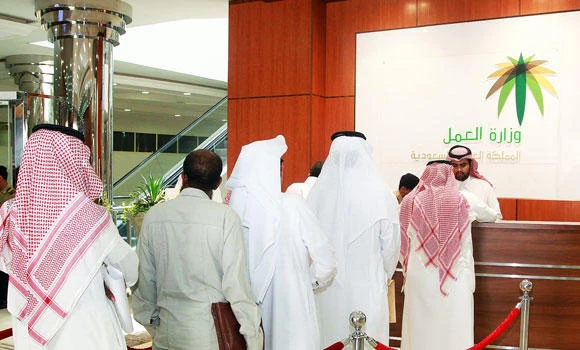
Ten percent of Saudi beneficiaries of the Hafiz program are currently employed in the real estate, contracting and private property management sector, revealed experts.
The Ministry of Labor is working on a plan to employ most beneficiaries, particularly women, in various private sector jobs, including construction, real estate, accounting and design, they said recently.
The largest barrier facing Saudi women is a lack of cheap and safe public transport. Most are willing to take on jobs in all fields, provided working conditions are safe and appropriate, the experts said.
Statistics reveal that there are 203,000 men and nearly 1.8 million female applicants for Hafiz assistance. So far, only 415,000 women have been employed.
“The number of women working in the construction sector has increased over the past few years. It is likely to rise even more if appropriate means of public transport is provided because taxis and rental cars are too costly,” said Abdullah Al-Maghlouth, a member of the national committee for contractors at the Council of Saudi Chambers (CSC). He said women are not only employees in the sector, but many also own companies and have a record of involvement in commercial activities across the country.
According to Faisal Ibrahim Al-Aqeel, director of business development at Construction Products Holding Company, there are many female university graduates with degrees required in the construction and contacting sector, such as architecture, electrical engineering and mechanical engineering.
Lama Al-Suleiman, a board member of the Jeddah Chamber of Commerce and Industry, said women need appropriate working conditions to facilitate their employment in these sectors.
She said many Saudi women have already invested their funds abroad, especially in construction and real estate. More emphasis should be placed on providing jobs locally for young graduates with degrees in these fields, she said.
Abdullah Radwan, a member of the CSC’s national committee for contractors, said the regulations do not differentiate between the employment of men and women in these sectors. He said many female graduates with degrees in architecture have taken an interest in working in contracting and design, despite the fact that these sectors are dominated by men. He said women are just as likely as men to succeed and improve these industries.
10% of Hafiz beneficiaries employed in property sector