- The event has drawn more than 3,000 participants from 55 countries, showcasing 1,200 projects and solutions across fields ranging from AI and cybersecurity to space, aviation and health technologies.
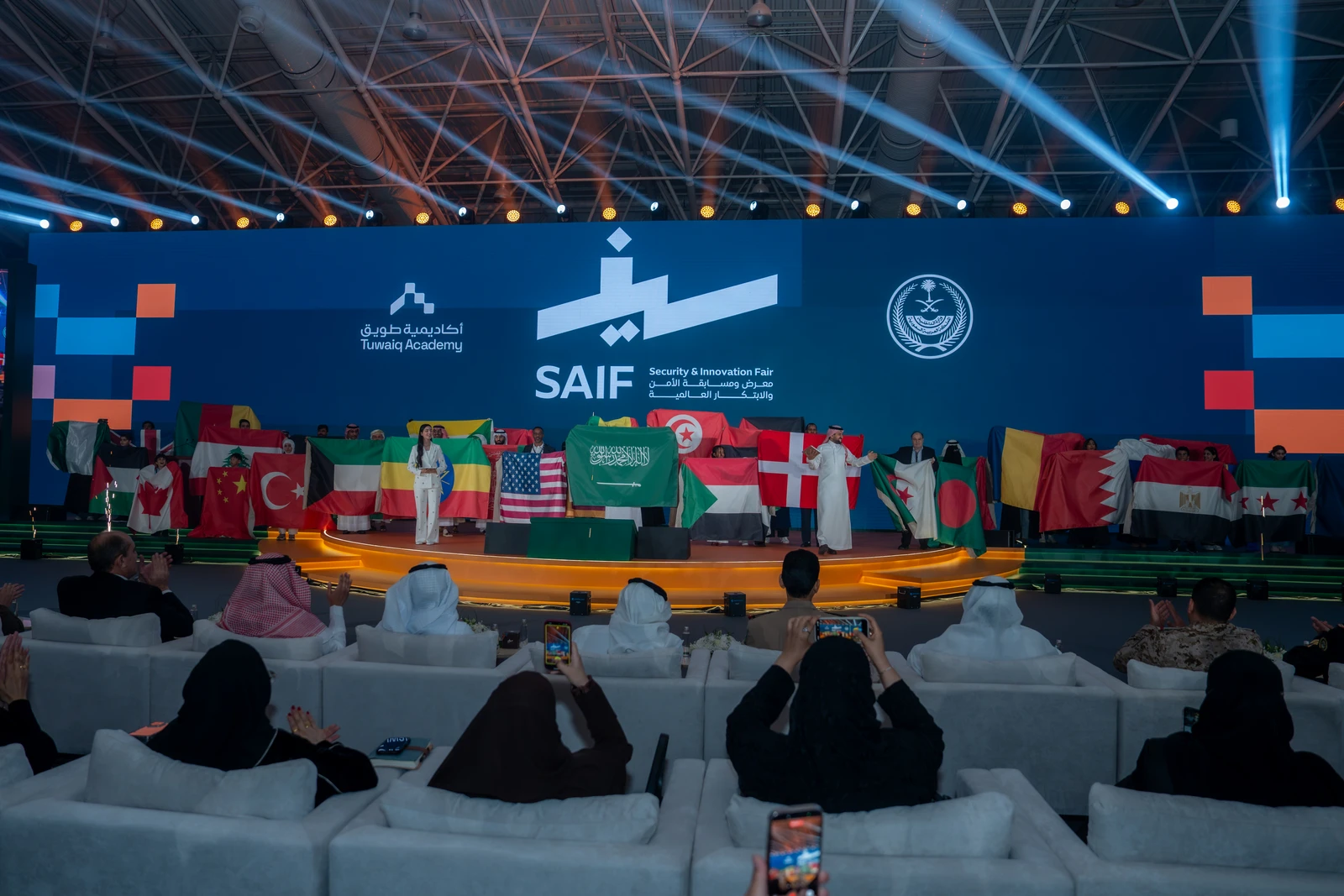
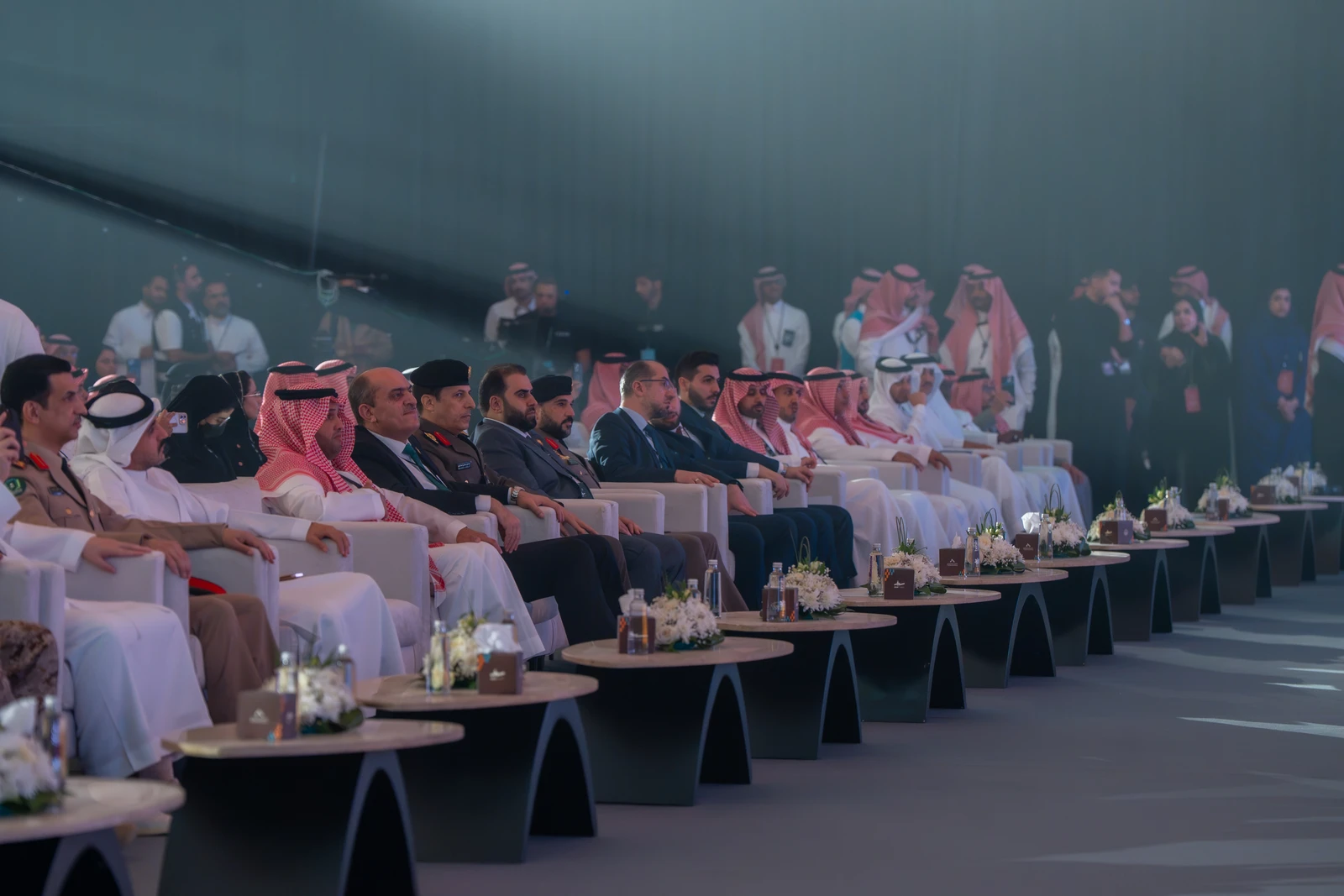
RIYADH: From artificial intelligence-powered environmental monitoring tools to smart systems designed to protect critical infrastructure, thousands of innovators gathered in Riyadh on Monday as the SAIF International Security and Innovation Exhibition and Competition opened its doors.
Held as part of the Global Security & Technology Summit, the event has drawn more than 3,000 participants from 55 countries, showcasing 1,200 projects and solutions across fields ranging from AI and cybersecurity to space, aviation and health technologies.
Running through Nov. 26, SAIF features workshops, interactive exhibits and a competition that organizers say has attracted far more interest than initially anticipated.
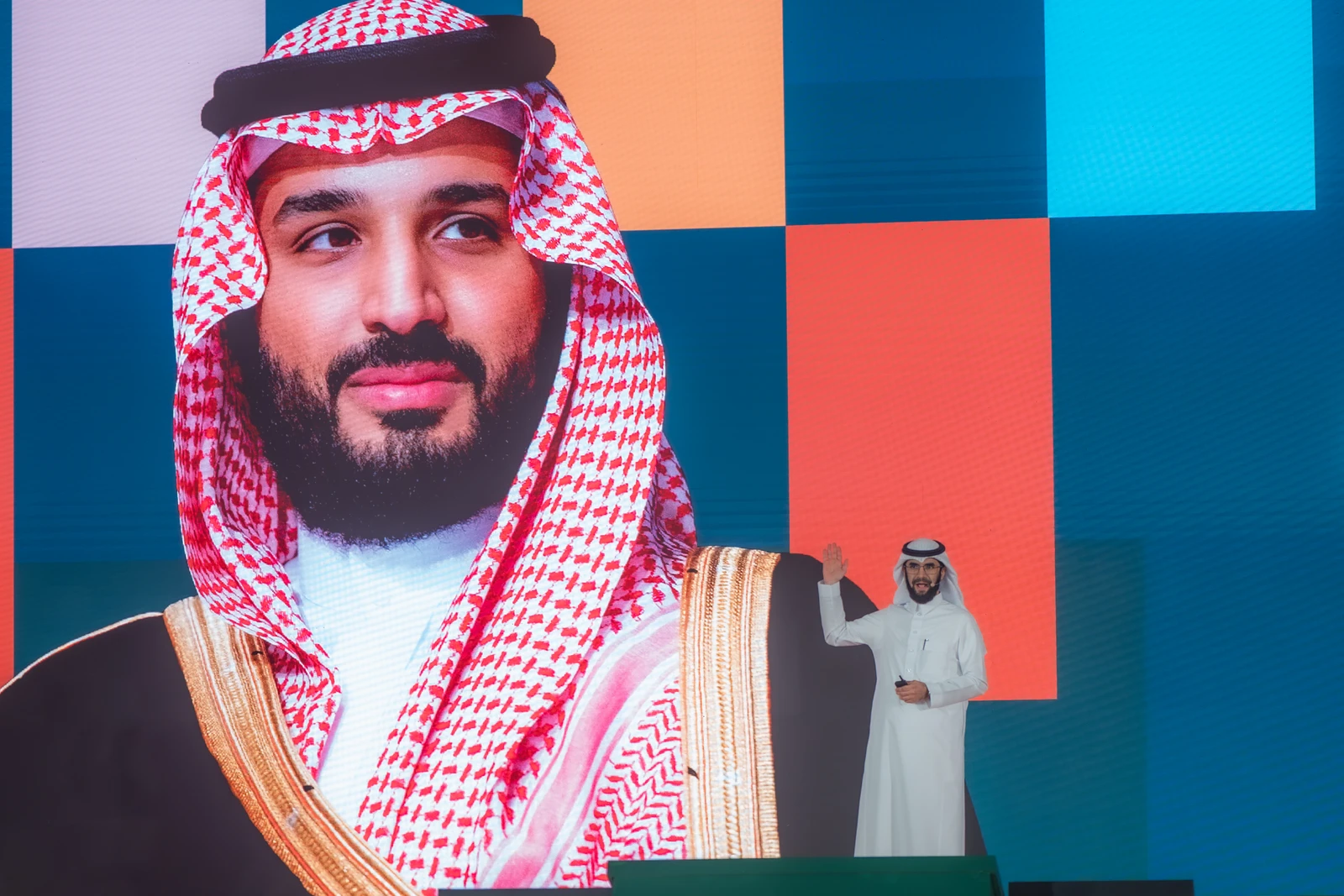
“We expected limited numbers,” Abdulaziz Alhammadi, CEO of Tuwaiq Academy and vice chairman of the summit’s organizing committee, said during the opening ceremony.
“Within a short time, we had more than 120,000 registrants wishing to take part in this competition, representing more than 30,000 innovative projects,” he said.
The opening marked the start of final judging, capping months of evaluation by more than 300 judges who collectively spent more than 50,000 hours assessing submissions.
For Alhammadi, one of the event’s most striking achievements is its international reach.
“International competitions usually begin with five, six or seven countries,” he said. “This first edition has attracted 55 countries.”
The exhibition floor reflects that global participation, with students, researchers and entrepreneurs presenting solutions aimed at tackling some of the world's most pressing challenges.
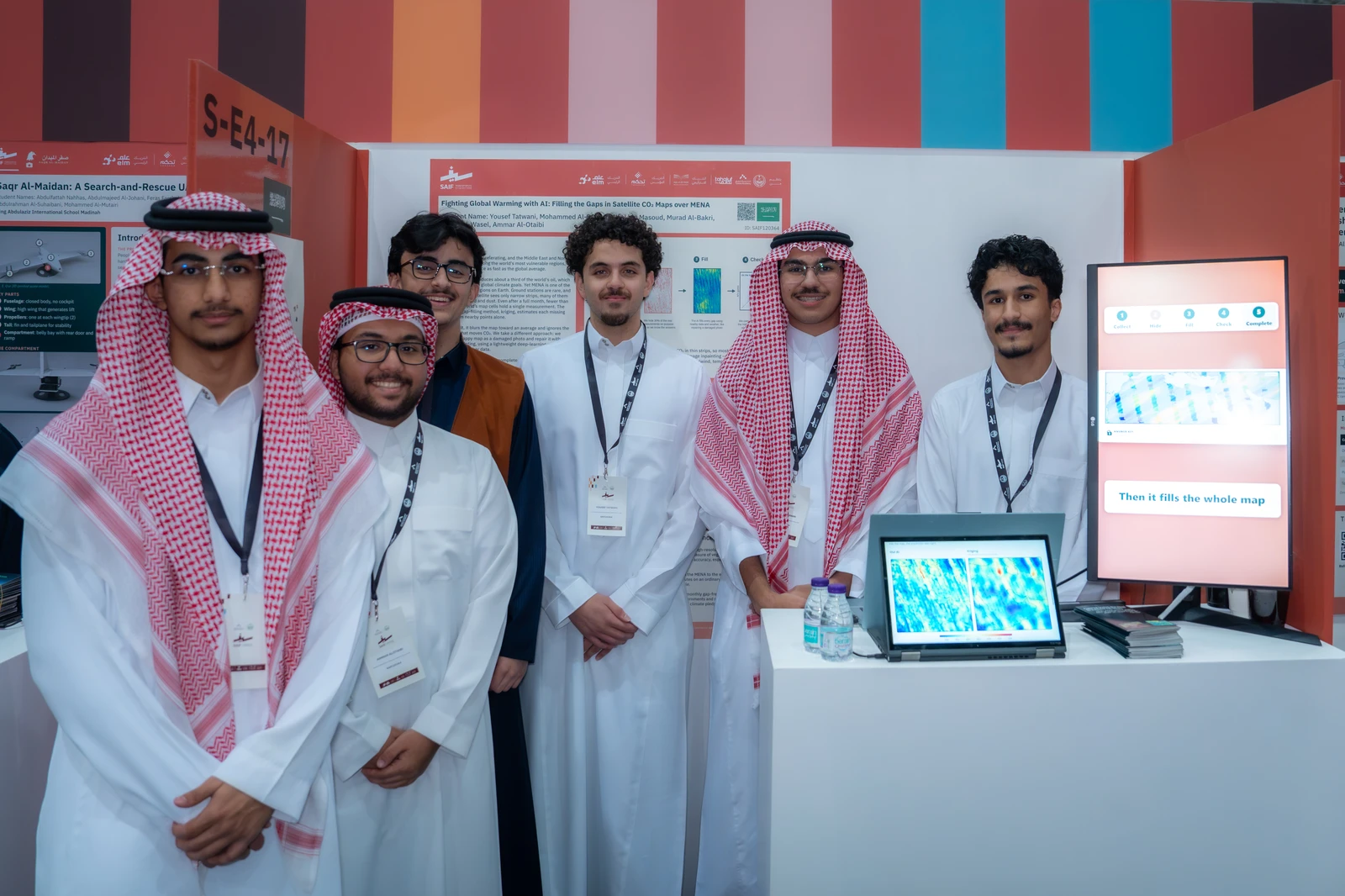
Among them is a team of Saudi high school students using AI to fill a major environmental data gap in the MENA region.
Their project uses image inpainting, a technique that reconstructs missing visual data, to create more comprehensive maps of carbon dioxide concentrations across the region.
“The MENA region is warming two to three times faster, and it is one of the most under-observed regions around the world,” said team member Yousef Tariq Tatwani in Grade 12, Riyadh Najed Schools.
“To actually address a problem, we need to know where it is,” he said, explaining that the tool could help policymakers and environmental researchers identify emission hotspots more accurately.
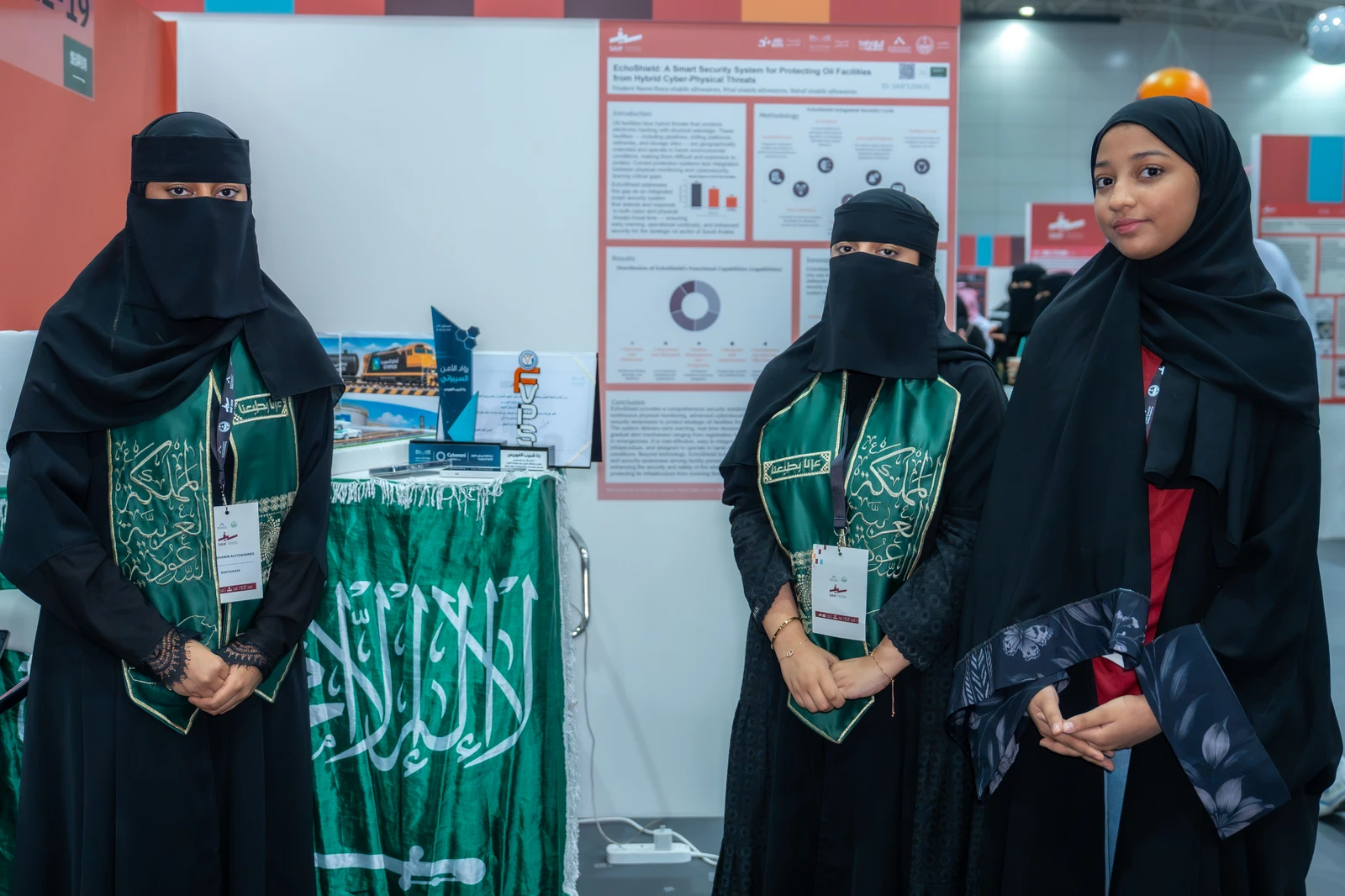
A few stands away, three Saudi sisters are presenting EchoShield, a prototype security platform designed to help protect oil and gas facilities from a wide range of threats, including cyberattacks, fires and hazardous leaks.
“Traditional security systems may not detect all these threats quickly,” said Rana Shabib Alfowaires in Grade 12, Future Vision Private School.
The system combines information from sensors monitoring temperature, pressure and gas levels, then uses AI to identify anomalies and alert operators before incidents escalate.
The idea grew out of a classroom project, according to her sister Rital Shabib Alfowaires, and was later refined with guidance from their father, an engineer at Aramco.
For competition judge Aiyoub Aldhalea, the projects that stand out are not necessarily the most complex.
“The uniqueness of the solution and how easy it is to execute it in each market” are among the most important factors winning projects share, he said.
Throughout the exhibition, organizers have emphasized that SAIF is intended to be more than a competition. Alhammadi encouraged participants to see it as a platform for collaboration and the exchange of ideas across borders.
“Every idea you share today could, God willing, be the start of a solution for the world,” he told competitors.
Whatever the outcome, he added, the most lasting rewards may be the connections formed between innovators tackling common challenges from different parts of the world.
The event’s partners include the Ministry of Education, Tahakom, Elm and the International Federation of Inventors’ Association.