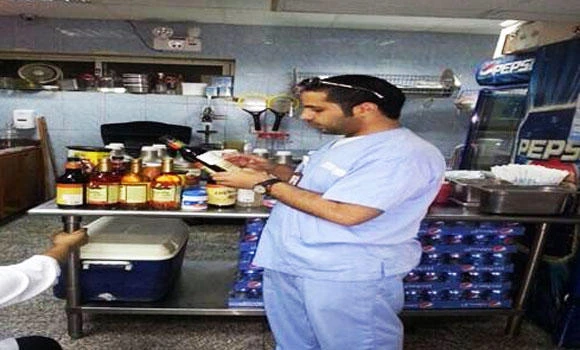
An estimated 20,000 workers have been referred for medical examinations after being suspected of suffering from infectious and epidemic diseases during an inspection round on more than 80,000 restaurants and big and small-sized fast food outlets across the country.
The Riyadh region ranked first, with more than 6,500 foreign workers being referred for examination, according to a recent annual report issued by the Ministry of Municipal and Rural Affairs.
Qassim ranked second, with more than 2,800 workers being referred, followed by Madinah, with 2,000 suspected cases, Jazan 1,400, and the Eastern Province 1,370 workers.
Around 43,000 violations were recorded during these inspection tours, while more than 66,500 health certificates were granted to establishments that met standards.
Municipalities across the Kingdom have deployed state-of-the-art health monitoring technologies, with great emphasis on systematic due diligence toward implementing sound manufacturing practices in food processing and farming.
It also seeks to apply strict health controls on the food production chain inside the various food processing facilities regardless of their size.
Government agencies are also intensifying their efforts and performances in the field to detect violators and impose sanctions on the violators.
These aagencies have appealed to citizens and residents to cooperate via open channels, either through the Ministry of Municipal and Rural Affairs or the Ministry of Commerce and Industry websites in order to expose irregularities.
Last year, Saudi markets dumped more than 426,000 kilograms of perished food items, more than 74,629 beverages and 91,120 canned foods.
Perished items include flour and its derivatives, types of meat, fish, poultry, vegetables, fruit, dairy products, eggs, oils, juices, marmalades, candy, tea and coffee, spices and other items.
According to a report issued by the Ministry of Municipal and Rural Affairs, Riyadh also had the most food items confiscated from its local markets.
More than 128,000 kilograms of food and beverages were removed from the region.
Asir came second, with more 68,000 kilograms of food destroyed, and Hail third, with more than 66,000 kilograms worth of food that is unfit for consumption.
20,000 workers referred for medical examinations