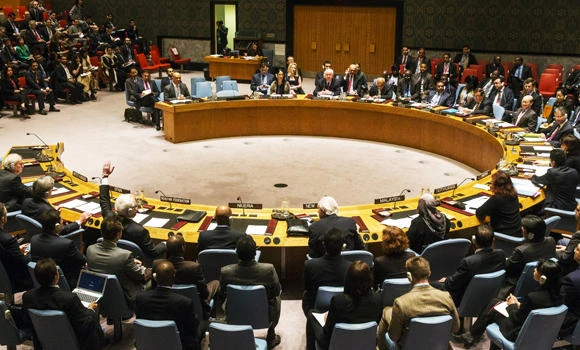
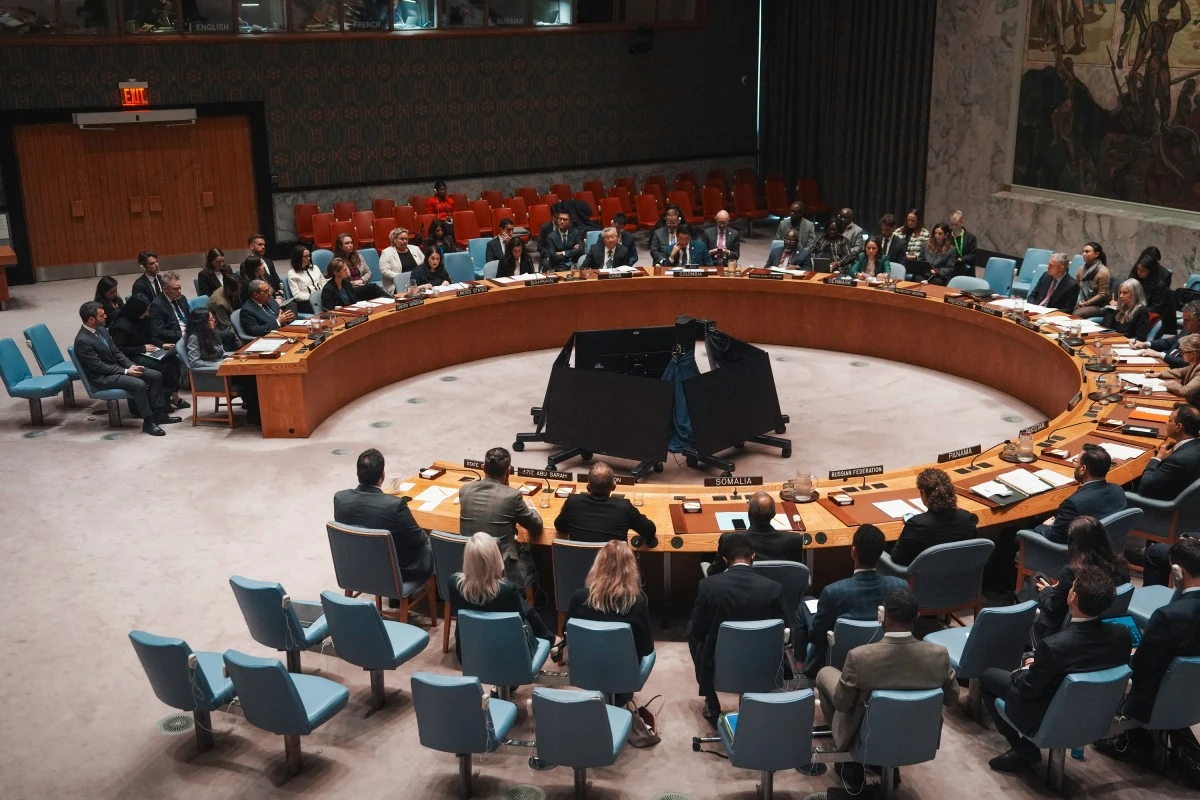
Academics and political scientists have acknowledged the skill of Gulf Cooperation Council countries in chalking out the most appropriate political strategies especially after the Arab coalition’s success with the UN Security Council's recent adoption of Resolution 2216 supporting the return of the legitimate President Abed Rabbo Mansour Hadi to Yemen with an overwhelming majority.
Academics said in a statement to the Saudi Press Agency that "Decisive Storm" received backing from Muslims and Arabs to rescue the Yemeni people suffocating under the Houthi militias and their cohorts the moment it was launched.
A former member of the Shoura Council and professor at the mass media department of King Saud University, Ali Al-Anazi, said the political horizon of the Houthi militias and forces loyal to ousted President Ali Abdullah Saleh began shrinking after the adoption of the UN resolution, which authorized the Arab coalition to inspect ships and aircraft suspected of ferrying weapons to the rebels.
''The Arab countries under the leadership of Saudi Arabia have displayed their political acumen in forging an alliance and winning international, regional and local support, in addition to the support of the United Nations Security Council with the diplomatic efforts of Saudi Arabia and other Arab countries,'' Al-Anazi said.
The political scientist pointed out that the UN resolution is bound to make a significant impact on the current course of events not only in Yemen, but also on the remaining Arab issues. It also reveals the weight of the Kingdom in the region and its role in resolving the pending issues in the Arab world.
Associate Professor at the Department of Political Science at King Saud University Muhammad Ahmed believes that Decisive Storm has proved the ability of joint Arab forces to preserve and protect the security of Arab states. The operation has been effective in restricting the expansion of the Iran-backed Houthis.
A researcher at Naif Arab Security Sciences University, Yahya Al-Zahrani, said Decisive Storm also proved to the world that the Kingdom has the military power and the diplomatic expertise for crisis management in addition to the capacity for ground management and relief operations.
Professor at the Faculty of Law and Political Science at King Saud University Serhan Al-Otaibi, said: "UN Security Council Resolution 2216 gives the coalition forces tacit approval to carry out air and sea blockades, and conduct more strikes to weaken the Houthis and their associates and prevent them from acquiring weapons."
Academics hail UN resolution