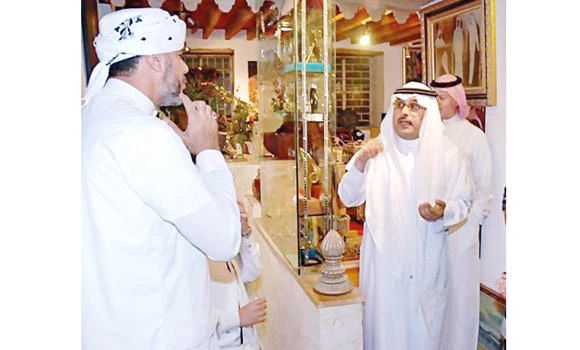
Prominent Jeddah personalities, activists and historians participated in a forum Saturday to discuss future prospects for heritage preservation following the end of the Jeddah Historic Area Festival, which lasted for 10 days in January.
The forum was organized by “The Heart of Jeddah” group.
Sami Angawi, a prominent architect and a staunch advocate of heritage preservation, stressed the need for enhanced cooperation between different government bodies in order to maintain historic Jeddah.
Angawi said that he had spent around SR1.2 million to repair a house worth SR600,000, only to have the renovation efforts stopped by the Endowments Committee, who have since raised rent prices.
Tareq Al-Garni, the head of the Historic Jeddah Municipality, said that some SR50 million has been allocated to house owners annually for renovating heritage houses within a five-year plan. The amount has been criticized by some as being insufficient.
Jamal Borhan, a journalist and social activist, said that 75 percent of houses in downtown Jeddah’s Al-Balad district were constructed through endowments, a source of pride for locals, but that many endowments and resources have dried up.
Borhan also expressed the local view that residents want the downtown area to be a vibrant neighborhood all year round and not just a venue for annual events.
Waleed Shalabi, another activist, said that the municipality and the Saudi Commission for Tourism and Antiquities (SCTA) have still not tackled the fate of many old houses in the area and that many endowments have been stalled, with no end in sight to the freeze.
Talal Samarkandi, a member of Saudi Council of Engineers, said that while the event boasted a huge turnout, the service sector failed to maintain the minimum standards required at such an important historic occasion.
Samarkandi also criticized the SR50 million annual allotment, saying it is insufficient and should be reviewed.
Whatever the views expressed at the forum, academics unanimously agreed that the downtown area is in dire need of tourist facilities such as cafes, restaurants and hotels if the area is to have any future as a major tourist attraction.
Atef Al-Shahrani, an engineer, branded the restoration works going on at the Shafie Mosque, one of the oldest mosques in Jeddah, a “massacre,” saying important historic features in the mosque’s architecture have been destroyed.
“Why do we have to put on an act for foreign delegations?” he said. “We pretend that the area enjoys regular trade activity and normal civil life, when it is, in fact, abandoned and empty all year round.”
Malak Ba Eissa, mayor of the Al-Sham and Al-Mazloom avenues, said that there is no exact figure on the number of families who still live in historic Jeddah, but that there are no families living in the old houses dotting the alleyways. “There are only poor women living in charity houses,” he said.
“The historic area has, unfortunately, turned into a stronghold of illegal expats. The ground levels of many old houses have been transformed into shops and the upper floors into storage areas for goods,” Ba Eissa said.
‘Al-Balad needs tourist facilities’