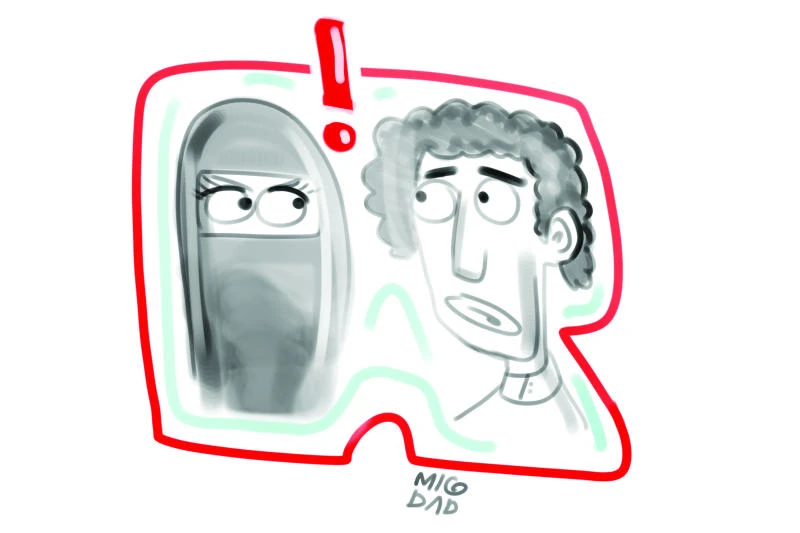
JEDDAH: National Family Safety Program member Abdul Rahman Al-Qarrash has called on the Shoura Council to enact a tough law against sexual harassment in view of rising incidence of such cases in the Kingdom.
“Society is grappling with the problem of harassment because of the lack of a deterrent law against offenders, in addition to poor awareness on the definition and nature of the crime,” he has been quoted by local media as saying.
Al-Qarrash said harassment can be committed anywhere — at public and workplaces, in streets, on transportation means, in schools and universities, restaurants, shopping centers and even in a house.
Some of the main reasons for harassment, he said, are absence of religious deterrents, lack of affection and emotions within the family, inappropriate upbringing, addiction to liquor or drugs or psychological or mental illnesses.
Harassment can also take place on the Internet via social media, he said. “Nowadays, with new media technologies, the absence or lack of censorship or education along with the absence of deterrent laws, cases of harassment are rising,” he said.
Al-Qarrash said all countries in the world — advanced, developed or undeveloped — have in place laws that criminalize sexual harassment. “Islamic laws and the Shariah strongly stress on the importance of self-purification as well as that of the community. Islamic laws intensively fight against all kind of vices, encouraging chastity and self-control.”
He stressed the role of society to stand firmly against such behavior, wondering why the Shoura Council did not enact a law against this repulsive and aggressive behavior, and seeking to know the role being played by civil society organizations in this regard.
Al-Qarrash said: "All ministerial bodies must join hands to establish a severe and deterrent law against harassers so that nobody has the courage to commit this shameful behavior, which is actually destroying the Saudi society at ethical, social and psychological levels."
He said: “From my point of view, we should make use of international laws in this regard in accordance with Islamic values and principles, as well as our traditions and customs.”
A recent study conducted on a group of Saudis between 18 and 48 years revealed that 92 percent of the respondents see a rise in harassment cases because of a lack of deterrent laws. Twenty-seven percent of women respondents said they were subjected to verbal harassment, and 26 percent experienced men or youths trying to give them their mobile phone numbers.
According to the study, 24 percent of the women respondents said they were subjected to harassment through staring improperly while 15 percent experienced physical harassment. Saudis accounted for 59.9 percent of the culprits, the study showed.
Anti-harassment law urged