An obsession for pets has turned a man from the southern province of Asir to a zookeeper in Abha.
Faisal Abdu Asiri loves and looks after more than 2,000 animals belonging to 150 species at two locations in Abha — one on Al-Mamsha Road and the other at the Qarda center in Aqaba Dilae.
He has always loved birds and animals because he grew up in a house filled with a number of apiaries, cats, goats and birds. As an adult Asiri’s passion involved getting as many kinds of rare animals, reptiles and birds as he could. Today, he owns not only domestic pets but also wild animals, deadly snakes, rare horse breeds and different breeds of falcons.
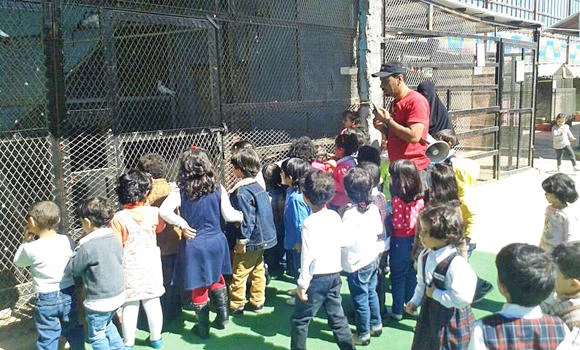
“Since I opened the zoo 10 years ago, the people of Asir, neighboring towns, schools and university students, including disabled children have been visiting the facility,” he said.
He added that he is assisted by more than 40 people including Saudi amateurs at the zoo. He has trained them on the techniques of looking after the animals, feeding and keeping them disease-free.
“I showcased my animals in a number of festivals outside the province and organized mobile zoos. I also take it as my duty to make the public aware of the need to be gentle with all kinds of animals besides showing them how to handle dangerous animals or poisonous snakes. I also participate in dramatic presentations with children,” Asiri said.
“I request the Asir municipality to allot me suitable land to house the zoo as I am currently paying a rent of SR250,000. However, the income from the zoo is enough for the expenses such as feeding the animals, lighting the zoo and other requirements. Plenty of visitors come to the zoo as the events I present include playing with lions and other wild animals. People also like to watch talking birds such as parrots, husky dogs and cats,” he said.
He said the zoo has organized awareness programs which have made a deep impact on the people’s attitude toward animals and stopped them from harming any kind of animals. He believed that any cruelty to animals amounted to a serious crime as animals have feelings and sentiments. “I know each one of my animals closely and I can sense their illness and their changing moods,” Asiri said, adding that it was his father who made him love animals.
He said that there were a number of invitations from other Gulf States including the United Arab Emirates to move his zoo to those countries.
“But my love for the country and the Asir region and my desire to provide amusement to the people of this area has made me turn down all such offers,” he said. However he demanded generous support for the zoo from the authorities especially from the province’s governor. He said his zoo, which is well known in the Kingdom, demanded a lot of his efforts and time to maintain it properly as about 15,000 people visit it annually. The number could be doubled if there is a suitable location with arrangements to accommodate large numbers of visitors and convert it into a model zoo that served the entire southern region.
He also appealed to interested businessmen and the Ministry of Agriculture to support him to feed and vaccinate the animals and facilitate the breeding of rare animal species, which are on the brink of extinction. He pointed out to the Saudi Commission for Tourism and Antiquities (SCTA) that the development of the zoo could serve as a boost to domestic tourism.
He said the zoo received a number of letter of thanks and certificates of appreciation from the Asir municipality, Education Administration, Social Affairs Department and the SCTA for its service.
He urged the municipality to provide sufficient land for the zoo so that the project could be expanded with a children’s play area, restaurants and other utilities besides bringing more animals and organizing programs on animal breeding. He has also bred rare strains of tiger, lion, gazelle, raccoon, and a variety of pets. He said the climate in Asir necessitated separate locations for a zoo during the summer and the winter because animals are generally acclimatized to one of the seasons and moving them from one place to another as the seasons change is very expensive.
Asir man seeks govt support for his zoo