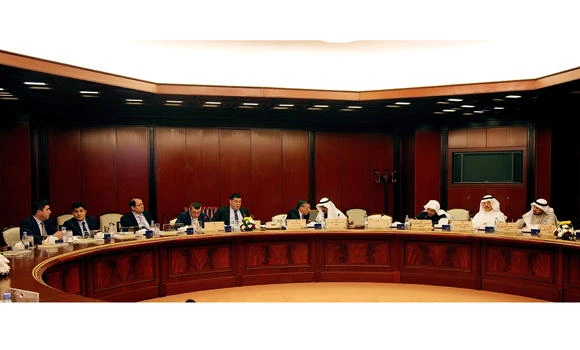
Improving the bilateral relations between the Kingdom and Azerbaijan was the main focus during a meeting held between the members of the Shoura Council and the Azerbaijan Embassy here, on Tuesday.
The talks were held when Azerbaijan Ambassador Rasim Rzayev met with the members of the Saudi-Azerbaijani Parliamentary Friendship Committee of the council headed by Abdullah bin Mohammed Al-Nasser at the Shoura council headquarters in Riyadh on Tuesday.
During the meeting, they discussed bilateral relations between the two countries in various fields, especially in economic, investment and parliamentary domains.
An official from the Shoura council said the two parties also discussed about the possibility of operating direct flights between Baku and Riyadh, and also explored ways and means of strengthening the relations between the two countries.
Since gaining its independence from the Soviet Union in 1990, Azerbaijan focused its foreign policy efforts on balancing relations between the major powers in the region and building strong ties to Europe.
Saudi Arabia was one of the first countries to recognize Azerbaijan’s independence, and was one of the nations to aid Azerbaijan in the wake of the war with Armenia.
GCC states and Azerbaijan have much in common on which to base their newly founded partnership. They are major oil and gas producers. Both have adopted expansionary fiscal policies intended to finance ambitious development programs. In addition they have embarked on long-term investment plans abroad. On all of these three fronts, they can establish solid and mutually beneficial cooperation, both at the official and private levels.
Azerbaijan is rich in culture. Over the centuries, it has been at the crossroads of several civilizations that have left their impact on the mix that is Azeri culture.
In December 2013, Abdullatif Al-Othman, head of Saudi Arabian General Investment Authority (SAGIA), visited Baku and concluded an agreement to invest in Azerbaijan’s petrochemical and refining sectors with the Azeri government. The two governments signed a total of twelve economic agreements and put 10 more in the works. In addition to bolstering their economic collaboration, Riyadh and Baku resolved to upgrade their relationship in the spheres of culture and education.
Azerbaijan holds bilateral talks with KSA