Cardiovascular diseases are the number one cause of death globally and more people die annually from the diseases than from any other cause, according to Dr. Tawfik Al-Bassam, consultant in internal medicine at King Fahd General Hospital in Jeddah.
“Through supporting advancements in clinical research, such as the ACE study, we seek to help improve the lives of patients suffering from diabetes and cardiovascular diseases in Saudi Arabia,” he said.
Al-Bassam was referring to a recent clinical trial study conducted by Pfizer, which was completed last year.
The study revealed crucial data related to the prevalence of cardiovascular diseases risk factors in the Middle East and Africa.
The findings are based on the examination of 4,378 men and women above the age of 18 across 14 countries in the Middle East and Africa, including Saudi Arabia, the UAE, Kuwait, Egypt, Lebanon Jordan, Tunisia, Algeria, Cameroon, South Africa, Ghana, Kenya, Nigeria and Senegal. The patients were tested at general practice clinics for six cardiovascular diseases risk factors, namely obesity, abdominal obesity, smoking, dyslipidaemia, diabetes mellitus and hypertension.
“While studies have confirmed that communicable diseases are a major health risk in the region, the extent of the burden of the cardiovascular disease among our population was relatively less known. This study helps bridge such gaps in knowledge. Further, it aims to support governments and health care professionals in prioritizing, responding and managing the rising tide of cardiovascular diseases,” said Al-Bassam.
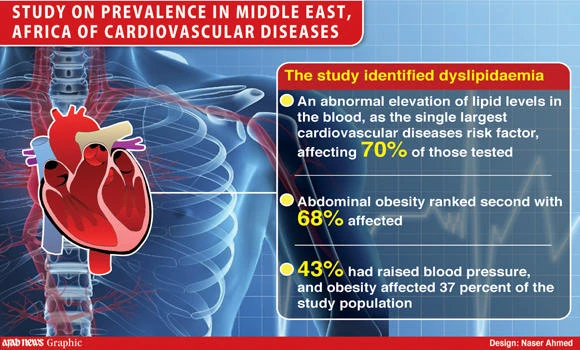
Overall, the ACE study identified dyslipidemia — an abnormal elevation of lipid levels in the blood, which is often due to diet and lifestyle — as being the single largest cardiovascular diseases risk factor, affecting 70 percent of those tested.
Abdominal obesity ranked second with 68 percent affected. According to the research females in the region are more susceptible than males to abdominal obesity and obesity. Among the respondents, 43 percent had raised blood pressure, and obesity affected 37 percent of the study population.
The prevalence of diabetes mellitus was found to be 25 percent, and 14 percent were found to be smokers. The rural study population had a prevalence of the cardiovascular diseases risks slightly less than the urban population but the difference was not marked.
“One of the keys to preventing cardiovascular diseases is getting risk factors under control, such as high blood pressure and high cholesterol levels,” said Al-Bassam. “Eating a heart-healthy diet that includes foods that maintain the levels of cholesterol and fatty molecules will certainly reduce overall cholesterol levels and bad cholesterol (LDL- cholesterol), which are harmful to the heart. This approach will also help increase the so-called good cholesterol, (high-density lipoproteins (HDL)) cholesterol while reducing other harmful, fatty molecules called triglycerides,” he added.
He stressed the importance of exercising, as well as controlling associated conditions such as diabetes, high blood pressure, weight, stress, and habits such as smoking.
Cardiovascular diseases leading cause of death