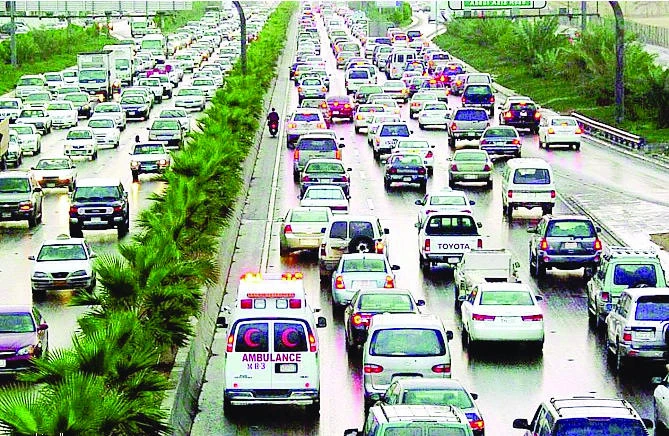
Citizens here have called on the government to teach the public how to behave at accident scenes because curious onlookers often impede rescue and medical teams trying to save the lives of victims.
Ahmed Fadalah said there should be more public debate on the issue. He urged people to respect emergency lanes on roads. He said the Kingdom should try to learn how to handle these situations from other countries, including allocating takeoff and landing places for helicopters in specific areas in every neighborhood.
Talal Al-Ghamdi said the government should launch an awareness campaign to educate the public about the importance of giving way to ambulances. “There was an unfortunate case recently where a patient died at the scene because an ambulance could not get access because of the crowds.”
Abdullah Daavs said kibbitzers have become a big problem for paramedics. He said this negative behavior impedes security and emergency teams from dealing with traffic accidents. There is also a lack of penalties for these violations, he said.
“I never see any awareness programs regarding this problem in various media, especially television and radio.” He said he does not stop at accident scenes if he knows security and emergency teams are doing their work.
Ibrahim Al-Yahya, director general of emergency medical services of the Saudi Red Crescent Authority, said there should be more awareness programs on the issue because it is vital for ambulances to reach victims quickly.
He called on motorists not to drive behind ambulances as they head to and from accident sites because this might confuse drivers and result in accidents. He said that Saudi Red Crescent teams often have to deal with large groups of people at accident scenes, or those driving slowly past in their cars.
An additional problem was citizens insisting on driving in ambulances with injured relatives or friends, which impedes the work of paramedics. He said people can get more information on its website www.call997.com.
He said the Saudi Red Crescent has launched the Prince Naif First Aid Program, aimed at teaching people basic first aid to help the sick and injured on the country’s roads. A total of 7,224 men and 3,992 women passed the course over the past year.
He said the Saudi Red Crescent also has air ambulances in most regions of the Kingdom that significantly reduce response times, especially on highways outside the cities and during peak times within cities.
“Air ambulances in the Kingdom are a quantum leap in current emergency services, providing support for ambulances on the road. They assist in transferring people in critical condition quickly to hospitals,” he said.
Crowds at accident sites hamper rescue work