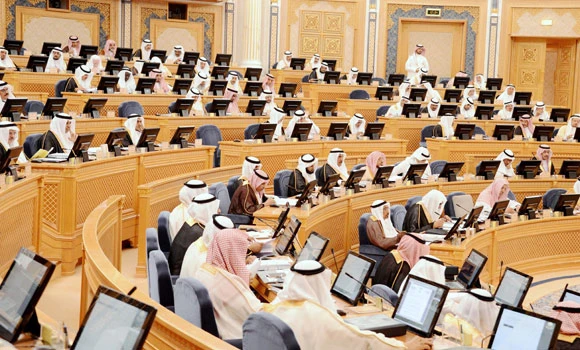
Draft legislation overseeing audio-visual media limits freedom of expression, a senior Shoura Council member said recently.
Abdullah Al-Thoufairi, head of the Shoura Council’s human rights committee, said the bill limits the right to express an opinion, encourages those who seek to make money from television competitions and promotes bad songs.
He said the bill was not fit for modern life and does not take into account the impact of the information revolution on people.
Other members pointed to the contradictions in some of the articles, and said it does not cover censorship on blogs and YouTube videos.
The bill consists of 47 articles that aim to regulate and develop audio and visual media in line with government policy, and create a suitable investment environment.
“The articles of the bill places more constraints on media activity,”said one member. Another member suggested adding new articles on blogs and YouTube, and urged the committee to redefine media content in the section on definitions in the legislation.
“Do tweets fall under the visual, audio or reading item?”one member asked. Another member called for an article to clamp down on those spreading false news and rumors.
Meanwhile, a female member of the Shoura Council has accused the Presidency for Scholastic Research and Religious Edicts of not doing enough to clamp down on fatwas that have become “the laughing stock”of the world, “ridiculed in the western media and very much offensive to Islam.”
Amal Shamman said that more should be done to implement the royal order issued in Ramadan four years ago, which stipulates that fatwas should only be written by members of the Council of Senior Scholars. “The objective of this order is to limit the chaos of irresponsible fatwas.”
Shoura members also criticized the Ministry of Economy and Planning. Meshaal Al-Sulami commended the ministry because it had admitted it did not have the experience to implement projects, and called on the government to set up a firm to handle public sector projects.
However, Al-Sulami also criticized the ministry for not citing in its report information about its economic activity, which represents 50 percent of its work. Others called on the ministry to conduct studies on changes taking place in the Kingdom such as overcrowding in cities, unemployment and other pressing issues facing the country.
Draft media law ‘limits freedom of expression’