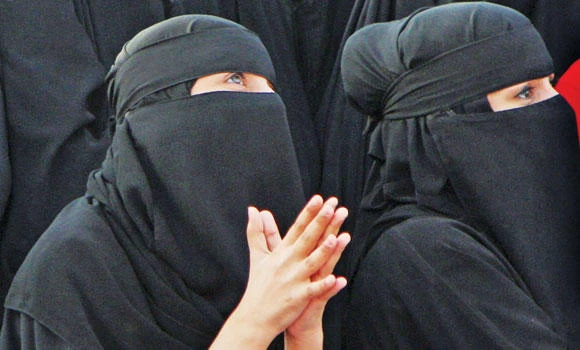
Saudi Arabia still lags behind its GCC counterparts in women employment despite a slight increase in the rate to 18.2%, which is much less than that of Qatar, which holds the first position among the six-member group with 50.8%, followed by the UAE 46.6%, Kuwait 43.4 percent, Bahrain 39.4% and Oman 28.6%.
A study prepared by Khadija bint Khuwailed Center at the Jeddah Chamber of Commerce and Industry in Jeddah confirmed that Saudi Arabia is seeing continuous improvement in the participation of women in the nation building process. Positive outcomes included improved education and foreign scholarship opportunities for women, as well as supportive government policies that involve women in the process of economic development. All of these factors have contributed to promoting women’s in leadership positions and family businesses.
With regard to family businesses, the study indicated that many family companies in the Gulf would see the handing of their management to third generation of these families over the next five to 10 years. It also presents an opportunity for these businesses to benefit from the skills provided by female members.
Commenting on the results of the study, Basma Mosleh Omair, executive director of the Khadija bint Khuwailed Center, said: “Due to the attention of the GCC states to the economic role of women, a supportive environment has been created in which the family businesses are benefiting form the contribution of female members.”
Omair pointed to a number of trends that have contributed to the increasing leadership roles of women over the past two decades, including changes in social conditions, a higher average age of marriage, as well as greater efforts by women to acquire the necessary skills to take on wider and more diverse roles in the business field.
As for challenges facing women's participation in the family businesses, the study revealed the ongoing cultural concepts about female roles, gaps between necessary skills and education level, and the lack of interest or poor motivation by women to participate in the family businesses.
These challenges are described as demonstrative of the importance for women to develop their skills to compete with male counterparts.
Despite important steps achieved by GCC states in the context of women's education, female participation in the labor force still remains lower than rates in developed countries, where the average rate of participation among Gulf women is about 30%, compared to 70-80% within most OECD countries.
Female employment: Kingdom still has miles to go