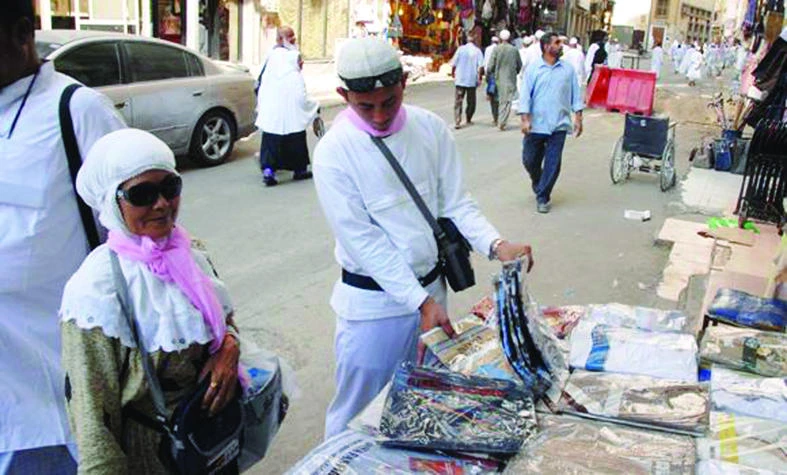
As the Haj season draws to a close, thousands of pilgrims are flocking to shops in Makkah to do some shopping for friends and relatives before heading home.
Besides, souvenirs and other items to remind them of their journey to the holy land, pilgrims also buy large quantities of fabric from Makkah and Jeddah to sell back home.
Most pilgrims avoid visiting the malls or expensive stores and instead are on the look out for cheap bargains. The choice of items is varied with fabrics, clothes, watches, perfumes, particularly oud and musk, mobile phones and other electronic gadgets and dates making the bulk of pilgrims’ purchases.
Aziz Ruhmani from Algeria who completed his first Haj with his wife said that he got various products at competitive prices which he will sell for a profit when he goes back to his country.
Fatma Shawkat, an Egyptian pilgrim, said she plans to visit Jeddah’s gold market to take advantage of the current drop in gold prices.
Osmat Khan, a Pakistani pilgrim who was on his third Haj in 10 years said: “I did a lot of shopping in Jeddah and Makkah after completing the pilgrimage but this year I only bought traditional and the bare essential items.”
The Haj 2014 season registered 2 million pilgrims arriving in the Kingdom to perform Haj. All countries had to comply with the reduction in their pilgrim quota owing to the expansion projects under way in Makkah.
Pilgrims this year spent an estimated SR2 billion on gifts and other products, Abdullah Radwan, an economist, told Arab News. “Most pilgrims spend money according to their purchasing power. But high prices of items in many stores in Makkah and Jeddah have dampened the sales owing to a limited number of pilgrims especially from the conflict-ridden Arab countries who were unable to make any substantial purchases,” he added.
Echoing the sentiment, Subhi Al-Faraj, a fabrics store owner in Makkah, told Arab News: “Most pilgrims like to buy clothes and fabrics in huge quantities to sell back home, but this year the spending is not as high as previous years due to the lower number of pilgrims and poor economic situation of their countries.”
Saleem Asaad, a businessman who owns several shops in Makkah, said pilgrims tend to buy gold from Jeddah and Makkah because they trust the jewelers in these cities. He added that gold comprises 25 percent of gift items bought by pilgrims during the pilgrimage seasons.
Fewer pilgrims, unstable economies hit Haj sales