Pollution, flooding, housing and transportation topped the agenda of 36 studies conducted by the Haj & Umrah Research Institute to improve facilities for pilgrims at the Kingdom’s holy sites.
Atif Asghar, the institute’s dean, said the studies and programs have not been confined to Makkah and the holy sites, but include Madinah, where a study on the importance of expanding the women prayer’s court northeast of the Prophet’s Mosque and linking the women’s prayers court with the Holy Rawda (Garden of Paradise) area has now been given top priority.
Asghar explained that the institute seeks to conduct an applicable study to develop services through a series of different research branches on Haj and Umrah.
“The study will depend on scientific and experimental basics in resolving obstacles,” added Asghar.
He said that these programs and studies gave the issue of floods much needed attention because floods are one of the biggest dangers faced by Makkah and the holy sites.
“The objective of the study is to forecast locations most at risk for flooding and to monitor weather changes and the impacts of hydrological changes on the holy sites,” he explained.
“The study will also focus on developing ways to control air pollution. In addition, a study to combat pollution factors at water utilities, bathrooms and the courts around the Grand Mosque will also be introduced.”
The center also drafted a study that will adopt development standards to control rent prices, limit manipulation by brokers, boost and improve the housing environment for pilgrims and curb the prices of pilgrim lodgings, while maintaining security for landlords and investors.
Asghar said an urban study at the Prophet’s Mosque has focused on the expansion of the women’s prayers area northeast of the mosque.
“The proposition to link women’s prayers area with the Rawda area will increase capacity and reduce dependence on manpower in separating women from men during women’s visiting hours.”
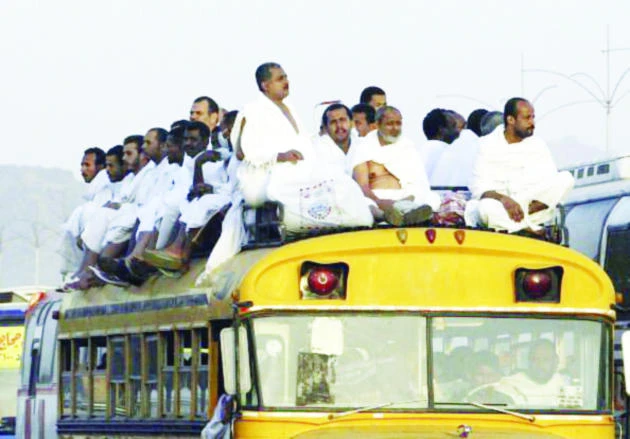
“There is also a program to assess vehicle and pedestrian movement when pilgrims leave Arafat,” he said.
He said the center will closely follow up on transport during Haj by ensuring the full utilization of buses.
“The time it takes to board and get off these buses will be measured, in addition to the time it takes to get from Arafat to Muzdalifah and then from Muzdalifah to Mina,” he pointed out.
Asghar said the institute contributed to several giant projects, including expansion initiatives.
“The institute has also played a key role in establishing a project that aims to fully utilize sacrificial meat and ensure cleanliness and hygiene standards while performing the ritual,” added Ashgar.
Another important study conducted by the institute, said Asghar, is a field study on the services offered by Tawafa establishments by taking into account the viewpoint of pilgrims about the situation on the ground.
Haj institute outlines top research priorities