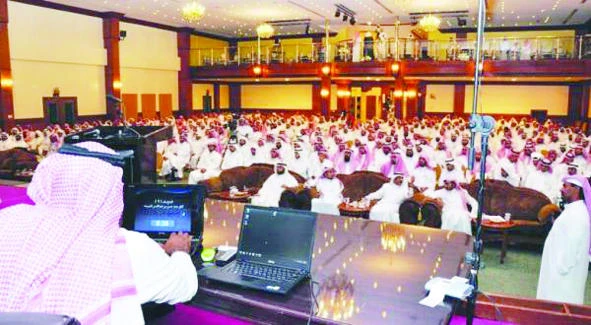
DAMMAM: Intellectuals across the country have welcomed the Saudi government’s plan to promote arts and culture as part of its Vision 2030 plan aimed at transforming the economy and raising income from non-oil sources.
Details of the plan was announced Monday by Deputy Crown Prince Mohammed bin Salman, second deputy premier and defense minister, who said there would be moves to revitalize cultural and entertainment activities, including the setting up of an Islamic museum.
Saudi poet Ahmad Al-Mulla welcomed the announcement saying that it fell in line with the “ambitions and dreams of young Saudis” who not only want to see economic development but also support for social, cultural and arts initiatives, which have been neglected over the years.
Al-Mulla said there was an urgent need to set up modern infrastructure that can support cultural activities in the country, including fine arts academies and institutions, dedicated arts faculties at universities, and a competent authority overseeing this development.
For this to be successful, there has to be direct moral and financial support from the public and private sectors. There has to be recognition that arts and entertainment was not only a human requirement but also an additional source of income through theaters, cinemas and festivals, Al-Mulla said.
Film critic and writer Fahad Al-Yahya said the National Transformation Plan (NTP) was an “ambitious and long-term program, and I think there are priorities that were not disclosed, but I expect and hope that a lot of work is accomplished over the first five years.”
“I expect the establishment of public libraries, cultural centers, and sports clubs in neighborhoods, alongside theaters and cinemas, which can organize various competitions and global performances.”
He welcomed the plan to set up museums that would reflect local and other cultures, and said he hoped that literary clubs can merge with arts associations to provide the public a place for all cultural activities.
Critic and writer Mubarak Al-Khalidi, said he agrees with Prince Mohammed that there was a “chronic shortage” of cultural activities in the country, which was a result of neglect over all previous five-year development plans.
He said there has also been an erroneous view that arts and culture was not a basic component of human life, and could not improve the quality of life of Saudi individuals in the short-term.
Critic Mohammed Al-Herz said that the ambitious vision outlined by the prince was based on the needs of the people of the country, who want to have an improved standard of living with cultural, arts and entertainment activities playing a part.
Author Nabil Al- Moajil said the development of the arts and cultural scene has been stymied for “decades by influential groups ... because it threatens their parochial interests.”
Writer Rehab Abu Zeid described the government’s plan as visionary and said it paves the way for changes on the ground, which includes the opening of cinemas and theaters, and more cultural events that would help refine people’s moral and other sensibilities.
“Cultural openness will create intellectual and economic diversity because it will strengthen communication with Arab and other cultures around the world,” she said.
Intellectuals back plan for arts and culture