Italian expatriates celebrated their National Unity and Armed Forces Day on Nov. 4, the date that marks the end of World War I in 1918.
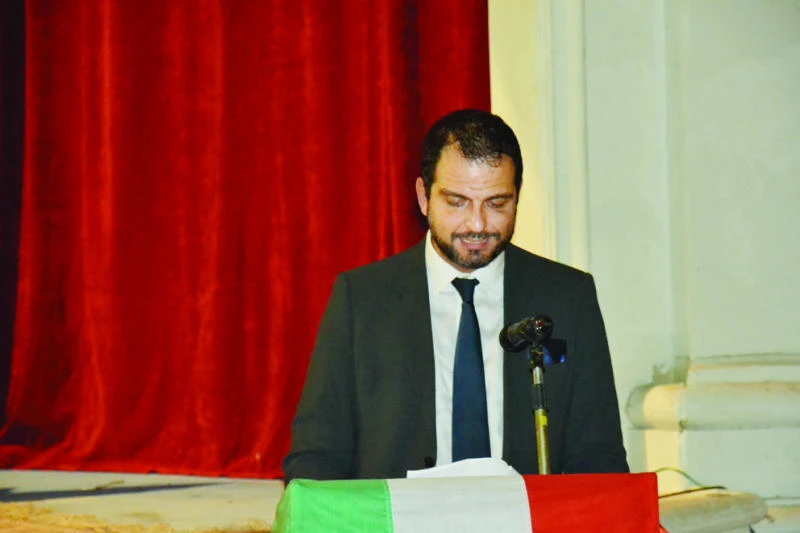
The event was held as part of the 14th edition of the Week of the Italian Language in the World, at the Italian Cultural Center. Simone Petroni, the Italian consul general, said Nov. 4 was when the war between Italy and Austrian-Hungary forces ended, after the armistice of Villa Giusti on Nov. 3.
With the signing of the Treaty of Saint Germain-en-Laye on Sep. 10 in 1919, the Austro-Hungarian Empire was formally dissolved and Italy completed its process of national unification with the annexation Trento and Trieste and other adjacent territories.
Petroni said the Italian Presidency of the Council of Ministers has organized several initiatives to remember these events, including exhibitions. A movie has also been produced entitled Torneranno i Prati by Ermanno Olmi, which will be screened in 130 locations in 100 countries. This coincides with the national preview of the movie in Rome, in the presence of the president of the Italian republic, he said.
He said that World War I “represented a massacre that had never been seen before in the history of warfare. In Europe, millions of men faced each other across the sandbagged parapets in the trenches where they lived in inhumane conditions. From time to time, the military commands would seek to break the deadlock.”
“Days and even weeks of artillery bombardments would start, followed by the moment in which waves of men would climb over the parapets to advance into no-man’s land where the enemy’s machine guns would shoot them down as they knew they would.” During the war, over 17 million people lost their lives. In Italy, about 1 million people died and another million were wounded during the conflict, he said.
He said the film takes place in 1917, in the mountains in the plateau of Asiago, in the Veneto region of northeastern Italy. This is the location of a major battle between Italian and Austrian forces in the war. The movie was inspired by real events that revolve around a group of Italian soldiers from different social and regional backgrounds. The battles also provided inspiration for the great novel Farewell to Arms written by Ernest Hemingway.
“Long sequences and silences, slow and intense dialogue, with the intention of recounting, not the war in itself, but the pain and suffering of the war. The story is therefore told with an inspirational but unrealistic style, like a series of hallucinations, as the horrors of war are set in the minds of its survivors,” he said.
Italians mark national unity day