The Jeddah Municipality in coordination with various government agencies is working toward relocating factories and workshops located in residential areas of the city. The move comes in the wake of demands from Jeddah residents to remove factories from residential areas.
According to a study conducted by the Industrial Committee of the Jeddah Chamber of Commerce and Industry (JCCI), there were over 480 factories of varying sizes in the city.
Undersecretary for Services at the Mayor’s Office in Jeddah Ali Al-Ghamdi said the municipality had decided to start with relocation of factories operating in Al-Nuzhah area in north Jeddah. Some factories were violating pollution norms by undertaking activities beyond the licensed limit for them.
He said the municipality has been insisting that all new industrial projects without exception should fulfill environmental specifications.
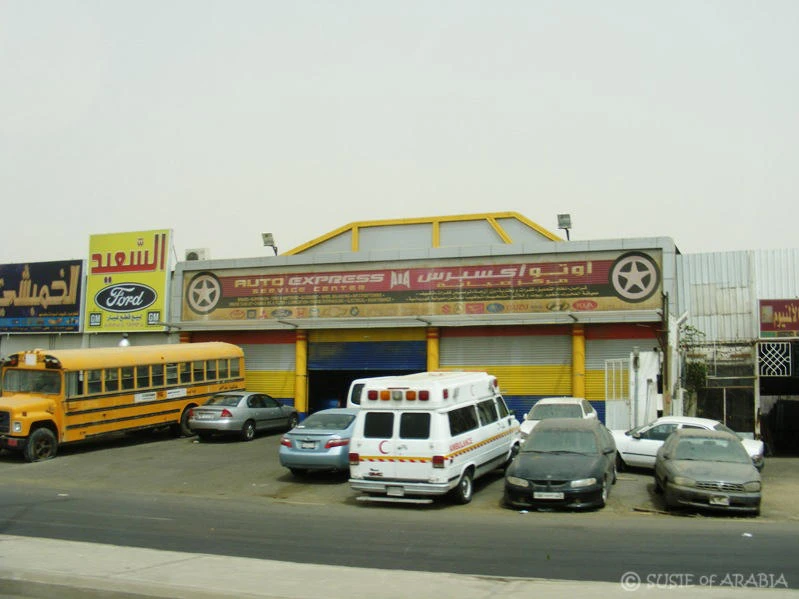
Stating that there were over 10,000 automobile workshops in the city, Al-Ghamdi said there was a holdup in shifting them to the industrial city in Usfan because of the delay in land allocation. Five million square meters of land had been allocated in that city, and formalities to begin the relocation process are under way, he said.
The new location, which is 70 km from the city, will provide sufficient land to workshop owners with space for support services, he said.
Vice President of the Industrial Integration Committee at the Saudi Council of Chambers Sameer Murad said millions of square meters of land had been allocated for relocation of industries in the south, north and along Haramain Road. The authorities had also allotted 85 million square meter of land for factories and workshops in Jeddah along the Jeddah-Leith Road and at Usfan.
However, Jeddah residents have been complaining that measures to move the workshops and factories from residential areas to industrial cities have been very slow.
According to a report of the Modon, 40 percent of the 3,660 factories in the Kingdom are located in industrial cities. It also noted that the factories in residential districts were outside the city limits when they were established originally, but later, with the growth of the city, they came within residential districts. Urban expansion is a phenomenon taking place in most cities.
Major factories that operate inside residential cities in Jeddah include the Pepsi Cola bottling company, Juffali Truck Factory, Zahid trucks, gold factories, units dealing with construction material and tile factories.
“The presence of such factories in the midst of residential areas until they are moved outside the city is bound to impact environment pollution and sufferings of the people living close to them,” Hafiz Al-Lehaibi, a resident of Bawadi district, said.
The relatively new Bawadi district is full of workshops and factories which were established before it became a residential center.
Al-Lehaibi demanded the quick relocation of factories and workshops and development of the area socially and environmentally.
Abdullah Al-Zahrani, a resident of Samer district in east Jeddah, said some expatriates had converted cattle enclosures in the district to workshops illegally, thus causing environment pollution. A number of workshops were established without license and they caused noise and air pollution in the area, he said.
Saeed Al-Mowalled, a resident of Quwaiza district, also complained of illegal workshops in the district spewing out toxic gas and causing noise pollution too. The authorities should take immediate steps to relocate the factories, he said.
Saud Al-Bishi, a resident of Hindawiya district, wanted penal action to be initiated against people who start factories in cities in violation of all regulations governing environmental health.
Bishi said he was aware of a committee comprising the Civil Defense, Presidency of Meteorology and Environment Protection (PME), JCCI, Ministry of Commerce and Industry and Saudi Electricity Co. which has drawn up plans to relocate the workshops and factories in residential areas to industrial cities.
Al-Rajhi Steel Factory in Al-Khomra was closed because of severe environmental pollution causing health problems for residents of Quwaiza and other nearby districts.
Jeddah residents demand relocation of polluting industrial units