Getting sacrificial obligations out of the way during Eid is no easy task.
This yearly ritual is in fact a daunting task for many, who often queue up for hours to get their hands on the goodies.
Thousands of residents headed east of the city soon after Eid prayers on Saturday to purchase sheep for slaughtering.
They could also be seen frequenting parked trucks with livestock tied with ropes on board.
Hundreds of expats also queued up on the Palestine Street flyover extending to the eastern outskirts.
Expats, mostly Sudanese, offer sacrificial services to these buyers, who paid SR200 at first, but gradually got off with paying SR150 or even SR100, in addition to a return taxi fare of SR30. Many Saudis, meanwhile, have visited slaughterhouses in the city, on the expressway and on Heraa Street.
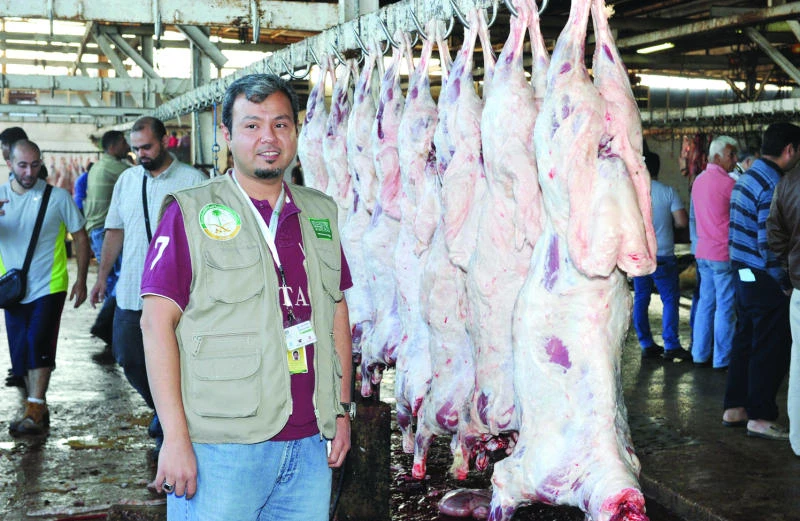
Five newly built slaughterhouses, maintained by an Australian company, are fully packed with customers who came to buy sheep, cows and camel.
“All five slaughterhouses are working at full capacity to cope with demand,” Jeddah Municipality spokesman Mohammed Al-Buqami told Arab News on Saturday.
Al-Buqami said that the main slaughterhouse, which works in three shifts with 200 employees, has the capacity to butcher 7,500 sheep, 750 camels and 750 cows a day.
The remaining four slaughterhouses are located at a workshop area in the Nuzha District near the airport, the Al-Khamra area, the Sabil District and Heraa Street.
“The municipality also deployed veterinarians at the facilities to ensure animals are healthy before being slaughtered,” he said.
“Slaughterhouses operated in wholly hygienic conditions, where disinfectants are in constant use.”
Al-Buqami urged residents not to visit unauthorized butchers for health reasons and to only visit municipality-authorized slaughterhouses in the city.
Saudis who live in big houses prefer carrying out the sacrificial rituals at home on their own.
“Every year, I purchase sheep ahead of Eid and slaughter the animal with my own hands,” Musfer Abdullah Al-Ghamdi, a Saudi citizen, told Arab News.
“I do, however, get the help of expats for skinning and butchering the sheep, which I pay a certain amount for.”
“We wish we could perform the rituals on our own, but we cannot due to logistical issues, such as not having space for sacrificing the animals,” Mohammed Saleem, a Pakistani expatriate, and Mohammed Sayeed Uddin, an Indian expatriate, told Arab News. Many expats are complaining about the ever-increasing price of meat.
“The same local butcher I visit yearly in Jeddah’s Aziziah District now charges me SR750 for skinned and chopped up meat parcels, compared with SR550 the year before,” said Mohammed Kaleem, another Indian expatriate. “We don’t actually see the sheep used in the parcel and only get its weight’s worth as part of the ‘Adahi’ scheme,” he said.
Several expat bachelors living in camps purchase sacrificial livestock and butcher the animals themselves at their place of accommodation.
Many Asian expatriates, meanwhile, send money for sacrifice back home due to administrative problems in the Kingdom.
Jeddah slaughterhouses working in full capacity