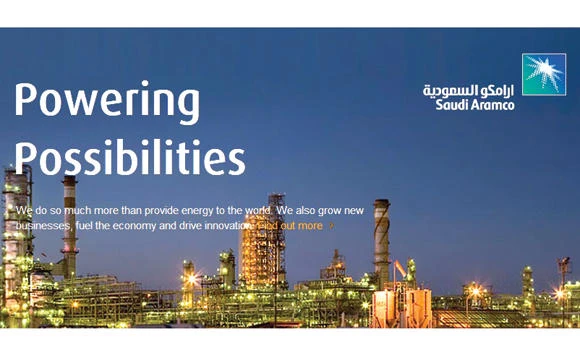
Saudi Arabia, the world’s largest producer and exporter of oil, holds 25 percent of the world’s known oil reserves — more than 260 billion barrels.
Most of the oil wells, oil and gas installations and oil-related facilities are located in the Eastern Province. Among them are the largest onshore field in Ghawar and the largest offshore field at Safaniya in the Arabian Gulf.
As the world’s largest producer and exporter of oil, Saudi Arabia plays a unique role in the global energy industry.
Its policies on the production and export of oil, natural gas and petroleum products have a major impact on the energy market, as well as on the global economy as a whole.
Mindful of this responsibility, Saudi Arabia is committed to ensuring stability of supplies and prices.
The Kingdom has repeatedly acted in times of crisis — such as the Gulf Crisis of 1990-91, the 2003 Iraq war and market fluctuations of the late 1990s — and covered any drop in oil supplies by increasing its output.
In this way, Saudi Arabia has prevented major shocks to the global economy from a loss of supply or sharp price increases.
In fact, the story of Saudi oil goes back to 1933 when late King Abdulaziz bin Abdulrahman Al-Saud granted Standard Oil of California (Socal), later renamed Chevron, the right to prospect for oil in the new Kingdom.
In 1938, Socal discovered large quantities of oil in the Dammam Dome near the Arabian Gulf.
Limited exports began in 1939, and picked up significantly with the end of World War II.
In the late 1940s, Socal entered into a consortium with other American oil companies and was renamed the Arabian American Oil Company (Aramco).
By the 1970s, Saudi Arabia had become the top producer and exporter of oil in the world.
The Saudi oil industry entered a new era in 1980 when the government assumed full ownership of Aramco, renaming it Saudi Aramco.
The company began exploring in areas that had previously been untouched, and discovered vast deposits of high-grade crude oil. Saudi Arabia continues to find new fields — such as one discovered 175 miles southeast of Riyadh on April 20, 2005.
Today, the Kingdom ranks as the largest producer and exporter of petroleum liquids in the world and the second largest producer of crude oil after Russia.
For many years, the Kingdom has been the world largest petroleum producer and exporter.
It currently pumps around 10.782 million barrels per day (1.7142×10⁶ m3/d) of petroleum.
While most of this is exported, domestic use is rapidly increasing, primarily for electricity production.
The Kingdom has also one of the largest reserves of natural gas.
Proved natural gas reserves are over seven trillion cubic meters (250 trillion cubic feet). It is important to mention here that the global production in 2009 reached 29 billion barrels (4.6×10⁹ m3) of oil and 3 trillion cubic meters (110 trillion cubic feet) of natural gas.
Today, Saudi Arabia is prioritizing upstream gas investment, but for use in the domestic power generation market, not for export.
The country has had plans to diversify its energy sources for some time, developing solar and nuclear power.
With increased economic development, the Kingdom has seen a lot of success in its oil and gas industries, making it the largest in the country.
The economy is petroleum-based with around 75 percent of its budget revenues and 90 percent of its export earnings coming from the oil and gas industry.
In the 1990s, Saudi Arabia experienced a change in oil revenues because of the high rate of population growth.
At the height of the oil boom in 1981 income stood at $11,700 per capita, and fell to $6,300 in 1998. In 2007, oil price increases boosted Saudi Arabia’s per capita GDP to $17,000.
The company’s yearly production of oil is around 3.4 billion barrels and it also manages more than 100 oil and gas fields in Saudi Arabia.
Among its portfolio is the 100 percent-owned Ghawar Field, the world’s largest oil field, and the Safaniya Field, the world’s largest offshore field.
As of January 2007, Saudi Aramco’s proven reserves were estimated at 259.9 billion barrels (41.32×10⁹ m3), comprising about 24 percent of the world total, it would last for 90 years at the current rate of production.
To this end, it must be noted that a number of Saudi oil fields found have not produced oil yet.
The Ghawar oil field is the largest oil field in the world, holding over 70 billion barrels (11×109 m3). Ghawar is able to produce 5 million barrels per day (790×103 m3/d) of oil.
Speaking of history, the first shipment of Saudi oil was exported to the international market from the new Ras Tanura port on the Arabian Gulf way back in 1939.
KSA has special role in global energy industry