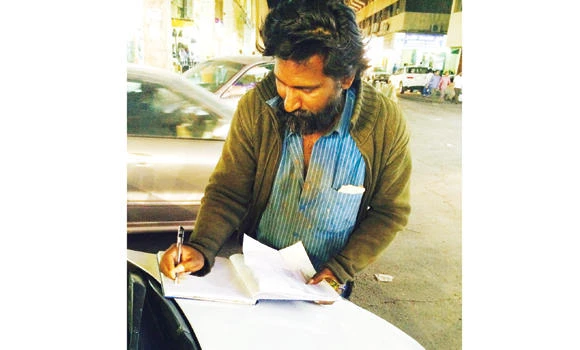
An Indian expatriate, who lost his memory and was sleeping in the streets in dirty, frayed clothes, was repatriated with the help of Passport Department officials. His identity was established with the help of the new biometric system.
Back home, unaware of his condition, the man’s family had been looking for him for several years. His aged father had continued inquiring about the whereabouts of his son.
Indian authorities issued travel document, bearing travel expenses, and arranged for an escort to accompany him from the hospital in Riyadh to his village in India.
The man was a known homeless person in the city, as he was roaming the streets every day, kicking at the air and generally acting in a bizarre way. Passersby many times offered him food and some money, as he had turned into a common sight in the busy streets of Batha in Riyadh for some time now, according to sources.
The creeping cold made his situation worse, and it was at this point when some social workers decided to put an end to the vagrant man’s woes.
After seeing his situation in these chilly nights, a few social workers decided to take him to the passport office to find out identity. His name is Shaikh Mahbub Peera, and he hails from the Kadapa district in Andhra Pradesh.
Peera, who had a business in Bisha and in Riyadh, ran into trouble over profits. It affected his memory and he became mentally ill.
Maqbul Basha, a close relative of Peera, said that the family had not given up looking for the man. “We have been trying to find him for the last seven years. We want to thank the authorities for their prompt action to repatriate our relative,” Basha said.
Peera was staying at Shifa Jazirah Polyclinic from where he was repatriated to his home country.
Mentally ill, homeless expat repatriated