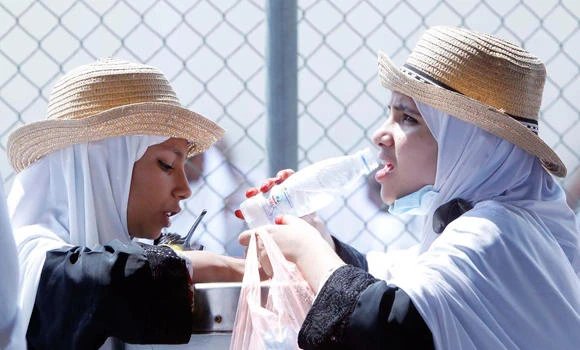
RIYADH: Anticipating high temperatures during the Haj season, the Ministry of Health has made arrangements to install more equipment to treat heatstroke patients among pilgrims, Health Ministry spokesman Khaled Al-Mirghalani said following a meeting of the Haj preparatory committee here on Monday.
Heads of various Haj committees and Haj central committees in Makkah and Madinah attended the meeting, which was held under the chairmanship of Hussein Ghannam, general supervisor of the general directorate of health affairs for Haj and Umrah.
Al-Mirghalani said the meeting reviewed arrangements that are being made for this year’s Haj. In view of the anticipated heat, special medical equipment is being brought to the holy cities and the number of exhaust fans will also be increased to combat the summer heat.
He said there are four hospitals each in Arafat and Mina, which will treat heatstroke patients. In addition to this, there are 80 primary health care centers in Arafat, Mina and Muzdalifa which will be ready to receive pilgrims during the Haj.
Recently, the ministry updated the facilities at these centers and now they will be ready for operation during the latter part of the Haj season. The centers include 28 in Mina, 46 in Arafat and six in Muzdalifa.
Health officials will be deployed at 15 ports of entry for land, sea and air, to monitor the entry of Haj pilgrims this season. “They are expected to take preventive and curative measures to keep infections under control.”
He said that health officials detailed at the ports of entry will ensure that pilgrims have already taken vaccinations from their ports of origin before arriving. “If they have not taken them, relevant doses will be given at these ports so they would be fortified with immunity against the respective diseases,” the official said.
Health care workers will be reporting any developments to the central command committee on a 24-hour basis.
All health officials who serve pilgrims will wear face masks during their encounters with Hajis.
According to the spokesman the functions of the Haj committees are interlinked through an electronic network to ensure integrated health care services.
The ministry recruits more than 22,000 people from various medical, technical, administrative categories for the Haj season every year. Officials will also include some 400 medics in rare medical disciplines including intensive care and resuscitation, as well as nursing intensive care and emergencies.
Health officials will urge pilgrims to focus on personal hygiene, and hygienic cooking, storing, transporting and serving methods which are important to avoid diarrhea and vomiting, food poisoning, dysentery, typhoid and cholera. Hands should be washed before eating. Disposable shaving kits should be used.
Wearing masks made of cloth during the performance of various Haj rituals will be very useful in preventing respiratory infections such as colds, coughs, sore throats and pneumonia.
Pilgrims with diabetes, high blood pressure, heart disease, asthma, arthritis, migraine, epilepsy, skin diseases, psychiatric illnesses and gastric ulcer should be properly controlled with appropriate treatment.
MoH gears up to treat heatstroke patients