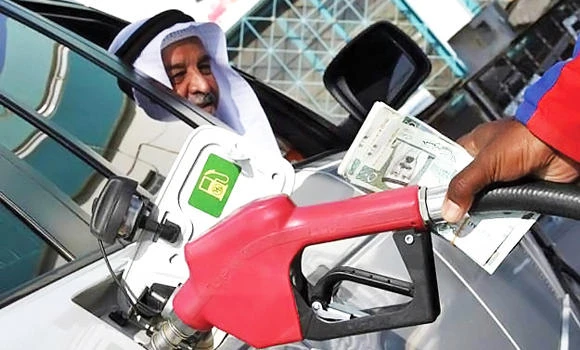
A recent study estimated motorists’ spending on fuel in the Kingdom at over SR1.4 billion monthly, an average of SR46.66 million daily. These estimations are based on fuel prices ranging between 42 halala for diesel and 59 halala of petrol per one liter.
According to the study conducted by Aleqtesadiah, a sister publication of Arab News, fuel consumption volume for private vehicles currently amounts to 811,000 barrels per day of oil, which translates to 128.9 liter, which is around 23 percent of the total consumption of energy by the transport sector in the Kingdom.
Diesel and gas are used mainly by vehicles or to generate electricity, as well as factories. Gas sales peaked in 2012 with about 1.18 million barrels sold.
Compared to 2008, the study found an increase of 24 percent in the consumption; from 947,000 barrels daily in 2008 to 1.18 million barrels a day in 2012.
This number attests to the growth in population in the Kingdom from 2008 to 2012 (this period was adopted because of the data available) where the increase exceeded 13 percent. Population growth spiked from 25.79 million at the end of 2008 to 29.2 million at the end of 2012, an increase of 3.41 million.
This growth in population was met with an increase in the demand for vehicles, with about 15.90 million vehicles sold at the end of 2012, meaning that this growth exceeded 24 percent, to 3.12 million vehicles.
The analytical study revealed that the price of one liter of gas in Saudi Arabia is 89 percent less than the global price. In the Kingdom, the average price of one liter of gas stands at 59 halala ($0.16), while the global average for about 165 countries was SR5.17 ($1.40) in 2012.
A comparison between the prices of 2012 and those of 2008, shows the Kingdom did not increase the prices of diesel and gas, while the world price per liter went up 26 percent.
The world price per liter of diesel has risen by 26 percent from SR3.21 ($0.87) to SR4.74 ($1.28). This study is based on the latest World Bank data.
To further reduce cost of gas and diesel, Prince Abdul Aziz bin Salman, deputy minister of petroleum and mineral resources, said recently that the manufacturers pledged to comply with the Saudi standards for fuel efficiency. He added that the Saudi standard for fuel efficiency in light vehicles is seeking to improve the rate of energy efficiency in the Kingdom by 4 percent annually, and shift it from its current level of 12 km per liter of fuel to more than 19 km by 2025.
Motorists in Kingdom spend SR1.4 billion on fuel a month