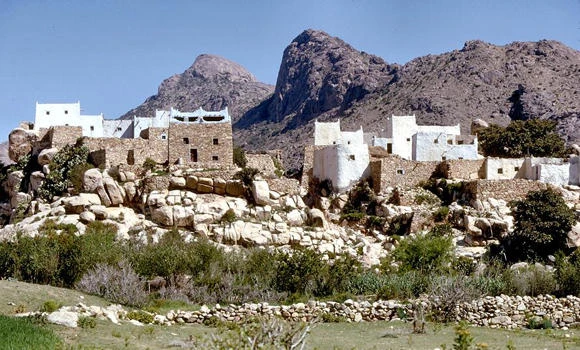
On the outskirts of the city of Abha, about 12 km to the west, lies a cluster of villages boasting an exuberant nature. The small towns dominate the panoramic scene and sit on the top of the mountains near Tahlel and Al-Souda hilltops.
Rising over 3,500 meters, the villages have a breathtaking view overlooking the Tuhama plains and Arar forests and the unique agricultural terraces planted with lentils, corn and fruit trees.
Yahya Issa Assiri is the deputy of Shaaf Al and Yemen Qabaliya, which are home to over 3,000 residents living in 10 villages in the 15 square kilometer area.
Assiri’s duties include taking care and guarding many heritage sites found around these villages, particularly Ser Al Obaid, as well as forts such as Al Halboub, Al-Qubei’i and Al Mihriq forts. “We’re looking forward to developing these villages, providing them with more services and building tourist attractions such as parks and gardens,” Assiri said, adding that local authorities are seeking investors in these areas to help boost tourism.
When talking about using panoramic scenery sites as investment opportunities, the name of the Saudi investor Saad Al-Ahmari comes to mind. Al-Ahmari has invested more than SR2 million to attract tourists. His project “the most beautiful view” in Shaaf Al and Yemen Qabaliya is located in Al-Sahab Park, overlooking Aqbit Habu.
“I chose the site after conducting comprehensive research in different areas in Asir,” Al-Ahmari said, explaining the effort behind investing in the site that enjoys high popularity, particularly during the summer.
“We provide full and comprehensive services of coffee shops, theme parks and restaurants that appeal to Saudi families, as well as hotel and conference rooms,” he added.
Al-Ahmari stressed the need to support Saudi businessmen regarding these kind of projects as a way to boost investment in the area.
The serial entrepreneur and businessesman invested in the cultivation of Moringa tree, known for its healing prperties as it is supposed to cure more than 300 types of diseases including diabetes, high blood pressure and cholesterol. “We planted around 45,000 Moringa trees on 100,000 square meters, producing more than 600 kilograms of Moringa leafs which are used for medicinal purposes,” Al-Ahmari said.
He said a raft of legal procedures had to be dealt with at many different government offices to get the projects off the ground.
Nature and investment possibilities go hand in hand in Asir