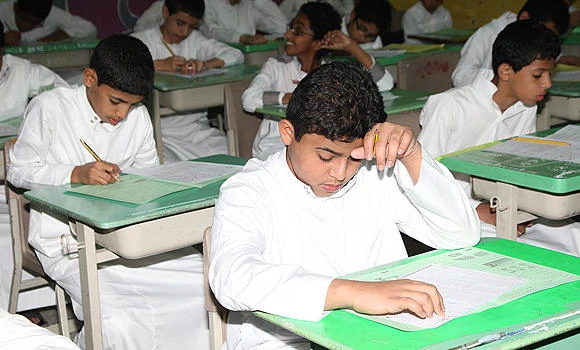
The Ministry of Education has asked the royal court to approve new regulations for the private-school sector that will oversee fees, employment practices, loans and subsidies. If approved, it will be the first time in 38 years that the regulations have been amended.
The Ministry of Education has already announced an electronic project that will facilitate licensing and transactions for investors.
Deputy Minister of Education for Boys, Hamad Al-Sheikh, confirmed that the ministry has asked Finance Ministry to increase subsidies and loans to the sector, facilitate procedures for investors, and seek coordination with competent agencies to support concessions for facilities needed by private schools.
“Private education is an essential and integral partner in the Saudi education system. It is an advanced and developed sector,” said Al-Sheikh at a recent meeting with 200 investors. He said the ministry was responsible for regulating all aspects of the education system.
Al-Sheikh said 15 percent of the entire student population attends private schools.
“The aim is to achieve sustainable development and meet the aspirations of those involved in private education.” He said the ministry’s transformation projects have targeted curricula, teachers, accreditation and the quality of teaching and administration. “Investments in this sector should be encouraged,” he added.
Al-Sheikh said the ministry wants to develop criteria for selecting teachers and the annual assessment of these schools. He said progress can be achieved because the sector has adequate capital, flexibility and leadership.
Abdullah Al-Mubti, chairman of the Council of Saudi Chambers (CSC), urged all parties to revitalize the relationship between public and private education. “This will lead to the advancement of this vital sector.” He said proper education forms the basis of a nation’s civilization, progress and development.
Abdurrahman Al-Haqbani, vice chairman of the national committee for private education and training at the CSC, rejected accusations that the sector was not serious about Saudization. “More than 20,000 Saudi men and women teachers are working at these schools,” he said. However, only qualified and committed citizens should be employed.
“It is better for Saudis to teach our children, but not when this comes at the expense of students, particularly if teachers stay away from school frequently and have poor qualifications.”
New regulations for private schools likely