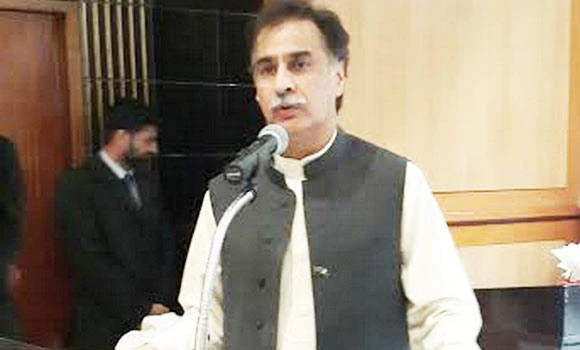
Sardar Ayaz Sadiq, a visiting speaker from the Pakistan National Assembly, said that 30 percent of his country’s foreign remittances come from the Kingdom.
Sadiq was addressing community members at a luncheon reception organized by Choudhry Nazir Ahmed Jutt, a former lawmaker from Vehari in Punjab.
The afternoon event was attended by a selected gathering of Pakistanis from all walks of life.
Pakistan’s Ambassador, Muhammad Naeem Khan, Khayyam Akbar, deputy head of mission at the Pakistan Embassy, officials from the Pakistani Embassy in Riyadh and Abdullah Bin Hamoud Al-Harbi, a member of the Saudi Shoura Council and head of the Saudi-Pak Parliamentary Friendship Committee at the Shoura Council, were also present.
Sadiq, who was leading a seven-member delegation comprising Pakistani lawmakers from the Lower House, was on an official visit to the Kingdom.The members of his delegation came from across political parties that have representation in the Pakistani Lower House.
He urged more people to send their remittances through legal channels, which, he said, would help the beneficiary, as well as their motherland.
He also took the opportunity to thank the Pakistan missions in Riyadh and Jeddah for their dedicated efforts to help 800,000 distressed workers under the Kingdom’s amnesty program.
He said that Saudi Arabia and Pakistan had agreed to endorse a Memorandum of Understanding (MoU) to boost cooperation in the field of parliamentary affairs and foster high-level parliamentary exchanges.
“A draft for this open-ended MoU will be shortly drafted by the two countries,” said Sadiq.
On his invitation, he said a delegation from the Shoura Council is expected to visit Pakistan on Dec. 8.
During his visit, he held wide-ranging talks with Crown Prince Salman, deputy premier and minister of defense, Prince Muqrin bin Abdulaziz, deputy crown prince and second deputy premier, and Shoura Chief Dr. Abdullah Al-Asheikh.
“Both sides have agreed to expand friendly exchanges, share experiences and learn from each other’s experience, as the two legislative bodies have different specialized panels, including a committee on Kashmir at the National Assembly of Pakistan,” he said.
Pakistani expats urged to use legal channels when sending remittances