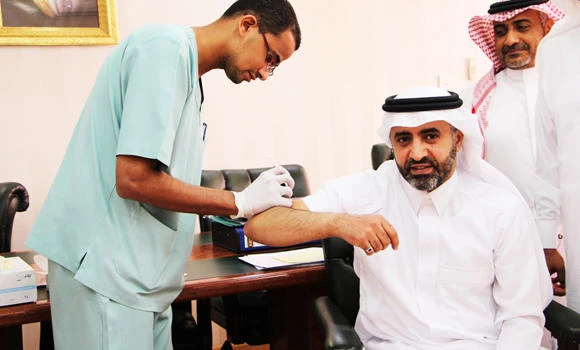
RIYADH: The Kingdom on Tuesday announced that vaccination against meningitis is mandatory for all local and international Haj pilgrims, while flu shots are recommended for their own safety.
Health Ministry Spokesman Khalid Al-Mirghalani told Arab News that on the recommendations of the Ministry of Health, the Ministry of Foreign Affairs has issued a circular to all Saudi missions abroad to follow quarantine regulations of the Kingdom when issuing Haj visas to pilgrims.
He said health requirements for this year focused on several diseases such as Ebola, Middle East Respiratory Syndrome- Coronavirus, yellow fever, meningitis, polio and vaccination against seasonal influenza.
He said that vaccinations should be taken at least 10 days before pilgrims arrive in the Kingdom.
As a preventive measures against Ebola, pilgrims from Guinea and Sierra Leone will not be issued Haj visas during the forthcoming season.
He explained that vaccinations against meningitis are valid for three years. Stressing the seriousness of meningitis, Al-Mirghalani said that pilgrims coming from areas where the illness is widespread can cause an outbreak during the Haj season.
He pointed out that congestion and overcrowding would ensure the disease spreads quicker. The vaccine is given to adults and children over two years of age and is not administered to pregnant women.
Al-Mirghalani said the ministry’s national scientific committee, which acts as a command center for the pilgrimage, monitors pilgrims arriving from all countries.
The ministry will deploy teams of officials at 14 ports of entry in the western province to check for infected cases among incoming pilgrims.
Al-Mirghalani advised pilgrims to take precautions against influenza. The flu vaccine is not mandatory but it is desirable to take it considering the present climate and the susceptibility of pilgrims.
Al-Mirghalani advised that high-risk patients who have chronic ailments such as diabetes, hypertension and renal problems, should take the flu vaccine, which will help them perform their Haj and Umrah rituals without problems.
Haj or Umra visas will not be issued for aged pilgrims and others who are suffering from chronic diseases such as heart, kidney, respiratory conditions and diabetes, as well as patients with immune deficiency — congenital and acquired — in addition to terminal malignant diseases as well as pregnant women and children, the spokesman said.
Saudi missions abroad will begin the issue of Haj visas to pilgrims following the end of the month of Ramadan.
Quarantine rules for Haj pilgrims unveiled