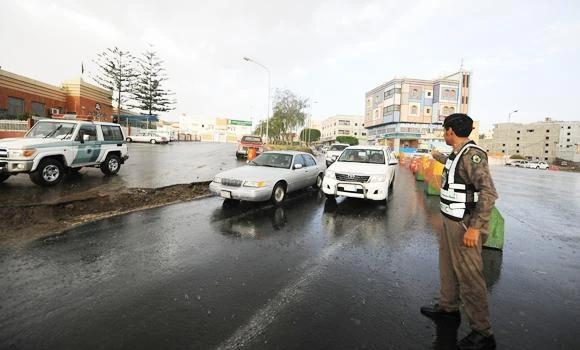
The government is focusing this Haj season on better crowd management to prevent congestion and facilitate pedestrian movement around the Grand Mosque.
With this view, a recently concluded Ramadan traffic plan is to be implemented for the Haj season where private cars and vehicles will be banned in the vicinity of the mosque and only a limited number of public transport buses allowed to operate in the area.
Owing to the demolition of many residential buildings in areas near the Grand Mosque, the accommodation for most foreign pilgrims this year has been shifted to the Aziziah district where a million pilgrims are expected to stay, according to officials.
A similar traffic plan is being considered for the Prophet’s Mosque in Madinah but it’s not clear whether it will be implemented during this Haj as it is still under study.
A shortage of buses means that it will be an uphill task to ferry pilgrims to and from the holy mosque, according to foreign Haj missions.
“We are preparing a plan to prevent excessive vehicular movement around the Grand Mosque but we must also have an alternative transport arrangement to ferry pilgrims,” said Col. Ali Al-Zaharani of Makkah traffic police, adding that there is another plan under way to introduce a public transport system from the pilgrims’ accommodation to the Grand Mosque and back.
“It will be a challenge to provide transportation facilities for the pilgrims from their accommodation to the Grand Mosque for all five prayers,” commented Saad Jamal Qureshi, a Makkah-based businessman.
An expert committee comprising several stake holders met and reviewed the plan to implement the Ramadan traffic plan which will exclude the entry of private vehicles and only allow public transport to navigate in the vicinity of the Grand Mosque.
“Taking into account the limited number of buses, we have advised the Ministry of Haj to make alternative transportation arrangements for pilgrims from their accommodation to the Grand Mosque,” said Essam Tunsi of the study committee.
He said that all buses ought to be roadworthy and only 2004 or later models will be approved by the authorities.
Ramadan traffic plan comes in handy