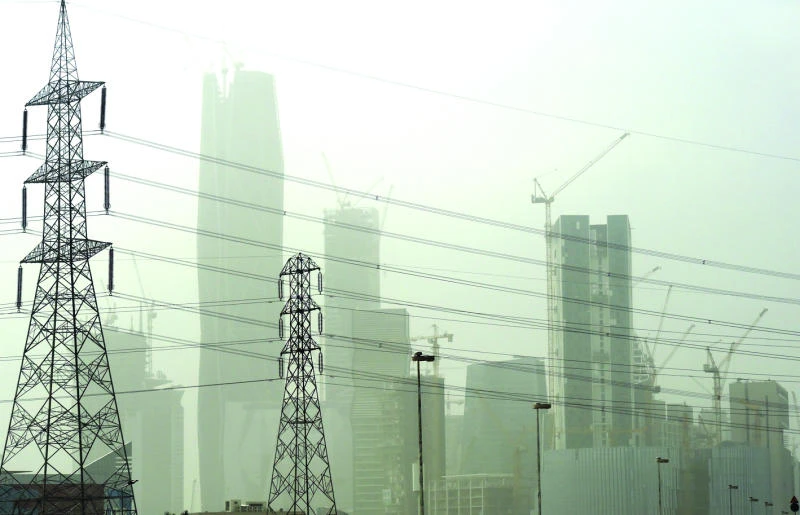
A massive sandstorm swept through the capital on Thursday, hampering visibility and causing traffic snarls and is expected to last for two days.
It isn't unusual for sandstorms to hit the capital during winter.
The dust storm, caused by strong winds, also affected other parts of the country including Makkah and Madinah, Al-Arabiya reported.
A recent sandstorm in Jeddah brought down the flag from the world's tallest flagpole. During the storms there is usually an increase in the number of people with respiratory problems going to hospital and doctors say sandstorms are a major cause of bacterial and viral infections.
There has been no reported impact on air traffic. Oil export operations were also unaffected by the weather conditions, according to Reuters.
At the main crude export terminal in Ras Tanura, export flow was uninterrupted, Reuters quoted shipping sources as saying.
But in neighboring Kuwait, a similar dust storm has disrupted oil exports forcing the country to halt both its crude and oil production exports, Kuwait National Petroleum Company said.
The suspension in Kuwait will remain in place until weather conditions improve, KNPC spokesman Khalid Al-Asousi said.
Earlier this week, a similar storm struck Egypt, forcing delays to several flights at Cairo’s airports on Tuesday.
During the closure of Cairo's airspace, four flights were diverted to another airport, while a fifth returned to Amman, Jordan, said Ihab Mohieddin, the head of the Egyptian aviation authority, to the Associated Press.
Sandstorms happen when loose sand or dirt particles are blown by gusts of winds across the land. These are very common in arid regions of the earth and lead to health and logistical issues.
Sandstorm blankets Riyadh