- Basodan said he wanted to transform QR codes and barcodes from silent technological tools into expressive visual elements capable of carrying stories, emotions and cultural references
JEDDAH: Most people see a barcode as something to scan.
Saudi artist Fahad Salem Basodan sees something else entirely: A visual language capable of expressing identity, memory and human emotion.
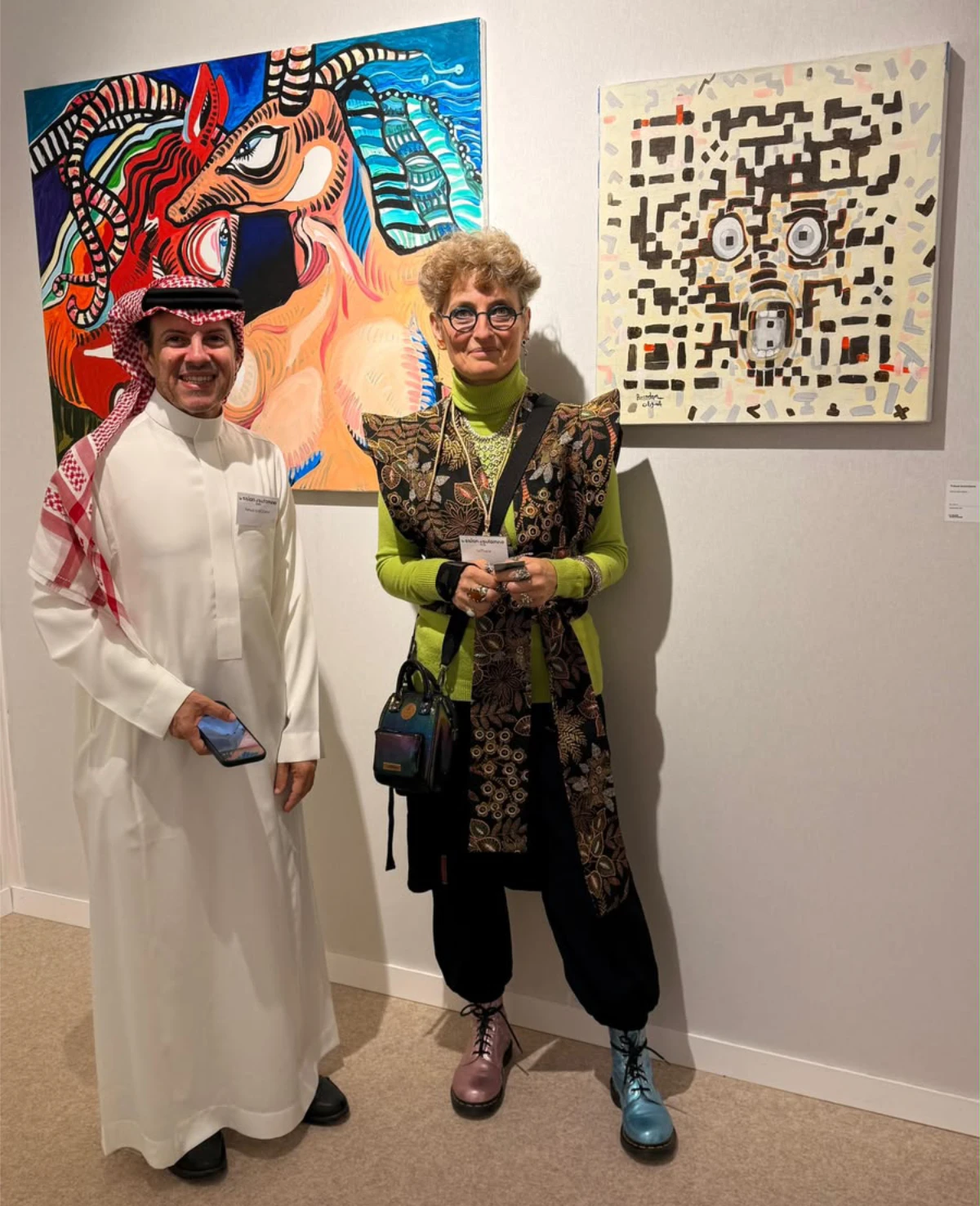
That idea is at the heart of “Barcode Echo,” the work Basodan is presenting at the 123rd edition of Paris’ historic Salon d’Automne, where more than 1,000 artists from 50 countries are exhibiting their work this week.
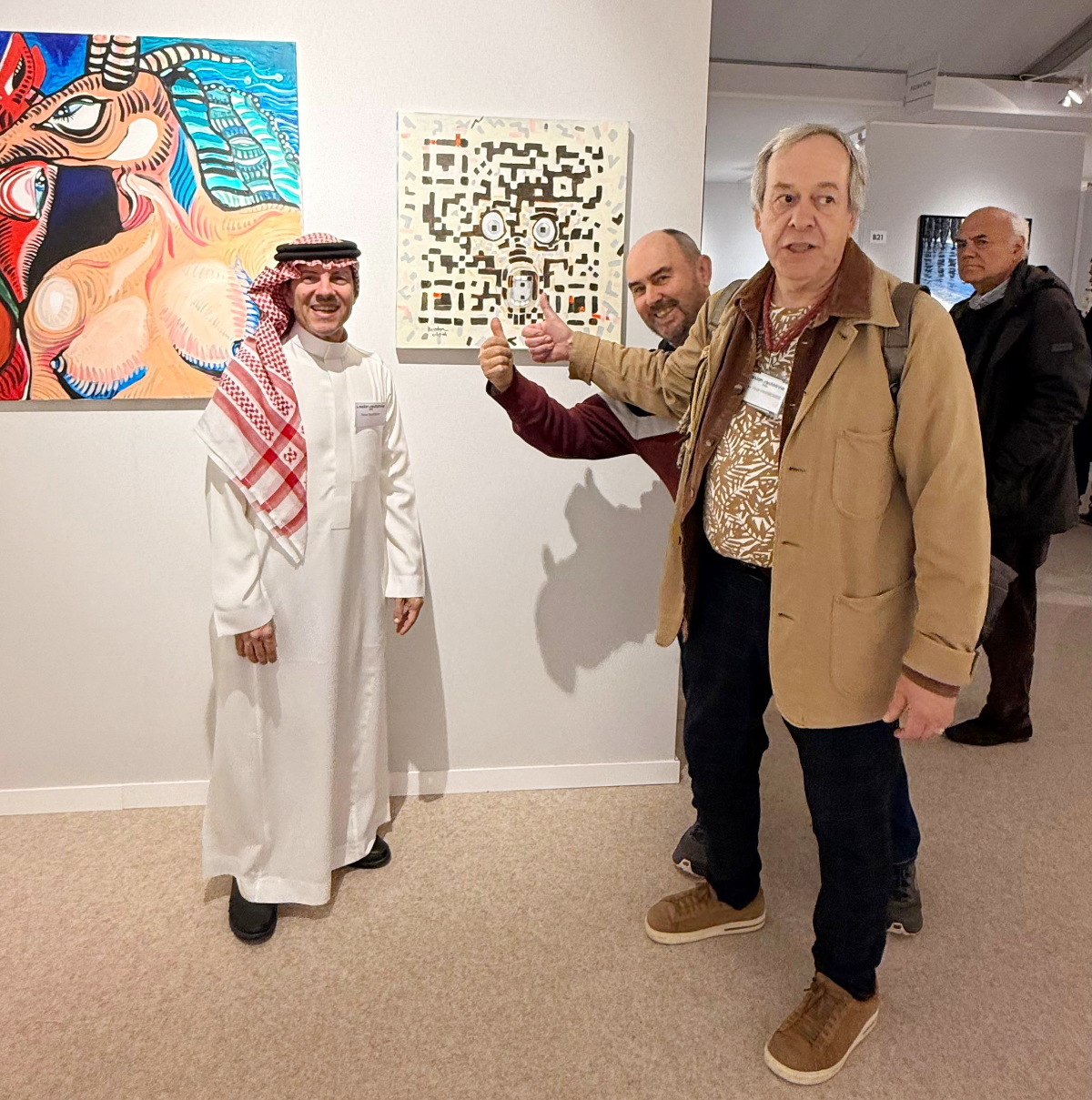
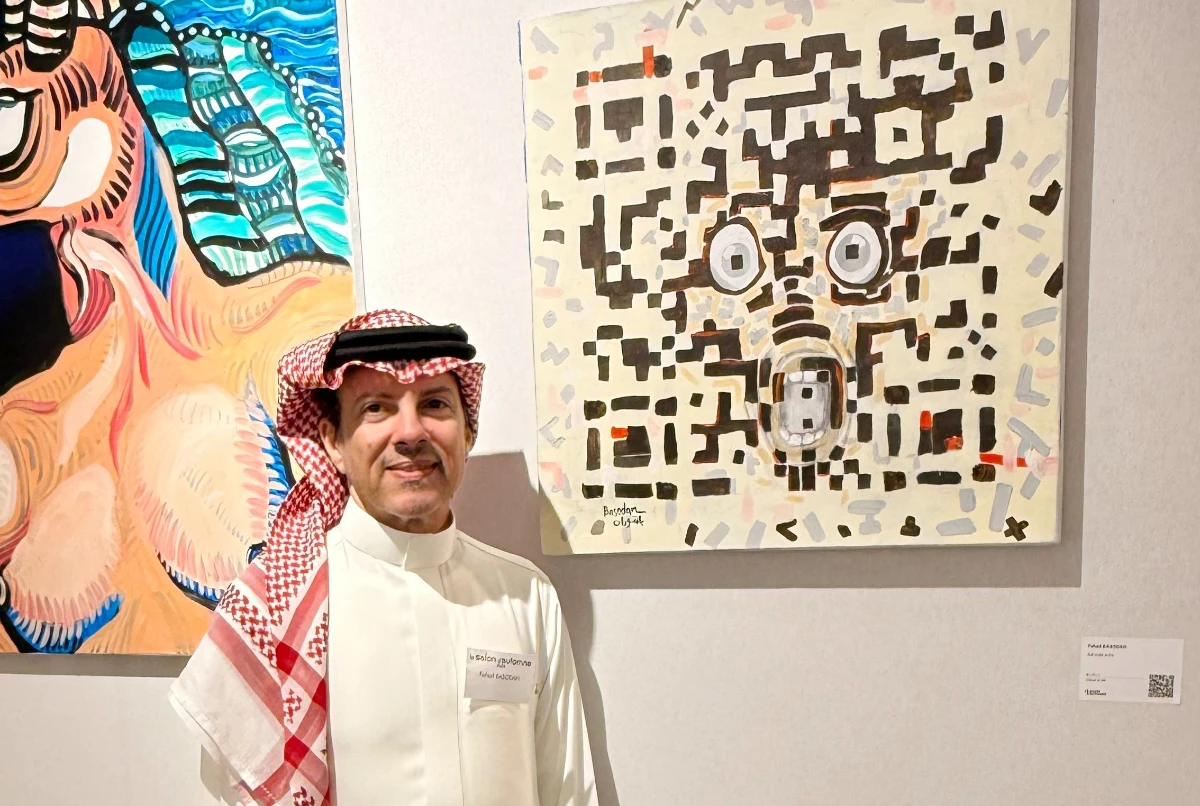
On the canvas, a human face emerges from a maze of barcode lines. Large eyes and an open mouth appear trapped within, yet connected to, the rigid geometry of the digital code. The result is a striking contrast between the precision of technology and the unpredictability of human feeling.
For Basodan, the piece reflects a question that increasingly defines modern life: What happens to identity in an age governed by digital systems?
“I draw digital symbols such as barcodes by hand with great precision, incorporating heritage-inspired details into an acrylic visual composition,” he told Arab News.
“Through this, I seek to create a visual dialogue between the rigidity of technology and the warmth of human identity.”
The work is part of a broader artistic approach Basodan developed himself, known as QRTISN, which transforms everyday digital symbols such as QR codes, barcodes and pixels into contemporary visual art.
What began as an experiment in 2023 evolved into a distinctive artistic language.
Basodan said he wanted to transform QR codes and barcodes from silent technological tools into expressive visual elements capable of carrying stories, emotions and cultural references.
“I try to break traditional artistic forms by transforming technological symbols, such as barcodes and pixels, into living artworks that carry identity, human depth and heritage,” he said.
While the materials are contemporary, the inspiration stretches back decades.
Basodan traces his relationship with art to childhood, when he spent hours drawing cartoon characters and experimenting with color. He credits his father with nurturing that interest by providing drawing materials and encouragement at an early age.
Growing up in Yanbu, he was also influenced by encounters with foreign artists who visited his grandfather’s home during the summer, exposing him to different artistic styles and techniques.
Those early experiences laid the foundations for a practice that now blends technology, abstraction and cultural identity.
Produced this year, “Barcode Echo” is a 60-by-60-centimeter acrylic-on-canvas work. Yet its message extends beyond the canvas itself, touching on themes of communication, belonging and the increasingly blurred boundary between the digital and physical worlds.
Basodan’s appearance at the Salon d’Automne follows a series of international exhibitions, including participation in the Global Brush art exhibition in Turkiye and artistic events in Georgia.
Founded in 1903, the Paris exhibition has long served as a platform for emerging artistic movements and has featured works by artists including Pablo Picasso and Henri Matisse.
For Basodan, exhibiting in Paris is less about showcasing technology than reclaiming its symbols.
In Barcode Echo, the barcode is no longer a product label or machine-readable code. It becomes a face, a voice and, ultimately, a reflection of the people behind the data.