JEDDAH: A new TV satire program has become a hit in the region by mocking some of the most pressing issues.
The show, "Selfie," has also brought a backlash. Daesh sympathizers have made death threats against its Saudi star and top writer on social media.
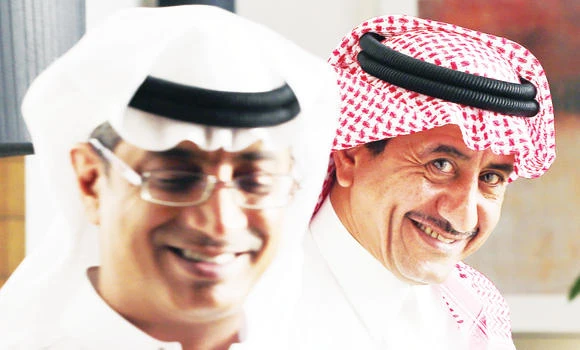
Nasser Al-Qasabi, the series' star, and its writer Khalaf Al-Harbi told The Associated Press in their first interview with foreign media that they expected the backlash, but weren't prepared for the popularity. It's one of the top shows on MBC and has been the talk of the Gulf press.
Al-Qasabi says the series' dark humor reveals just how tragic the situation across the Middle East has become. "What's coming is darker," he said. "Maybe I am a bit pessimistic, and I hope that I am wrong, but I don't think I am."
In the show's most popular skit, Al-Qasabi plays a Saudi father whose son has run off to join Daesh. He smuggles himself into Syria, pretends to be a jihadi joining Daesh and tries to convince his son to return home. It's a more serious episode, showing his horror at Daesh "perversions" of Islam and at the group's atrocities — and his torment as he tries to avoid committing atrocities himself in his disguise.
But it has comic moments as well, as he fumbles his way through militant training and is chased around the bed by a militant bride who is forced on him by the group and who has dedicated her life to pleasing the terrorists as a means of going to heaven.
Other, lower-budget Iraqi and Syrian TV shows have mocked Daesh and other militants. But "Selfie" stands out with its high production values — and the fact that it's a show with Saudi actors on a Saudi network.
Preacher Saeed bin Mohammed bin Farwa has accused Al-Qasabi and MBC of heresy. Columnist Hamad Al-Majed also criticized the show, saying that in its attempt to ridicule extremism the series also disrespected Islamic traditions and made generalizations, especially about the Kingdom.
Al-Qasabi and Al-Harbi are no strangers to controversy. They both worked on "Tash ma Tash", a long-running comedy that ruffled feathers for its handling of sensitive issues in Saudi society.
Al-Harbi says he wanted to kick it up a notch with "Selfie." He explained the title, saying the show is trying to give a snapshot of Arab society today.
"Selfie's" biggest success, said Al-Harbi, is in exposing how terrorists manipulate religion. He said the show delivered that message to the Arab public more effectively than lectures or newspapers.
"I felt this is a weapon that will reach the audience," he said. "If it was just something comical, we would have focused on easy societal issues that aren't dangerous and are guaranteed safe."
Saudi TV show becomes a hit by mocking Daesh