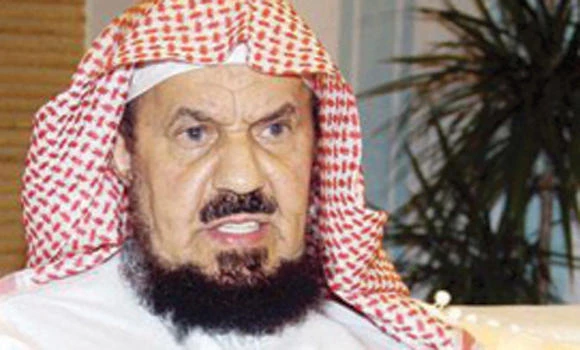
RIYADH: Abdullah bin Sulaiman Al-Manea, a member of the Council of Senior Scholars and adviser to the royal court, highlighted the independence of the Saudi judicial system and said nobody is above the law, including members of the royal family.
“I was talking to one of my friends about Custodian of the Two Holy Mosques King Salman’s recent statement about the independence of the judiciary when he stated that the king, crown prince and all members of the Saudi royal family respect the decisions of the judiciary and that there is no difference between ordinary citizens and princes when it comes to judicial decisions,” said Al-Manea. “However, my friend was not convinced. He felt that it was a customary statement from the king.”
Al-Manea said he felt the need to draw upon his 40 years of experience at different levels of judiciary to remove his doubts.
“I have some specific evidence to prove that all segments of Saudi society, including the royal family, respect the judiciary and its decisions,” he said.
“Once, a governor had sent an issue to one of the top judges to be urgently considered, even though there were other issues that awaited consideration,” recalled Al-Manea.
“The judge’s reply to the governor was: ‘If we give the priority to you then we will be doing injustice because there are other people who have submitted their cases before you. And if we are not fair in this dealing, then we will not be fair in our judgment as well.’ The governor accepted the judge’s reasoning and appreciated and respected his decision.”
Al-Manea narrated another important case to drive home his point. “A citizen had filed a lawsuit at the high court in Riyadh against the late King Fahd; he was then the crown prince. The judge ruled in the citizen’s favor,” he said.
The third case, Al-Manea said, was that of a Makkah court chief who had retired and had become a lawyer. “He appeared as a lawyer for a citizen in one case and started acting like a judge. The presiding judge told him: ‘You are here as a lawyer and not as a judge. We know all the laws of the land.’“
In the fourth case, a lawsuit over a land dispute was filed by the business agent of the late King Fahd against Abdul Rahman Faqeeh.
“But the Taif court ruled in favor of Abdul Rahman Al-Faqeeh and the late king accepted the court’s ruling,” said Al-Manea.
He recalled one more case. “King Abdullah has a large piece of land in Madinah but there was a house that belonged to a Saudi woman which was located inside the borders of this tract of land. The court decided to compensate this woman in lieu of that house,” added Al-Manea.
Scholar produces proof of judiciary’s independence