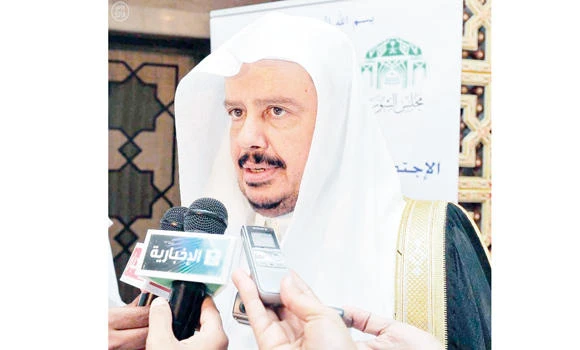
The Shoura Council is empowered to discuss all contentious issues facing the country including the performance of government departments, housing allowances, unemployment and women’s driving, provided these fall within its mandate, according to Abdullah Al-Ashaikh, chairman of the advisory body.
In an interview published in local media recently, he said council members could tackle all “thorny” or potentially embarrassing questions under certain set conditions.
“We discuss matters referred to us directly from the premier. We do discuss national and social cases ... when they are proposed for discussion by council members, and we did issue some resolutions regarding some hot topics, such as poverty, unemployment, and housing.
“With regard to women’s driving in the Kingdom, some female members of the council made an additional recommendation that was annexed to the annual report of the Ministry of Transport for the year 2012/2013, calling for women to drive cars in Saudi Arabia within the established legal framework of the traffic regulations.”
“However, the council did not discuss the topic because it was not in compliance with Article 31 of the council, which stipulates that ‘any recommendation has to be related to the topic presented to the council for discussion.’ And the subject of women’s driving does not fall within the jurisdiction of the Ministry of Transport,” he said.
In response to a question about the obvious lapses in the performance of some ministries, such as health, education and transport, he said that the council discusses the performance of these entities as reflected in their annual reports. “When we see areas of underperformance that need to be addressed, we do provide what we believe to be adequate methods of redress, through our specialized committees,” he said.
He said the council issues resolutions and not recommendations. “There is a difference between a resolution and a recommendation in terms of compliance and enforcement. Recommendations are usually presented by the commissions after reviewing the cases presented to these commissions,” he said.
“We have nothing to hide. Our doors are open. We are also open to constructive criticism. It is a principle of the council that its sessions are public. That’s the rule. But some ministers, however, prefer that the sessions be held away from the eyes of the media,” he said.
He said the jurisdiction of the council under Article 15 includes discussing the economic growth plan, regulations and international treaties. The council also presents proposals about these issues. Article 23 enhanced the role of the council, to pass or amend regulations, in conjunction with the king.
Shoura empowered to tackle ‘thorny issues’