The need for polyclinics certified by the Ministry of Health to process medical tests and issue health certificates has taken on greater importance as the Kingdom moves to expel undocumented foreign workers and ensure that all expatriates have legal status.
However, many polyclinics have earned a reputation over the years as being lax in how they conduct examinations before issuing certificates, leading several expats to suggest that improperly executed medical tests pose a danger to their health. The issue also begs the question as to whether clinics are staffed with trained doctors and medical personnel to declare the medical status of patients.
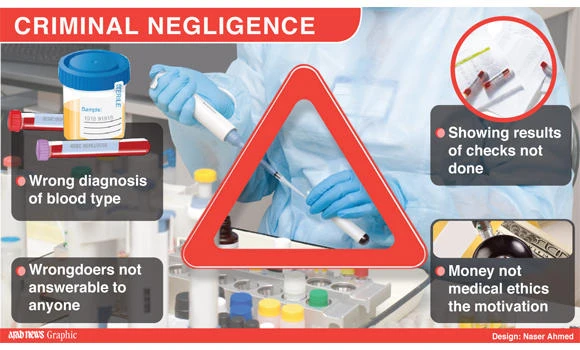
A Turkish employee working at an international school told Arab News that she had her medical tests performed at a polyclinic in order to transfer her sponsorship from her husband to the school. The doctor gave a cursory check of her heartbeat and took her blood sample. She was asked to collect her results in 48 hours. When she received the results, the woman said she was shocked that the results listed her blood type as O- when her blood type is actually A+.
“Additionally, the report stated that I had cleared my urine and stool tests, which they never took samples of,” said the woman, who chose to remain anonymous.
“This is totally unacceptable,” said Sahar Tawfiq, an Egyptian secretary working for a private company in Jeddah. “The blood type will be stated in my residency permit and this is extremely dangerous. In cases of emergency, they will refer to my identification card for my blood type and may end up giving me the wrong blood type.”
Physicians familiar with the operations of polyclinics say there is no justification for inaccurate results on a medical certificate.
One polyclinic medical staff member defended her clinic’s practices.
“I don’t think this is the case,” said a nurse working at a local polyclinic in Jeddah. “Our system is very accurate and we ensure that each and every single patient receives the utmost medical care.”
The nurse pointed out that some people might have received incorrect results. “But this is not the case always,” she said.
She said all complaints are taken seriously and there is a proper system in place to ensure the quality of medical check-ups. She also said that if a person receives the results for a sample that they did not submit, they should refer back to the clinic to ensure that the results are legitimate.
Dr. Salahuddin, a general physician at a Jeddah hospital who asked that his family name not be published, said many polyclinics may not be issuing accurate medical certificates for government services because clinic doctors and nursing personnel do not answer to a higher authority.
“No one faces any consequences if they get caught and I suppose that the money they make from the patients looking for medical reports is substantial,” he said.
The doctor added that this is part of the rookie mistakes committed by government servants in that the tasks given to people are not being followed up on genuinely, he said.
“It is all just a way to earn easy money,” he said. “The polyclinics get paid by the government and by the patients; why should they go through the trouble of actually performing the tests?”
A Saudi educator who married a non-Saudi said that she recently took her husband to a Jeddah polyclinic for a medical exam to obtain a residency permit under her sponsorship.
“His blood type was wrongly diagnosed because we had another clinic perform a blood test for an unrelated matter just a few weeks earlier,” said the Saudi woman who asked that her identity not be revealed. “All the boxes were ticked off about his health status although they performed no exam.”
Alaa Tamer, a Syrian engineer who needs to undergo a medical exam for a residency permit, said if the Kingdom’s long-range goal to have a legal expatriate work force is to be successful, the clinics must operate in a legitimate manner.
“The point of all of this is to minimize the number of illegal foreigners in the Kingdom and at the same time create job opportunities for Saudis,” Tamer said. “If things should work for a long period of time as the Kingdom intends, then it should start on right terms.”
The Turkish woman said: “It is very unfair that people are being paid for jobs they are not performing.”
Some polyclinics fail to follow basic medical guidelines