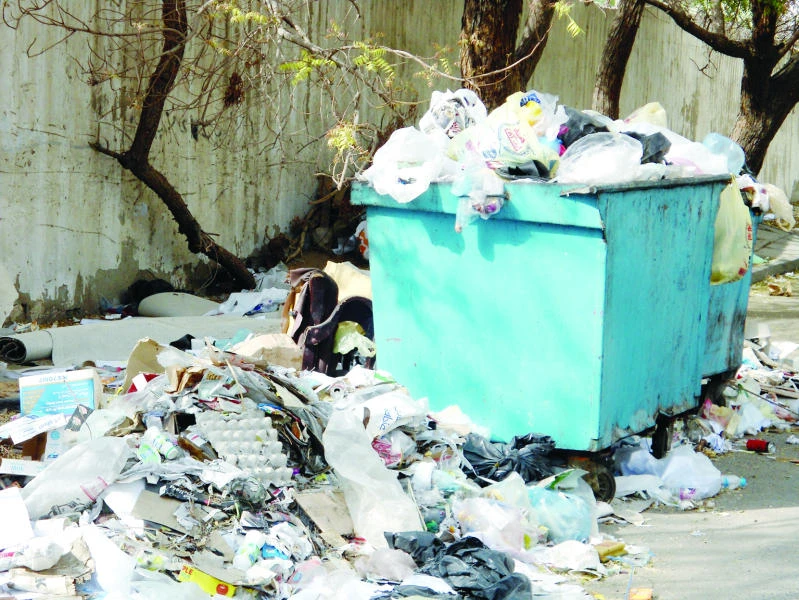
Although the Jeddah Municipality has finalized contracts with waste removal companies and some garbage collection has commenced, central and southern parts of the city are beset by further accumulation of garbage on the streets as no collections have been made for the past two days.
A resident of Jeddah’s Sabeel district, Abdul Saleem, said that piles of garbage have become a mainstay in his neighborhood as cats rummage through garbage bins, spewing rubbish all over the surrounding area.
Hindawiya, Sabeel and other areas along King Khaled Street are also awash in uncollected garbage. According to Mohammed Zahid, who lives in Kilo 7, there is no regularly scheduled garbage collection.
There is some dispute over the exact causes behind garbage transforming into a common part of the Jeddah landscape. A number of residents voiced the belief that most of those hired to collect garbage and keep streets clean had abandoned that task in favor of the more lucrative business of collecting empty beverage cans and aluminum foil containers for recycling.
While it is common for sanitation workers to come across valuable items in the course of their jobs, there is no evidence that they have abandoned their primary employment in favor of treasure hunting. The size of collection trucks and garbage bins along with the number of trips necessary to remove the garbage from a single neighborhood pose significant logistical difficulties, all of which are beyond the control of the abysmally paid local street crew. The trucks of newly hired companies may be of a different size than street bins or the new companies may not have up-to-date sanitation vehicles.
Jeddah and adjoining urban areas have been divided into 9 zones for which five cleaning companies were recently awarded garbage collection contracts for five years at a cost of SR1.8 billion.
Jeddah produces an average of 7,000 tons of garbage every day.
South Jeddah awash with garbage despite new sanitation contracts