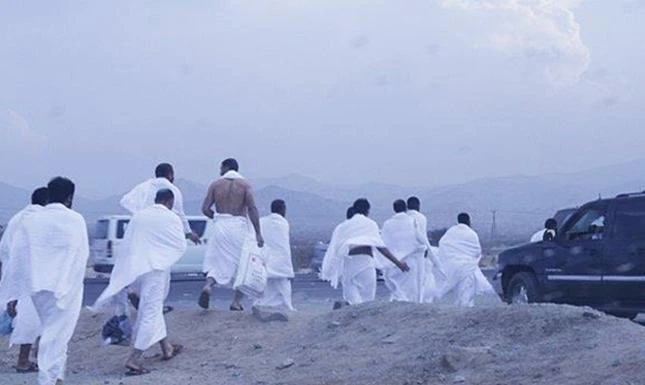
The Ministry of Justice has established 14 special courts in Makkah for the very first time to deal with Haj-related offenses in and around the holy sites during the busy Haj season, said Salman Al-Nashwa, secretary-general of the Supreme Judicial Council.
The special courts were opened upon a recommendation made by the council to address violations committed by pilgrims, supervise power of attorney for slaughtering sacrificial livestock and to oversee procedures for handing over cash or valuables left by pilgrims who died.
Police stations throughout Makkah, including the Grand Mosque area, will be linked to the courts. The intensification of surveillance at numerous checkpoints on roads leading to Makkah has led to a significant reduction in the number of infiltration attempts into the holy sites.
Backed by air surveillance, authorities intensified checks throughout the Kingdom and in the western region in particular, netting the highest number of illegal pilgrims this year.
More than 15,000 illegal pilgrims were caught and fingerprinted this year, compared with only 4,100 caught last year, according to the latest information released by the Interior Ministry’s command center in Makkah.
Security authorities focused on the outskirts near Taif, the second main entry point that sees nearly half of all pilgrims pass through every year.
Very few expatriates, especially from Jeddah, were able to make their way into Makkah without permits.
“We will not spare any expatriate who dared to enter into Makkah without a permit to perform Haj,” Col. Ahmed Al Lohaidan, Passport Directorate spokesman in Riyadh, told Arab News.
“We will expedite penal measures, which will include imprisonment, deportation and a 10-year ban from entering the Kingdom,” he said.
The new, state-of-the-art system, which linked checkpoints with the Interior Ministry server has not only helped authorities catch illegals, but has made it easier for pilgrims with permits to file into Makkah.
An exclusive fiber-optic cable was set up at an integrated inspection complex in Al-Baheetah near Taif, which is also a designated follow-up center for Haj violators. Another similar facility has been set up in the Shumaisi area.
The random survey, which coincides with world cardiology day, showed cases of high blood pressure (HBP) and diabetics among a number of men and women who were oblivious to their ailments.
Some of the prospective patients were given guidance, while others were advised to consult doctors and further tests, the paper said.
Mohamed Sulaiman, a cardiologist at KAMC, said the survey included 110 samples and large numbers of respondents in the 35 to 50-year age group, who were discovered to have health problems that could negatively impact on heart, the paper said.
Special courts for Haj-related offenses