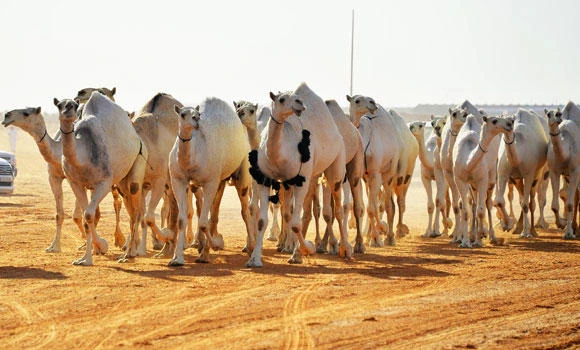
In a fresh campaign to combat MERS coronavirus, the Ministry of Health has urged people to take maximum precaution when dealing with camels and its products.
In a new initiative to prevent the spread of the virus, the MoH has advised people not to go near infected camels.
Where it is absolutely necessary, one must wear a long-sleeve medical gown, gloves and a mask over one’s nose and mouth.
The statement further said: “Avoid contact with camels, especially if they are sick. Stay away from their nasal secretions, stool and body fluids such as blood, urine and milk, and camel meat and liver should be cooked well before consumption.”
Camel’s milk should also be boiled well before consumption, the statement added.
Since September 2012, there have been 817 confirmed cases of MERS-CoV in Saudi Arabia resulting in 351 deaths. The latest victims were two Saudis in Riyadh and one of them, a 52-year-old man, died on Wednesday at a government hospital here.
The MoH also reiterated its appeal to the public to take preventive measures against the virus. Besides avoiding infected camels and refraining from coming into contact with MERS-infected persons, basic hygiene, such as hand-washing before and after meals, should also be strictly observed.
The Ministry of Health launched a Kingdom-wide awareness campaign on coronavirus in cooperation with the World Health Organization as soon as Adel Fakeih took over duties as acting health minister. Based on the current situation and available information, the WHO encourages all GCC member states to continue their surveillance for acute respiratory infections and to carefully review any unusual patterns. Infection prevention and control measures are critical to prevent the possible spread of MERS-CoV in health care facilities. It is not always possible to identify patients with MERS-CoV early because like other respiratory infections, the early symptoms of MERS-CoV are nonspecific.
Therefore, health care workers should always apply standard precautions consistently with all patients, regardless of their diagnosis. Droplet precautions should be added to the standard precautions when providing care to patients with symptoms of acute respiratory infection; contact precautions and eye protection should be added when caring for probable or confirmed cases of MERS-CoV infection; airborne precautions should be applied when performing aerosol generating procedures.
Until more is understood about MERS-CoV, people with diabetes, renal failure, chronic lung disease and immune-deficiency are considered at high risk of contracting MERS‐CoV infection.
Therefore, these people should avoid close contact with animals, particularly camels, when visiting farms, markets, or barn areas where the virus is known to be potentially circulating.
Steer clear of camels