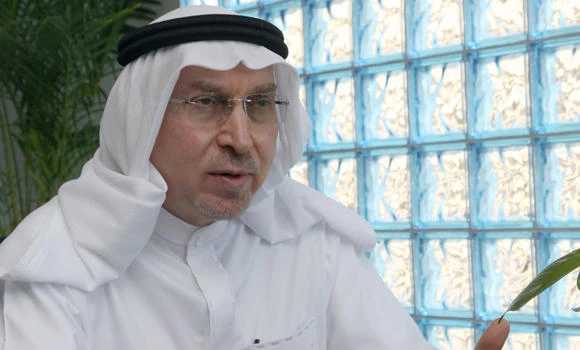
Adil Bushnak, a global authority on desalination and water reuse, has warned of the risks associated with the Kingdom's growing reliance on central desalination plants to provide drinking water. He has suggested moving from centralized to decentralized solutions, emphasizing the need to achieve financial sustainability and to instead increase reliance on renewable energy sources to provide drinking water.
According to Bushnak, the Saudi water sector continues to build central plants. "It is illogical to pump water hundreds of kilometers. This requires costly and large amounts of energy. Further, mega desalination plants are continually exposed to crashes, which result in sudden supply cuts.” He said it is better to build small plants with lower costs within cities that are close to residential areas. In addition to dealing with the private sector to buy local fresh water, which costs the state less than to produce and pump water. This change would also help to empower young Saudis to own and manage the plants.
Bushnak stressed the importance of adopting and implementing comprehensive, integrated, and strategic plans for the sustainability of water, food and energy in the future. Indeed, at present, there is poor water security and a lack of planning for sustainability. He praised the Ministry of Water and the National Water Company's efforts to set up several plants near the capital for groundwater desalination. He has emphasized the need to use nonrenewable groundwater as a source of drinking water that could be sufficient for hundreds of years, rather than continuing to drain it in few decades.
Bushnak urged the ministry to chalk out plans to use natural valleys for water storage, to replace traditional surface dams with groundwater dams, to reduce rainwater evaporation and to increase the collection of rainwater.
To achieve food security, the expert called for creating greenhouses within cities. This will train and empower the Saudi youth to use renewable water sources, and will meet the Kingdom’s increasing need for food.
With regard to leakages and water wastage, Bushnak believes that desalinated water leakage in some districts, especially in Jeddah, comprises up to 50 percent of total water use.
Strategic planning for water security urged