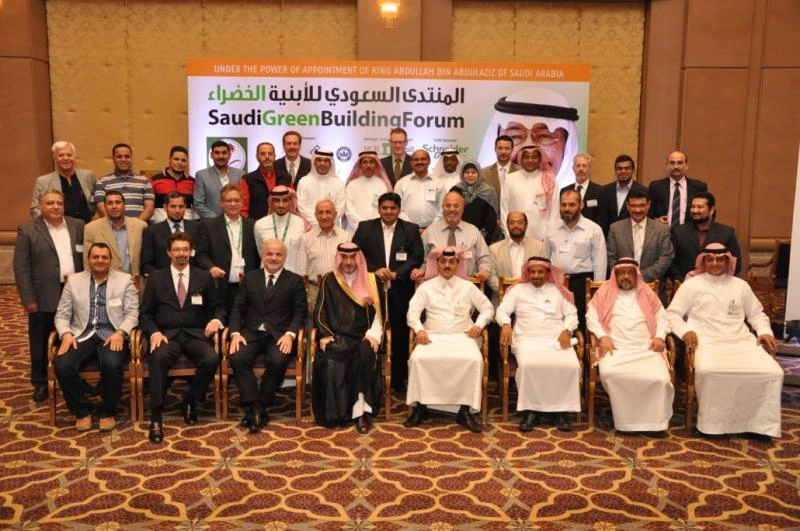
RIYADH: Ten recommendations meant to express the position of sustainable development across Saudi Arabia emerged this week from the third annual Conference of Saudi Green Building Forum (SGB Forum) that ended this week.
To the establishment of a Green Building chapter in the Saudi Council of Engineers the council has given its nod.
The strategic partners of the forum agreed to have a Model Home for green building by October next year. This would provide a model representation of green building technologies, related practices and sustainable material, its production and utilization.
It would open the door for local, national and international investment and long term economic and eco-friendly benefits from sustainable development. The forum recommended that model buildings incorporating green building principles should be constructed because their design and operation can deliver an educational environment and create a living laboratory where students can explore sustainability.
The forum recommended that the Saudi Council of Engineers should lay importance on setting up training programs such as master classes in Leadership in Energy and Environmental Design (LEED) that were organized at the third annual conference of the SGB Forum.
The partners and delegates collectively suggested that more green initiatives should be encouraged, such as the Green School initiative that the Kingdom School had successfully undertaken for the first time.
The forum suggested that government could lower the cost of producing electricity by 2030 by insisting on an increased use of solar energy producing equipment and generating electricity from renewable energy. The forum recommended the development of more solar power in Saudi Arabia and suggested that private investments in solar energy generation should be fostered.
The SGB forum also observed that the private and public sector should help and associate with companies and institutions investing in new housing schemes that follow the code of energy efficiency and sustainability.
Regional and international collaboration in green buildings and sustainability should be intensified, concluded the forum, after hearing the presentations on a wide range of sustainability issues from leaders from Jordan and the UAE, Europe and North America. The Saudi Green Building Forum should promote similar initiatives in other GCC states and elsewhere in the Middle East.
As a part of the green building initiative, an incentive program for Saudi companies through trusted agencies should be established that would encourage the production of energy and water in association with local manufacturers. This would boost production of green building material as per the green building international code. The Saudi-US Business Council, Saudi-German Delegation and the Riyadh Chamber of Commerce and Industries may play a leading role in this regard.
The forum recommended the launching of a new City of Nuclear and Renewable National Strategy, to reduce dependence on oil and gas, which is being used to produce electricity for the community. The forum suggested that the aims and objectives of King Abdulaziz Center for Science & Technology (KACST) go hand in hand with those of the forum and working together could help in achieving common goals in lesser time.
The Saudi Ministry of Education could consider introducing sustainability and environmental awareness as part of the national curriculum for elementary and secondary education. The forum also suggested that the Kingdom’s program of technical education should be expanded to encompass green building and sustainability topics and skills, including the practical application of such skills in the Kingdom’s construction industry.
The forum recommended that sustainability and green building initiatives should be encouraged right from school level to university level so that students become aware of it and join hands to bring the Kingdom in a green era.
‘Tangible’ recommendations emerge from SGB conference