DAMMAM: Several local traders here are continuing to sell SIM cards that are not officially registered to their buyers, a local publication reported on Wednesday.
Ismael Al-Majedi did not think he was undermining the country’s security when he bought a pre-paid SIM card recently that was registered on the name of an expatriate he had never met.
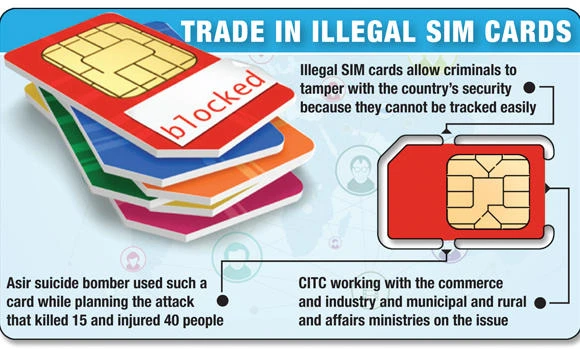
He admitted that he was aware of warnings issued by the Ministry of Interior that people should not buy these cards. Recently the Asir suicide bomber, Yousif Salman, used such a card while planning the attack that killed 15 and injured 40 people.
Al-Majedi, who is 23 years old, said he wanted to buy a specific number and that he registered it on the name of an unwitting expatriate because it was cheaper than buying one from a telecommunications company. He has since broken the card.
Asir governorate has stated that people selling these SIM cards are allowing criminals to tamper with the country’s security because they cannot be tracked easily, the publication reported.
Anwar Al-Abdullah, a Yemeni who sells these cards, said he obtains them from people working at telecommunication companies for between SR10 and SR50, depending on whether they offer high-speed Internet or free minutes.
He said the SIM is then sold using the identity number of a foreigner. He said many of his fellow traders are not involved in this activity and prefer to sell cards legally with the names and identity numbers of their buyers.
An employee at a telecoms company said the firm often receives complaints from clients about mobile numbers that were registered on their names without their knowledge.
He revealed that some employees are illegally registering numbers on the names of expatriate workers without their knowledge. He said these numbers are sold to store owners. There was no supervision currently over how numbers are registered and sold, he claimed.
Mobily has denied reports that some of its workers are involved in these illegal activities. Mohammad Al-Balawi, executive director for corporate telecommunication and public relations, said there is no specialized department to distribute SIM cards. Cards are issued to clients coming to the company’s offices with correct identification documents, he said.
The Communication and Information Technology Commission (CITC) said that it is working with committees in governorates across the country to deal with this issue, apart from sending out inspectors to check up on licensed service providers.
Those found breaking the law would be penalized a maximum of SR25 million if they are found dealing with unknown SIM cards, the CITC stated. Other penalties include naming them in the media. The CITC stated that it was working with the commerce and industry and municipal and rural and affairs ministries on the issue.
Trade rife in illegal SIM cards