Despite robust growth in the Saudi economy, developments in the transport sector have not been forthcoming. The poor state of public transport infrastructure is a fallout of years of neglect.
Easy accessibility to private automobiles and low fuel prices have steadily increased automobile traffic levels leading to rise in congestion and accidents in urban areas.
In 2010, the number of accident-related deaths had reached 6,460, resulting in losses of SR13.6 billion. A strong move toward urban mobility solutions is only recent, but it aims to bring about a positive transformation of the country’s public transport system.
Saudi cities are suffering from congestion in their roads and streets. The population density plays a role in increasing daily vehicle trips between 5 and 7 million trips in Dammam, Jeddah and more than 10 million vehicle trips in Riyadh.
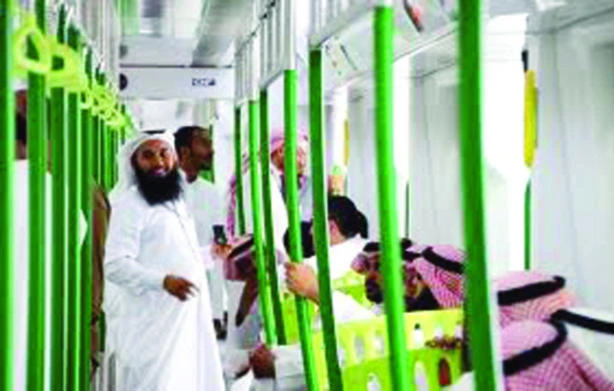
This crisis can be resolved through adopting alternative projects for public transport. Railways transportation will contribute to reducing pressure on the roads in Saudi cities and can connect Makkah and Madinah via Jeddah through several stations. It is an ideal solution to reduce traffic bottlenecks associated with that intensive movement.
Jeddah, Riyadh and other provinces will have train networks that can provide transportation service for about 100,000 to 300,000 people a day in the major cities. Municipalities in coordination with the Ministry of transportation take into account train networks’ impact on congestion on roads and street through determining train tracks and stations.
The Saudi Public Transport Company (SAPTCO) is the main and the largest public transport operator in the country. Established in 1979 as a joint-stock company and public transport concessionaire, SAPTCO has been providing urban and intercity services for 30 years under a 35-year concession agreement with the government.
SAPTCO as the most known bus companies in the Gulf region has redefined its goals and objectives. As part of its new strategy, the transport company is designing and constructing integrated multi-modal public transport infrastructure and coordinating service schedules to provide interconnectivity across these transport modes. It is also exploring new sources of long-term financing at significantly lower costs for ongoing and proposed urban transport projects. The company is actively designing and implementing short, medium and long term plans to propagate a public transport culture in the community through formal and informal endeavors.
Taxi as a transportation alternative needs a long time to be more modern. At the same time, taxi cars play a big role in making roads and streets crowded. However, trains aims to resolve the congestion in roads of Saudi major cities.
Meanwhile, the “Taxi Jeddah” project, a proposed joint stock company bringing all taxi companies in Jeddah to operate under its umbrella with a start-up capital of SR 500 million, has been rejected due to its low Saudization levels, according to local media.
“We proposed establishing the company that eventually incorporate 260 taxi companies within five years. However, the Transport Ministry said in order to approve the project Saudization had to be at 100 percent,” Abdul Hadi Al-Qahtani, former president of the taxi committee at the Jeddah Chamber of Commerce and Industry, told Arab News in a previous interview.
“Therefore, we could not contract the Australian company that established the similar ‘Taxi Dubai’ project due to the difficulty of finding Saudis willing to work for taxi companies. We opened the door to Saudis to work as taxi drivers but we received applications from only six locals. The majority of Saudis prefer to work using their own taxi car,” he added.
“There are 20,000 Saudi taxi drivers in the Kingdom. However, they are facing obstacles as many expatriates have converted their own private cars into taxis. At the same time, we are facing a large problem with new taxi drivers who come from outside and they do not know the layout of Jeddah as street and districts in the city are not numbered and organized. Therefore, there are many Saudi taxi drivers who find themselves in trouble when the customer ask to go to areas that the driver does not know very well,” added Al-Yami.
According to the Kingdom traffic laws, drivers are not allowed to take paying passengers in private cars. First-time offenders violating the ban will be fined SR 300.
“We recorded 6,569 incidents of paying passengers traveling in private cars. We do not allow the passenger to travel in private cars. Only licensed taxis or buses can transport passengers,” Mohammed bin Hassan Al-Qahtani, traffic director in Jeddah said.
Trains will reduce burden on buses, taxis