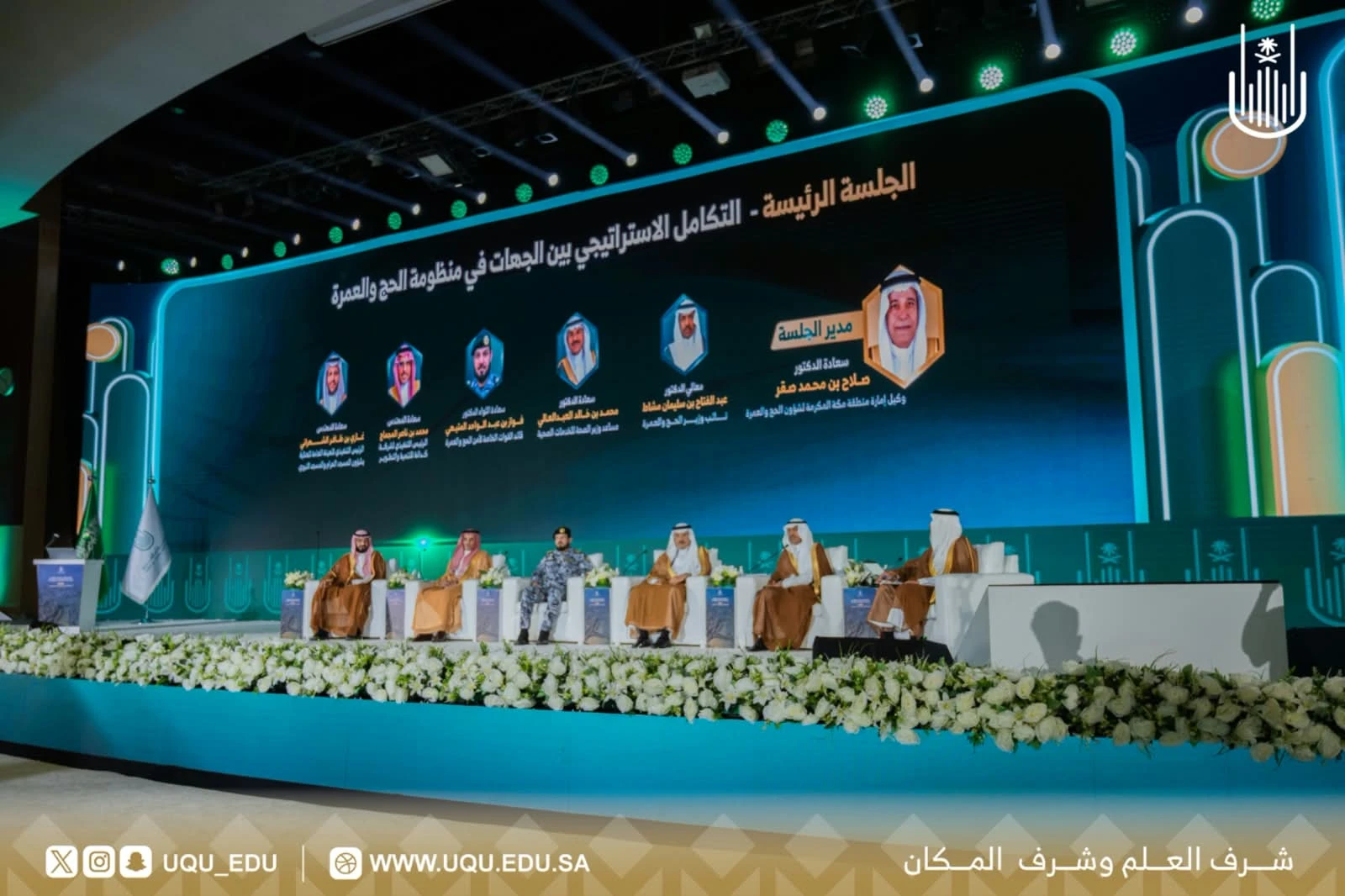

MAKKAH: Umm Al-Qura University inaugurated the 26th Scientific Forum for Hajj, Umrah and Visit Research at its headquarters in Makkah, under the theme “Excellence and Integration in the Hajj and Umrah Services Ecosystem”.
Under the patronage of King Salman bin Abdulaziz Al Saud, the two-day forum supports strategic efforts to enhance the Hajj, Umrah and visitation ecosystem by providing a scientific platform for researchers, experts, decision-makers and service providers. It allows participants to examine the latest research and studies, explore innovative proposals, exchange expertise, and highlight leading local and international practices in line with the objectives of the Kingdom’sVision 2030.
The forum explored a range of key topics, including the role of integration and coordination in improving services for worshipers, models of cooperation among relevant entities, the measurement of operational efficiency at the holy sites, data governance and information sharing, as well as business continuity and emergency planning.
Assistant Minister of Health for Health Services Dr. Mohammed Al-Abd Al-Aali said “The Kingdom’s health sector has undergone significant structural and governance reforms under the Kingdom's Vision 2030.” He explained that the Ministry of Health now focuses on regulatory and supervisory responsibilities, working alongside specialized entities including the Saudi Food and Drug Authority, the Public Health Authority, and the Saudi Red Crescent Authority to guide and support healthcare providers across health clusters and the military, private, and non-profit sectors.
He noted that this integrated system operates within a governance framework linked to the Supreme Hajj Committee and the permanent committees in Makkah and Madinah. Preventive efforts begin well before worshipers arrive in the Kingdom and include setting health requirements, monitoring global health developments through the Public Health Authority, verifying vaccinations, and conducting surveillance at points of entry, all with the aim of ensuring the highest standards of healthcare throughout the Hajj season.
For his part, Deputy Minister of Hajj and Umrah Dr. Abdulfattah Mashat said the Kingdom's Vision 2030 has significantly elevated the quality and efficiency of services provided to worshippers, driving a shift from seasonal operations to a sustainable, year-round model. He explained that this approach focuses on expanding capacity and strengthening supply chains for food, accommodation, and transportation, supported by regulations and operational frameworks applied throughout the year.
He highlighted the growing role of the private sector, noting that the number of approved catering establishments in the Holy City has risen from around 70 four years ago to more than 300 today. He also pointed to the introduction of unified year-round digital platforms, including the electronic track and the “Nusuk” application, as well as efforts to promote a more professional approach to Hajj-season operations by preparing workers to handle peak demand while sustaining their activities throughout the rest of the year.
Meanwhile, Commander of the Special Forces for Hajj and Umrah Security Major General Dr. Fawaz Al-Mutaihi said that crowd management at the Two Holy Mosques is a continuous, around-the-clock operation that has evolved into a highly coordinated system. He explained that this approach integrates crowd organization and movement, transportation and scheduling controls, the management of congestion points, and the provision of supporting services.