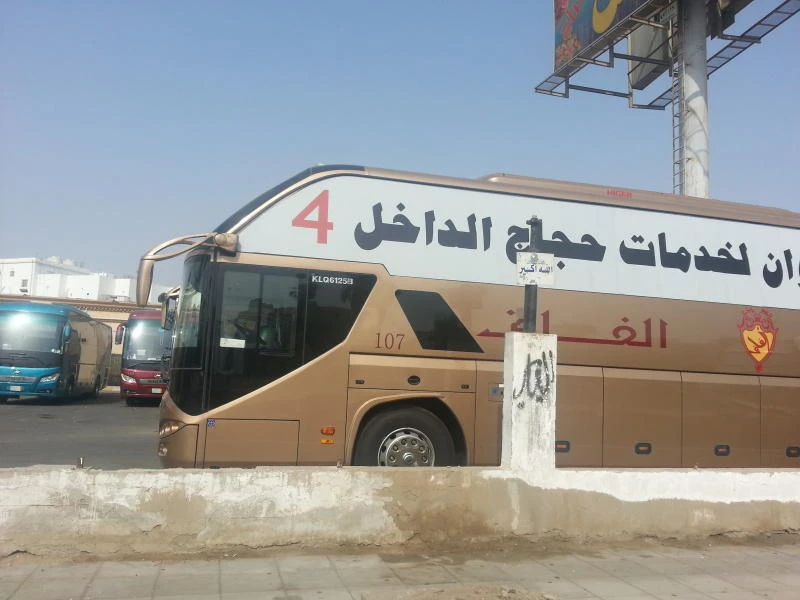
The extensive campaign by Saudi authorities against unauthorized Haj pilgrims attempting to enter the holy sites this year has paid off. Thousands of expatriates who believed they could undertake the pilgrimage without permits have backed off, thanks to the campaign.
Unlike previous years when thousands of people from Jeddah undertook Haj pilgrimage without permits, this year, the campaign by the authorities has acted as a deterrent which is perceptible. The decision follows the drastic reduction in local quota to 104,000 pilgrims.
Unlike previous years, there are no tents or broker’s offices, generally real estate agents, who used to run Haj campaigns, in Jeddah, considered as the gateway to the holy city of Makkah and widely acknowledged as prime conduit for unauthorized pilgrims. Last year, around 1.5 million people preformed Haj without permits.
Undoubtedly, there have been warnings earlier too, but this year’s firm decision to stop unauthorized pilgrims seems to have paid dividends. Earlier, the impact had little effect on pilgrims particularly from lower and middle-income group expatriates, who managed to sneak into the holy city on the day of Arafat through the various dirt roads with the help of their Saudi transporters.
What worked this year was the warning of deportation of expatriates with a 10 year ban from entering the Kingdom and the recording of biometrics at entry points to Makkah city. Several areas in south Jeddah located on old Makkah Road were considered as safe passage points for pilgrims without permits until last year. This year, however, there is no such activity in the area.
Areas like Aziziah, Sharafiah, Bab Makkah, Hindawiyah and Ghulail, considered expat strongholds where hundreds of handbills offering Haj packages used to appear every year, have a different story this year. With police keeping strict vigil, there is hardly any promotion.
Most of the lower income group Asian and Arab expatriates used to opt for unauthorized Haj, but this year, the trend has changed. Several social groups also used to offer service at cheap rates which is no longer available.
Another reason is the high cost of Haj which forced many middle and lower-income group expatriates to abandon their Haj plans. The minimum cost starts at SR7,500 compared to SR4,000 last year.
Shaikh Aftab, an Indian expatriate from West Bengal, told Arab News: “I was planning to perform Haj along with my wife but was forced to cancel the plan due to high cost which I can’t afford.”
“And I am not for doing it illegally since I can be caught and deported,” he said.
Ahmed Alwan Sham, a Yemeni expatriate, told Arab News: “This year, there is hardly any activity in the city regarding unauthorized Haj transportation. Not many Yemenis from south Jeddah area willing to take the risk when the authorities have resorted to biometrics recording.”
Unauthorized Hajis deterred