JEDDAH: Amid tightened security at all entry points of the holy city of Makkah, the Haj pilgrimage and the preventive measures to curb entry of illegal pilgrims is the talk of the day among many expatriates in Jeddah.
Mohammed Qurshid, however, hardly is concerned about it. His sole goal is to reach Mina irrespective of method. The 94-year-old man, who is hailing from Uttar Pradesh in India, is not in possession of any valid documents nor a Haj permit, but he is unfazed and confident that he will make his journey to Haj.
Qurshid arrived in Jeddah a few months ago on an Umrah visa of 15 days validity with support of his two sons, who are working in Jeddah as embroidery tailors for abayas. He also has six grandchildren working in the city.
He says that although he came to perform Umrah in the holy month of Ramadan, his aim is to perform Haj. Therefore, he didn’t return home after his visa expired, but, instead, opted to stay in the Kingdom. He performed Haj 30 years ago, but he is very enthusiastic to do it again, despite having to violate the rules.
The Passports Department said this week that it turned away 26,000 undocumented pilgrims and advises that pilgrims without permits should not enter Makkah.
Qurshid’s sons found some agents who quoted a price of SR 4,500 to SR 5,000. One of his grandsons contacted a middleman who demanded SR 3,000, but even that amount was too high for his children. Finally, they agreed on the price of SR 2,000 for Haj with an unknown operator.
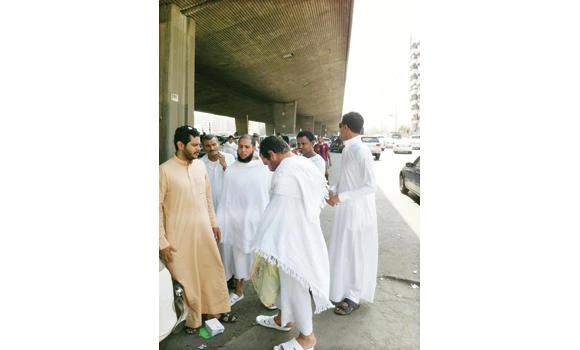
Tuesday night, Qurshid left Jeddah to an assembly point on the old Makkah Road along with his son, from where he was promised to be picked up by the agent who would smuggle him into Makkah and make his dream to perform Haj one more time come true.
Qurshid is only an example of a phenomenon that prevails among the working expatriate community in Jeddah. He is just the tip of the iceberg.
Bangladeshi Iman Hussain, 39 years, is neither in possession of a Haj permit nor does he intend to apply for one, given the hefty fee. He has been watching developments of Haj for quite some time. Last week, he approached a middleman in Al-Nuzlah district, who promised to take him to Haj for just SR 1,700, telling him to go to a gathering point, from where he would board a bus to Makkah.
Abdul Hakeem, hailing from Bangladesh, and Yemeni Alwan Hussain Sham feel that spending money on a Haj operator makes no sense. For them, Haj is merely a matter of paying SR 200 to get them into the holy city. They are hopeful that they will find arrangements in the holy sites of Mina, Arafat and Muzdalifah. They keep silent on the animal sacrifice ritual, unable to answer how and when they will do it. A significant number of Hajis fall in this last category, which consists mainly of expatriates.
Law authorities say that illegal pilgrims are posing real problems for the lawful pilgrims.
Most of such illegal pilgrims proceeded to Makkah on Tuesday night, and the remaining number has left Wednesday morning from Jeddah. It is uncertain whether these people have been able to make it into the holy city or not. Many feel that these pilgrims are probably dropped ahead of the checkpoints near Makkah.
Unfazed illegal Hajis persist on the way to pilgrimage