The representative of the WHO in the Kingdom, Dr. Hassan Al-Bushra, has lauded the measures and efforts made by the Kingdom to protect the health of pilgrims.
“Saudi Arabia has always had close contact and cooperation with the WHO in health matters especially those affecting pilgrims and this contact intensifies during the Haj season,” he said.
“This year, for the first time in the history of WHO, we joined here in Makkah a global meeting along with Saudi health authorities and heads of foreign Haj medical missions,” Al-Bushra said.
Earlier, acting Health Minister Adel Fakeih officially announced on Monday that Haj was safe from infectious and communicable diseases.
“I totally dismiss the claim that some Ebola cases have been brought here by African pilgrims. No such cases were discovered nor any of them admitted to our Haj health care facilities,” Fakeih said while answering a reporter’s question. The ministry achieved this result by devising one of the most advanced epidemiological surveillance systesms in the world at its ports of entry and health care facilities.
Fakeih said the available evidence, including field reports and general statistics about the health status of this year’s Haj show that the precautions taken by the ministry had a tremendous positive impact.
“We picked up 170 suspected MERS cases among pilgrims during this Haj season, but all of them later tested negative,” the minister told reporters.
He highlighted precautionary measures taken by the ministry to prevent the spread of infectious diseases during the Haj season.
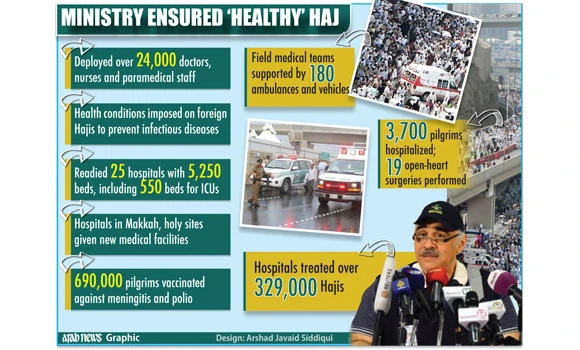
The ministry had deployed over 24,000 doctors, nurses and paramedical staff on Haj duty. It also readied 25 hospitals with 5,250 beds, including 550 beds for ICUs. Its hospitals provided treatment to more than 329,000 sick pilgrims.
“We have imposed health conditions on foreign pilgrims to prevent infectious diseases, while 690,000 pilgrims were vaccinated against meningitis and polio,” the minister said.
WHO recognition for KSA steps